
Commentary
Backed by the Trump administration’s financing, a U.S.–Kazakhstan rare-earth partnership aims to break China’s dominance over critical minerals essential to advanced defense technology and U.S. supply chain security.
At the World Economic Forum in Davos, U.S. Commerce Secretary Howard Lutnick criticized European leaders for their 2030 net-zero targets, warning that the policy would leave Europe heavily dependent on China for batteries.
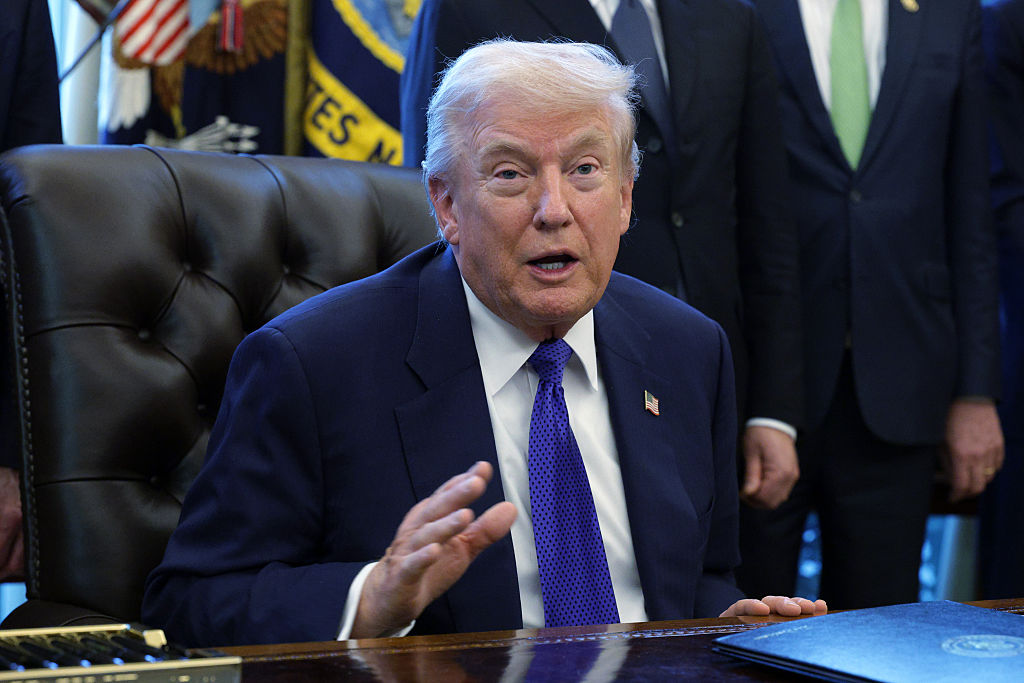
President Donald Trump has similarly made cutting China out of U.S. supply chains a central priority, particularly ending U.S. reliance on China for rare-earth minerals, especially heavy rare-earth elements critical to advanced defense technology.
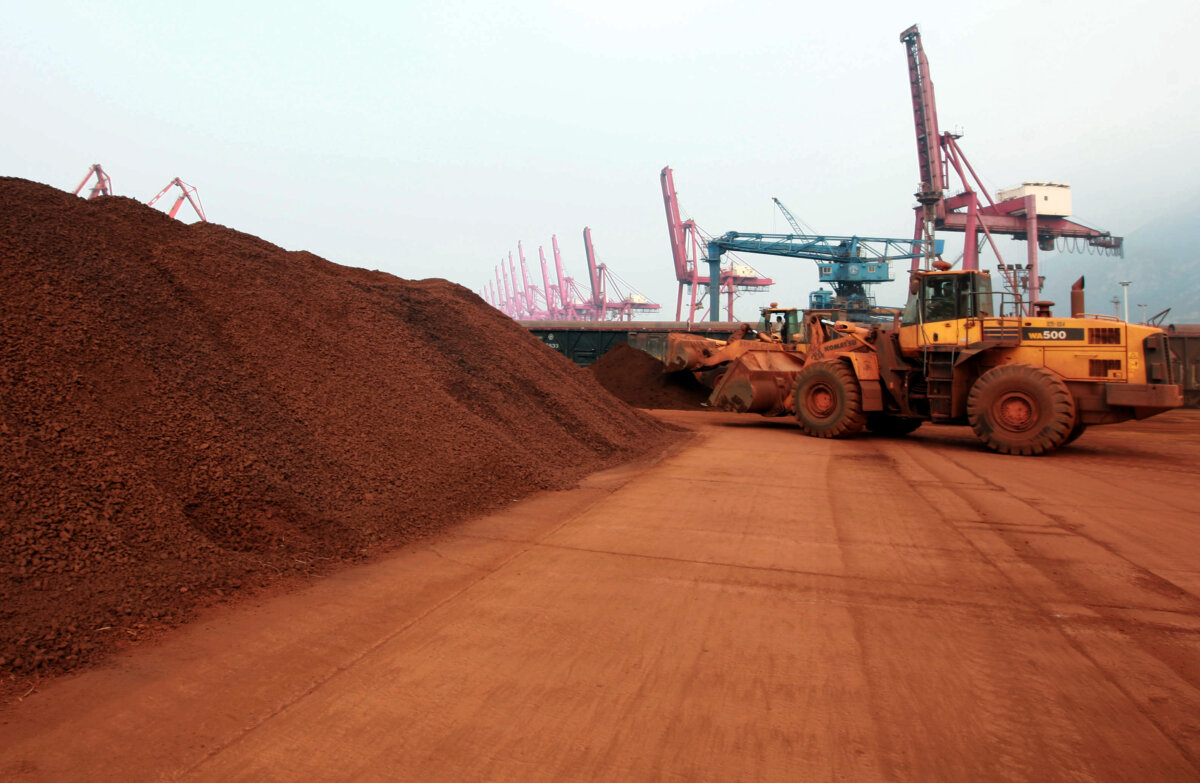
In an interview with The Epoch Times, Tim Johnson, a critical materials engineer with a decade of experience on projects worldwide, explained Beijing’s grip on rare earths. He said that “70 percent of all rare earths come from China, 90 percent are refined in China, and 100 percent of production today relies on some Chinese nexus, whether in technology, equipment, supplies, or reagents.”
Johnson is a technical adviser to REalloys, a U.S. company that recently signed a series of non-binding agreements with AltynGroup Kazakhstan to secure rare earth feedstock from Kazakhstan for processing in North America.
The arrangement is financed in part through the China and Transformational Exports Program, which was signed into law in 2019 during Trump’s first term. The program was designed to help U.S. exporters compete against state-backed Chinese companies by providing competitive financing for “transformational” sectors such as 5G, artificial intelligence, quantum computing, and renewable energy.
Company executives said the Kazakhstan partnership, combined with a $200 million Letter of Interest from the Export-Import Bank of the United States, reinforces REalloys’s strategy to build an allied, vertically integrated mine-to-magnet rare-earth supply chain serving defense, electrification, and energy-transition industries while countering China’s dominance in critical materials and advanced manufacturing.
The United States has rare-earth deposits, most notably at Mountain Pass, California, but these are dominated by light rare-earth elements. Light rare earths such as neodymium and praseodymium are used in high-strength permanent magnets for advanced weapons systems, including F-35 fighter jets, which contain roughly 920 pounds of rare-earth materials, as well as Tomahawk missiles and drone motors.
However, Johnson explained that heavy rare-earth elements are more critical for advanced defense applications, and the United States largely lacks these materials. Heavy rare earths such as dysprosium and terbium are used in small quantities but are essential for performance, allowing permanent magnets to retain magnetism at the extreme temperatures found in missile guidance systems, smart munitions, hypersonic weapons, and electronic warfare platforms. Without heavy rare earths, magnets made solely from light rare-earth elements would fail under combat heat.
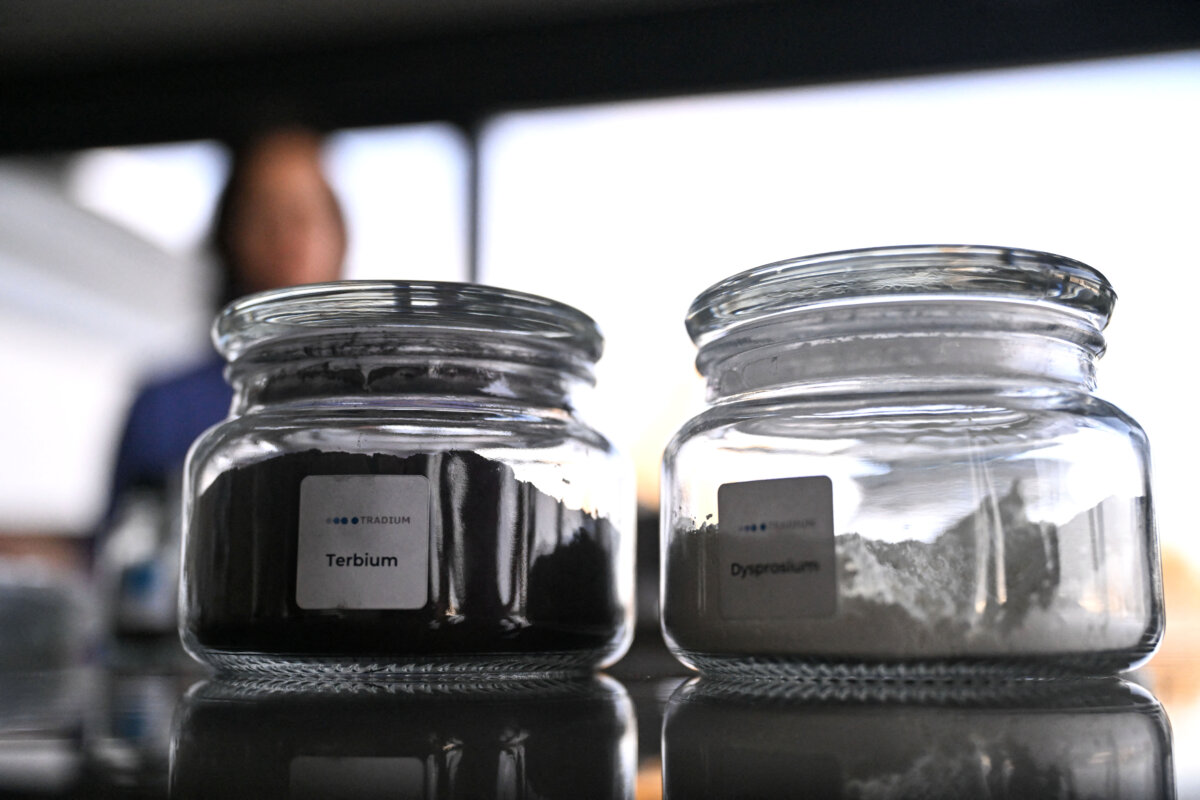
Heavy rare earths are primarily concentrated in ionic clay deposits, which are common in southern China and Burma (commonly known as Myanmar) but rare in North America. Until very recently, the United States was forced to ship its light rare-earth ore to China for processing, creating a strategic chokepoint in which the United States was effectively paying its primary adversary to refine its own critical minerals.
The partnership is intended to bring Kazakhstan’s rare-earth resources into Western supply chains by identifying producing mines, securing offtake, and refining rare-earth oxides, metals, and alloys through REalloys’s fully North American processing platform.
Johnson said the separation, refining, metallization, and magnet manufacturing will be carried out in Canada, with the final stages completed at the company’s U.S. processing facilities, including the only dedicated rare-earth metallization facility in the country, which supplies U.S. government- and defense-related agencies.
Despite skeptics who believe it would take decades to wean the United States off Chinese assistance with rare earths, Johnson is confident the model REalloys uses can be replicated by other companies to cut China completely out of the U.S. defense supply chain.
He added that the system is coming together quickly, “starting with the technology and going all the way through procurement,” with full capability expected by early next year. That timeline would allow the U.S. defense industry to source critical rare-earth materials from North American partners rather than from China.
Johnson said breaking dependence on China is difficult because Beijing has deliberately monopolized rare-earth markets for decades, leaving Western countries playing catch-up. He noted the challenge would have been far easier to address “20 or 30 years ago,” when the United States could have kept pace with China’s development.
He explained that similar challenges exist in the battery and electric vehicle sectors, though those industries face fewer immediate risks because alternatives still exist. In contrast, rare earths are particularly vulnerable. “In rare earths, there is no alternative,” Johnson said. “You can’t replace these metals with something else.”
Apart from REalloys, several other rare-earth projects are underway with direct support from, or in partnership with, the Trump administration as part of a broader effort to break China’s dominance over critical minerals.
By early 2026, U.S. policy had shifted from merely encouraging domestic production to direct government investment, financing, and strategic stockpiling. MP Materials, which operates the Mountain Pass mine in California, is the most advanced domestic producer. In July 2025, the Department of Defense took a 15 percent equity stake in the company.
USA Rare Earth is pursuing a mine-to-magnet strategy centered on the Round Top deposit in Texas. In January, the Department of Commerce approved a $1.6 billion financing framework under the CHIPS Act to accelerate development of the mine and a magnet manufacturing facility in Oklahoma, with commissioning expected to begin in early 2026.
Ucore Rare Metals is developing a heavy rare-earth processing facility in Alexandria, Louisiana, with commercial operations expected in 2026. The project is supported by federal and state partnerships and focuses on domestic separation of heavy rare earths critical to defense applications.
At the federal level, the Trump administration launched major initiatives to reinforce these efforts. This month, Project Vault established a multibillion-dollar strategic mineral reserve to stockpile materials such as dysprosium and gallium, financing the effort through a loan from the Export-Import Bank. In January, a Section 232 proclamation imposed restrictions on processed mineral imports from adversarial countries while incentivizing supply from U.S. allies.
Views expressed in this article are the opinions of the author and do not necessarily reflect the views of The Epoch Times.
 Friends Read Free
Copy
Facebook
Tweet
Friends Read Free
Copy
Facebook
Tweet