Commentary
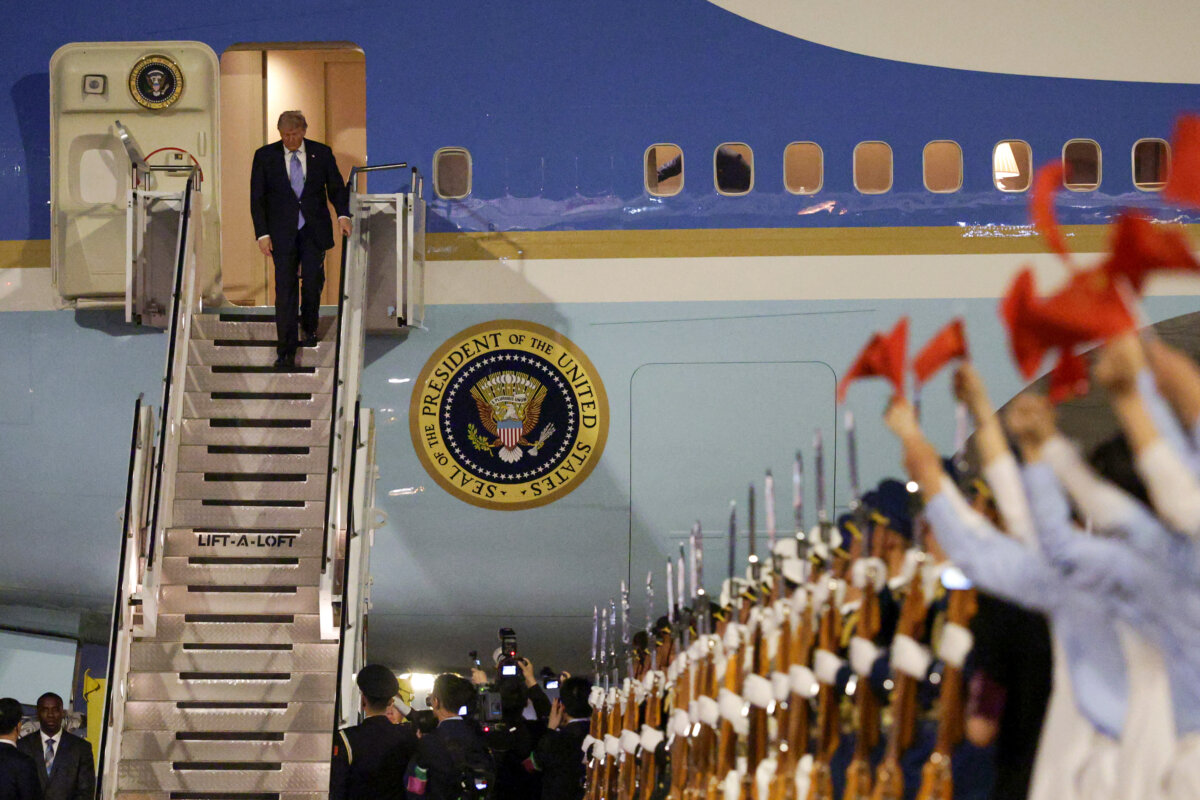
Recent direct talks between Chinese leader Xi Jinping and U.S. President Donald Trump seem to have done little to change the diplomatic and trade picture for either nation.
Both men seemed eager to reaffirm the settlement—some might call it a standoff—that they arranged late last year and that has prevailed since. The most remarkable thing to come out of this summit is the fact that these two rivals managed this reaffirmation despite the extreme tensions and disruptions emanating from the fighting in the Persian Gulf.
Usually, this column sticks to economics and leaves the diplomatic side of things alone, but this case warrants some comment on diplomacy. The two men agreed that Iran should never possess a nuclear weapon and that the Strait of Hormuz should remain open to all navigation free of interference of any kind. Trump had very much wanted Xi’s cooperation on this front. And although he would have preferred more than he got, this was the most that anyone, including Trump, could reasonably expect.
Each man acted in his government’s interests. On the second day of the summit, China’s foreign ministry put out a statement blaming the United States for starting the Iran war. The jibe was not unexpected and is purely rhetorical, with clearly zero policy implications.
Xi kicked off the summit, warning Trump against any support of self-rule for Taiwan. Trump initially failed to respond, but then recommended that Taiwan not become independent. Much was made of this as somehow a departure from past policy.
The Associated Press embarrassed itself by describing Xi as forceful and Trump as dealing in “platitudes.” Xi, of course, said nothing that he and other Chinese officials have not said for years. And Trump’s response was entirely consistent with the long-standing ambiguity of U.S. policy on the island of neither opposing Taiwanese independence nor promoting it. U.S. Secretary of State Marco Rubio reaffirmed that nothing said strayed from this long-standing policy position.
On the trade front, there was no change to speak of. Late last year, Beijing and Washington reached a standoff of sorts. Earlier in the year, Beijing had responded to Trump’s aggressive tariffs by threatening to cut off shipments of the rare-earth elements so critical to modern technology.
In October of that year, both sides agreed to an arrangement in which Washington backed off from its most severe tariffs and Beijing backed off from its threats to cut off shipments of rare-earth elements. The recent May meetings effectively reaffirmed the trade “truce” framed at their meetings late in 2025.
After the summit ended, Trump added specifics on the trade and investment agreement. Beijing, he said, promised, among other things, to buy 200 airplanes from Boeing, as well as more U.S. oil and agricultural products. Xi does not seem to have confirmed Trump’s additional comments, but neither has he refuted them. However, Xi did reassure the American businesspeople traveling with Trump that China planned to “open wider” to foreign business, a reaffirmation of many statements he has made over the past two years.
Trump had approached the meetings touting the idea that he and Xi might work toward the creation of a “board of trade” or a “board of investment,” something that could ease frictions and manage the competition between the two huge economies, especially on artificial intelligence, and do so without always having to resort to higher-level diplomacy.
As the summit ended, there was little mention of such an arrangement. That would have constituted a big disappointment for Trump, but shortly after the summit ended, China announced that it had agreed to set up the trade and investment boards.
The two men agreed to meet again, on Sept. 24, this time at the White House. Washington and Beijing may manage a more formal agreement then, although likelihoods point to just what recently happened: an extension of informal arrangements, for Xi because he has to contend with a troubled economy that does not need trade or investment troubles, and for Trump because he will still face distractions away from China. Probably the greatest chance for something more formal would emerge if the problems in the Persian Gulf were to ease by then.
Views expressed in this article are the opinions of the author and do not necessarily reflect the views of The Epoch Times.
 Friends Read Free
Copy
Facebook
Tweet
Friends Read Free
Copy
Facebook
Tweet