Commentary
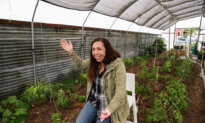
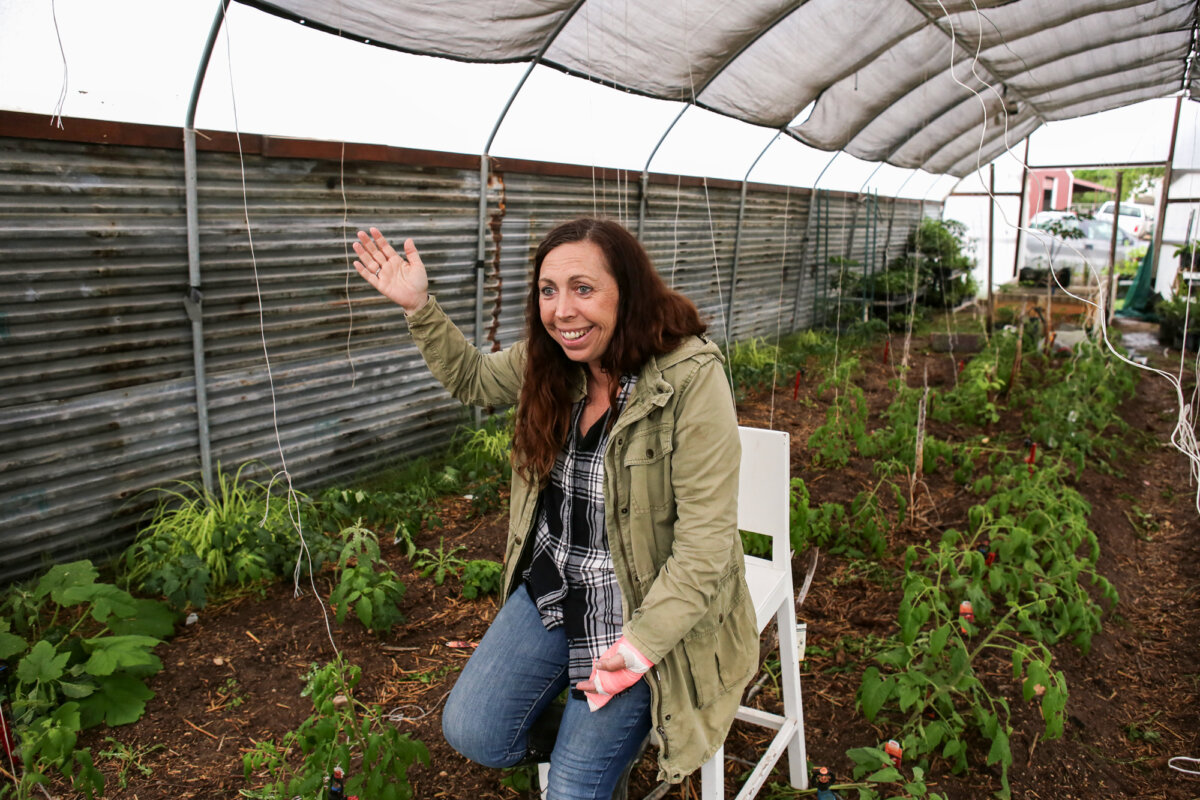
Within a few months, two glossy magazines contacted me with almost the same proposal. They wanted to profile my family, my business, and the life we are building at Sovereignty Ranch in rural Texas.
They met the same woman, saw the same children and unfinished projects, and heard the same vision. Then they published two radically different realities.
Palomino County titled its story “The Art of Belonging on Earth and the Return to What Matters.” The writer saw stewardship, community, and a family attempting to build a life in which work, food, faith, and children are not separated from one another.
Alta Journal titled its story “The Vegans Bought a Cattle Ranch.” Its subtitle described my family as a “brood” that had bet on meat and MAHA ideals. That writer saw financial struggle, political contradiction, unusual beliefs, and a haphazard ranch that might not make it.
I believe both writers came with journalistic integrity and would say they reported honestly. That is what makes the comparison interesting.
Neither story was entirely false. Neither story was complete.
We imagine bias as someone deliberately printing a lie. More often, it begins with what catches a writer’s attention, what she finds admirable or strange, which details she includes, and what meaning she assigns to them.
The Alta writer noticed a firepit containing empty Amazon boxes. Alongside a broken board, scattered toys, and signs pointing toward empty fields, the boxes created an image of disorder.
But we live in rural Texas. No one comes every morning to make our waste disappear. We sort what can be reused, hauled away, or burned. Someone accustomed to placing cardboard at the curb may see neglect. Someone managing waste on a farm sees an unfinished chore.
She saw the boxes correctly. She supplied the meaning.
She wrote that arrows pointing toward a photo booth and a toddler tent led to empty fields, implying the attractions had never been built or that we were advertising something nonexistent. In reality, both were temporary attractions for an event. Once it ended, they were removed, and I had not taken down the signs. Untidy, yes, but a very different story.
The unfinished projects are real. We are building a large family business without a large pile of money. Sovereignty Ranch did not emerge from behind a curtain on grand-opening day, perfectly landscaped and fully financed. We opened, started earning money, and continued building. The restaurant helps fund the brewery. An event may help finish a guesthouse. Sometimes, the vision moves faster than the bank account.
One writer saw incompleteness. I see construction.
I gave the Alta writer nearly unrestricted access because I live openly. I told her that when business was slow, I discussed our debt and explained why things remained unfinished. I welcomed her into my home while my children were in their pajamas. I spoke candidly about money, fasting, faith, motherhood, and failure.
I did not give her a polished public-relations tour because I believe authenticity is more interesting than polish.
In the resulting story, much of that openness became evidence against me. My willingness to admit the business was struggling helped create a portrait of desperation. My hard work became frantic hustle. The ordinary mess of building several businesses while raising four children became a state of haphazardness.
I do not think that framing was accidental. Magazine features are constructed. Writers and editors decide which details to repeat, which people to place together, and which image to use to close the story. But purposeful framing does not require malice. Her outside eyes also showed me things we should clean up, repair, or communicate more clearly.
Grace does not require me to pretend the framing was neutral. It requires me to resist the urge to construct an equally unkind portrait of her.
Alta placed me in a political constellation including RFK Jr., The Heritage Foundation, The Epoch Times, Tucker Carlson, Ye, and MAHA. Ye belongs in the ranch’s history because he helped me begin it. I have never met Tucker Carlson or identified myself as MAHA. My brother has worked within that movement, and RFK Jr. has visited the ranch, but proximity is not identity.
The article never falsely quoted me saying, “I am MAHA.” It assembled enough names and institutions around me that the classification felt self-evident.
Even the ending was a choice. My 3-year-old saw a vehicle coming up the driveway, and I said, “Maybe it’s a customer.” In the story, the line lands as a note of desperation. But every independent restaurant owner has looked toward the door and hoped the person entering wanted to eat. That is not humiliation. That is Tuesday.
I do not believe an entrepreneur should be shamed for saying a business is young or struggling. We celebrate the polished business after it succeeds, then retell its difficult beginning as an inspiring legend. While someone is actually living that beginning, we often call it foolish.
Maybe it is foolish. I am building a big, foolish project in the middle of nowhere. Noah built an ark before the rain.
There are obvious ways I could use my skills and work ethic to make more money than I make farming and operating restaurants. I have chosen the harder path because I believe there is value in it for my family, my children, and humanity. I want my children to know where food comes from, how to work beside their parents, and how to build something real.
I want to create a future different from the trajectory I see around us, one built on stewardship, local food, faith, and actual human community.
Honesty requires me to examine the Palomino County profile, too. That writer selected children milking cows, families preparing food, memories of a grandmother’s garden, and my belief that God placed us here to tend the garden. She saw my intention and did not dwell on debt, broken boards, or empty tables.
That story was framed, too. I recognized myself more easily because it emphasized what I believe Sovereignty Ranch means. My preferred story is not automatically the complete story.
Our lenses are not only red or blue. They are shaped by religion, class, geography, childhood, education, work, and loss. They are shaped by whether we have made payroll, managed our own trash, raised children inside a family business, or built something before all the money was available.
Every piece of media trains us where to look. It tells us which details represent hope and which represent failure, who seems normal and who seems strange. This does not require a conspiracy. It only requires a human being holding the camera.
Perhaps journalistic integrity does not mean having no lens. None of us can accomplish that. Perhaps it means knowing we have one, testing what it causes us to overlook, and making room for someone standing in the same place who sincerely sees something different.
If we say we want family farms, independent restaurants, local food systems, and publications willing to tell stories outside the approved narrative, we cannot support them only after they become successful and polished. We have to show up during the unfinished years. We have to subscribe, visit, buy the meal, book the room, and forgive the occasional sign that should have come down last week.
Two writers came to my ranch. Neither saw everything. Neither do I. Neither do you.
But I hope some people will see enough to help us keep building.
Views expressed in this article are the opinions of the author and do not necessarily reflect the views of The Epoch Times.
 Friends Read Free
Copy
Facebook
Tweet
Friends Read Free
Copy
Facebook
Tweet