
Commentary
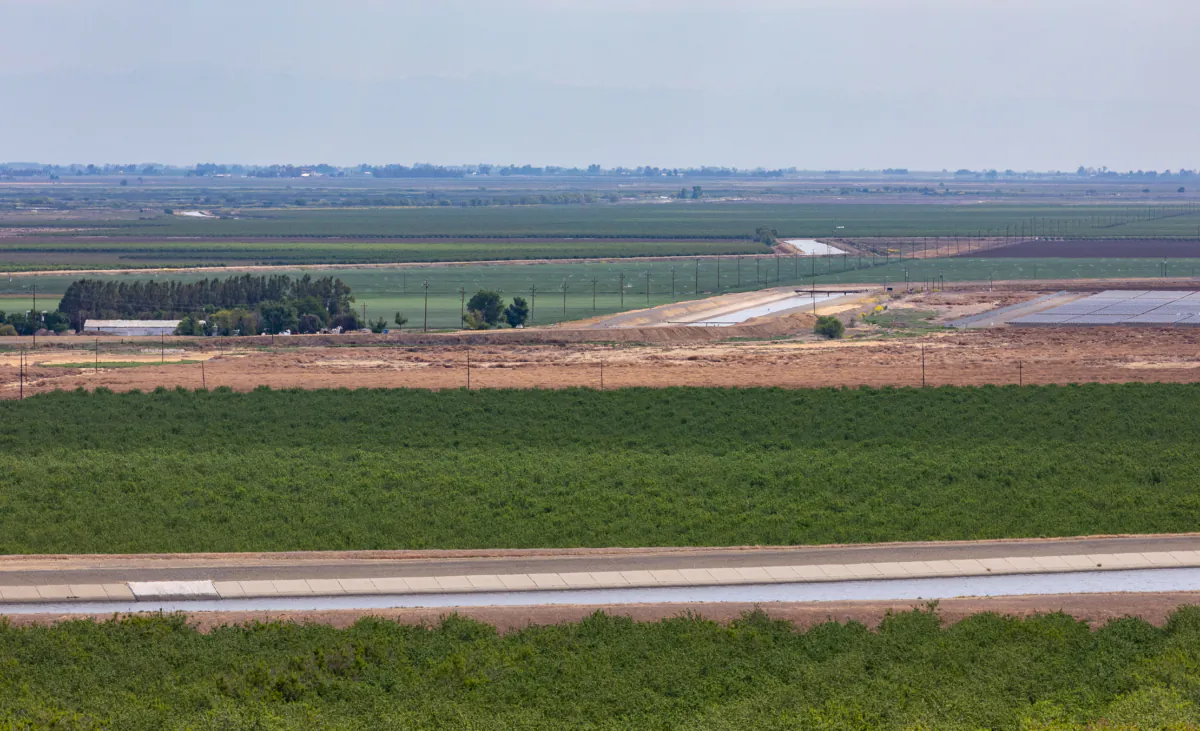
The U.S. Department of Agriculture (USDA) on July 8 launched the National Farm Security Action Plan, a landmark initiative that recognizes American agriculture as a vital component of national security. The plan aims to bolster the resilience of U.S. food and agricultural systems in the face of rising threats from foreign adversaries.
One of its most significant provisions is a nationwide ban on land purchases by entities linked to the Chinese Communist Party (CCP) and other designated “foreign adversaries.”
The plan was announced jointly by Agriculture Secretary Brooke Rollins, Defense Secretary Pete Hegseth, Attorney General Pam Bondi, and Homeland Security Secretary Kristi Noem. Senior White House adviser Peter Navarro, several governors, and members of Congress were also present, signaling broad interagency coordination.
A Strategic Threat
According to Sen. Tom Cotton (R-Ark.), citing USDA data, Chinese ownership of U.S. farmland skyrocketed from 13,720 acres in 2010 to 352,140 acres by 2020. That figure has since declined to nearly 280,000 acres in 2023, and Chinese ownership represents less than 1 percent of foreign-held farmland. However, much of it is located near key U.S. military bases, raising concerns about potential espionage and surveillance.
A June 2024 New York Post report revealed that Chinese entities owned farmland near 19 U.S. military installations. These include Fort Liberty, home to the 82nd Airborne Division and Joint Special Operations Command in Fayetteville, North Carolina, and Camp Pendleton, a Marine Corps base in San Diego.
The national security concern is real—Chinese landowners with ties to the CCP could install surveillance gear, radar systems, or infrared scanners or even deploy drones to monitor U.S. military activity.
Adam Savit of the America First Policy Institute compared this situation to placing a “permanent spy balloon” near military facilities.
Hegseth reinforced that point, stating in a July 10 press release that “foreign ownership of land near strategic bases and U.S. military installations poses a serious threat to our national security.”
Agriculture as Critical Infrastructure
The National Farm Security Action Plan goes further, designating food and agriculture as critical infrastructure vulnerable to agroterrorism. Intelligence gathered after the 9/11 terrorist attacks revealed al-Qaeda training materials explicitly focused on targeting American agriculture.
The sector’s vast open spaces, real-time supply chains, and tech-heavy systems make it an attractive target for malicious actors. Given the CCP’s doctrine of “unrestricted warfare,” such vulnerabilities can no longer be ignored, especially in the event of a conflict over Taiwan.
Alarming Cases
Two recent criminal cases highlight the pressing need for action.
On June 3, the Department of Justice charged two Chinese researchers for allegedly smuggling Fusarium graminearum, a fungus classified as a potential agroterrorism weapon. It causes head blight in major crops and produces toxins harmful to humans and animals. U.S. Attorney Jerome Gorgan Jr. said the case represented the “gravest national security concerns.”
Less than a week later, another Chinese national was arrested for allegedly smuggling biological materials into the United States and lying about her work at a University of Michigan lab.
These cases could be just the tip of the iceberg.
Legislative Action
Although overall Chinese investment in the United States has declined since 2016, farmland purchases have surged, suggesting these acquisitions may be driven by strategic motives. Growing U.S. awareness of the risk has led to a wave of legislative and regulatory responses since 2022.
In May 2023, the Treasury Department expanded the oversight authority of the Committee on Foreign Investment in the United States by broadening the definition of “military installation” and adding eight new sites to its jurisdiction. Any property transactions within 100 miles of these sites are subject to federal review.
In July 2023, the Senate passed an amendment to the 2024 National Defense Authorization Act, which bans land purchases and agricultural business deals by adversarial nations, including China, Russia, North Korea, and Iran. It restricts these entities from leasing more than 320 acres or purchasing land worth more than $5 million.
At the state level, momentum has continued to grow. According to Leonine Public Affairs, a Vermont-based lobbying and public relations company, 149 bills related to foreign ownership restrictions were introduced in 36 states and Congress in 2025. To date, 21 states have enacted laws limiting the purchase of farmland by foreign entities.
These developments demonstrate that the National Farm Security Action Plan is not an impulsive move but a timely and well-supported response to a growing national threat.
“We feed the world. We lead the world. And we’ll never let foreign adversaries control our land, our labs, or our livelihoods,” Rollins said in a July 10 press release. “This Action Plan puts America’s farmers, families, and future first—exactly where they belong.”
Views expressed in this article are the opinions of the author and do not necessarily reflect the views of The Epoch Times.
 Friends Read Free
Copy
Facebook
Tweet
Friends Read Free
Copy
Facebook
Tweet