
Commentary
In 1941, after Japan allied with Nazi Germany and fascist Italy and seized French Indochina, the United States blocked Japan’s oil imports. Japan’s military depended on these resources, and so viewed the U.S. move as an existential threat. Within months, Tokyo countered with its surprise attack on Pearl Harbor. The same could happen to China if Beijing tries to block U.S. imports of refined rare-earth elements (REEs), on which the U.S. economy and military depend.
China dominates the production of heavy REEs used in military applications, accounting for about 95 percent of global output. It has a lock on large parts of light REE production necessary for commercial applications.
While REE has a relatively small global market of less than $20 billion annually, refined REE products, including magnets and coatings, are critical to multiple strategic industrial and military applications, including in the often overlapping artificial intelligence, missile, laser, satellite, naval, semiconductor, energy, chemical, medical, and automotive sectors. All told, about $1.2 trillion of the U.S. economy is dependent upon REE.
Beijing has acted as if China’s dominance of the sector gives it an outsized lever in negotiations with the United States. The regime restricted REE exports to both the United States and Japan in an attempt to force its way on various issues, including trade, semiconductors, Taiwan, and the Senkaku Islands. As recently as before the September summit between Chinese leader Xi Jinping and U.S. President Donald Trump, Beijing decreased REE exports. China did something similar to Japan over the summer.
The Chinese Communist Party (CCP) wants to use its control of REE to force the democracies to surrender Taiwan, among other things. But the democracies have not—and will not—let Taiwan go easily. Taiwan leads the world in AI semiconductor manufacturing. The island has an annual gross domestic product of approximately $1 trillion, far exceeding the investment needed to make the democracies self-sufficient in REEs.
More importantly, if the democracies surrender one of their own to Beijing, the CCP will be in an even stronger bargaining position.
For these reasons, Beijing’s strategy will be self-defeating in the long term, as it once again demonstrates that it is an unreliable trading partner. Low investment requirements have eased China’s monopoly on REE refining over the past two decades, but will make it just as easy for the United States to reverse it in the coming decade.
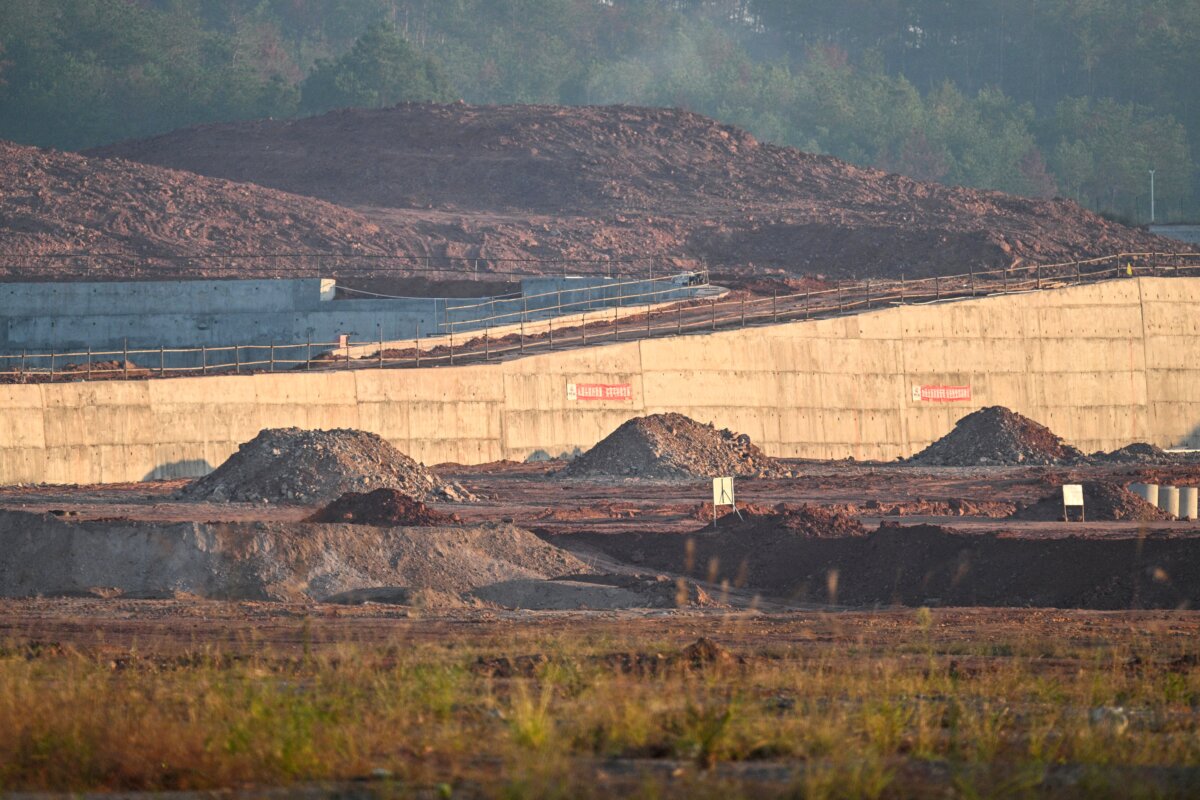
To ensure a more reliable supply of REEs, the U.S. government is investing billions of dollars in REE stockpiling, mining, refining, and production capacity. The U.S. industrial strategy now includes securing access to REE ores from democracies such as Greenland and setting price floors for some U.S. REE refining and production. Price floors will make it impossible for Beijing to dump REE at rock-bottom prices and put American refiners and producers out of business.
Despite the naysayers, the U.S. strategy is already succeeding. America is well on its way to REE self-sufficiency (along with a little help from its friends). In the mid-2000s, the United States fell from producing about one-third of the world’s rare earths to producing zero. In 2025, that number rose to about 13 percent.
Greenland was at about 69 percent, which explains the recent increase in interest in the country. Greenland has several key heavy ores, including dysprosium, terbium, and yttrium. In April, the Greenland government approved the transfer of a major mine containing these elements to a U.S. company.
In response to the CCP’s already existing restrictions, the United States is seeking a closed-loop supply chain with Europe, Japan, and other partners by 2030. Add another five years for comfort. In an emergency, the United States would seek to achieve this within as few as six to 12 months, according to the office of the U.S. Trade Representative.
Full REE self-sufficiency of the democracies can be achieved through a combination of industrial recycling, innovations that reduce the need for REE, and self-sufficiency in mining ore, refining the ore into oxides, and producing REE metals.
The price tag is small compared with the risk. U.S. government and private investments in the industry are currently in the low tens of billions of dollars. The International Energy Agency estimates that another $60 billion is required to build a fully diversified REE supply chain outside China. Compare that with the $6.5 trillion in supply chain disruptions that could result if the CCP decides to stop REE exports.
U.S. bilateral and multilateral agreements will help. A U.S.-led initiative called Pax Silica seeks to coordinate the AI supply chains of signatory countries, and AI depends upon REE. The European Union, the UK, Japan, Australia, India, and Korea, among others, have already signed or endorsed the initiative. U.S. bilateral agreements and investments further span the globe, including in Mexico, Brazil, Argentina, Uzbekistan, Madagascar, and Congo.
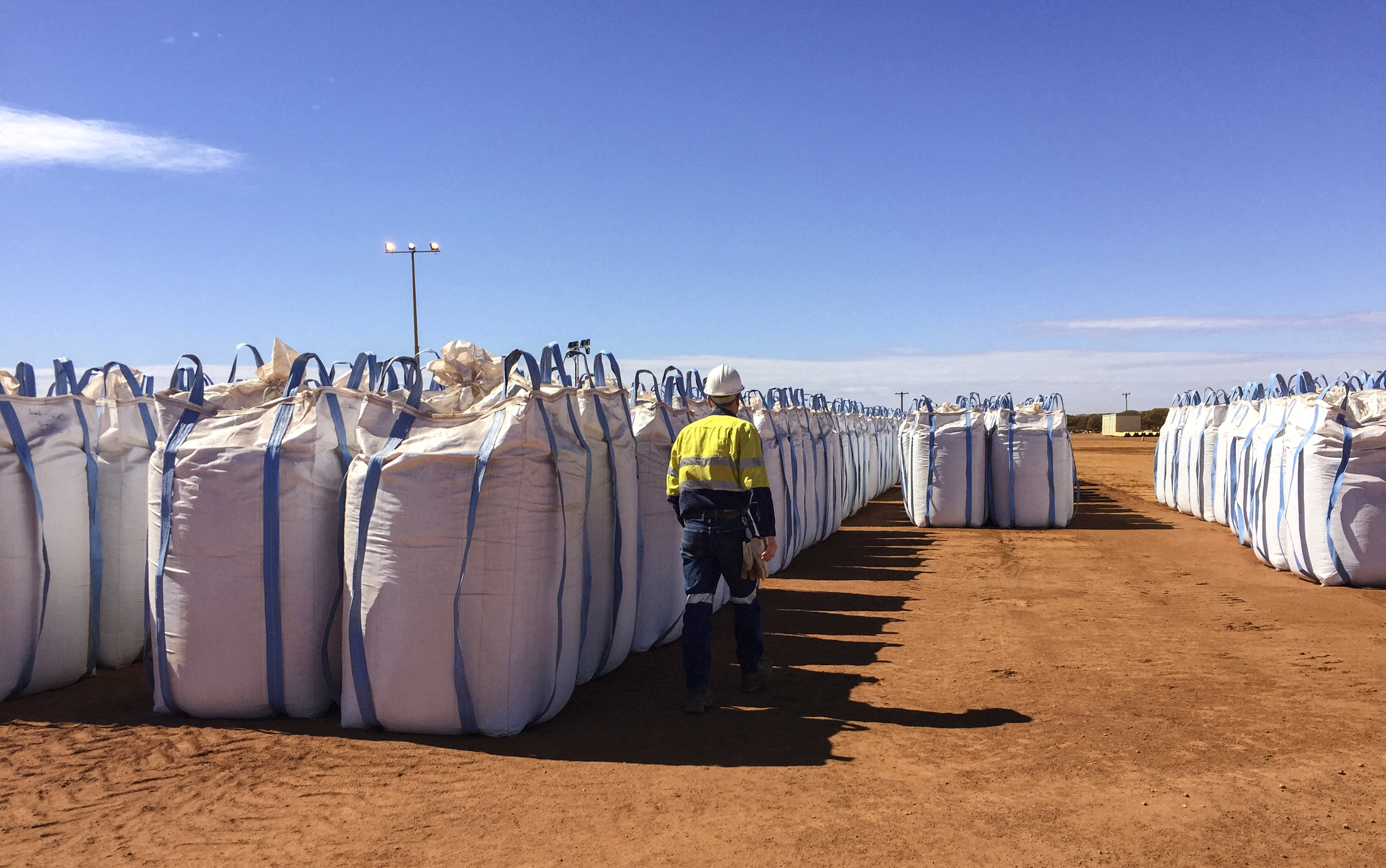 A Lynas Corp. worker walks past sacks of rare-earth concentrate awaiting shipment to Malaysia at Mount Weld, northeast of Perth, Australia, on Aug. 23, 2019. (Melanie Burton/Reuters)
Lynas, an Australian company operating in Malaysia, produced just 8 tons of dysprosium and terbium in the first quarter of 2026, compared with global demand in the thousands of tons. Lynas is the only company outside China that currently refines heavy REE at commercial scale. Both Brazil and Malaysia are associated with China’s BRICS grouping, which means that they are under significant influence from Beijing and therefore unreliable suppliers of REE.
The United States should speed the closed-loop democratic supply chain of REE ores, oxides, metals, and products. Washington should attempt to delink key REE countries from BRICS, and encourage them to join the Pax Silica. These actions will mitigate the risk of military conflict with China.
The regime in Beijing should know that, given the industrial and defense links to rare earths, China’s cutting the United States off from REEs could be a casus belli. In that unfortunate scenario, Washington may decide that military force to acquire REEs is preferable to allowing the U.S. economy or military to deteriorate. The United States and allies should never surrender their economic and military advantages to the totalitarian regime in China.
Views expressed in this article are the opinions of the author and do not necessarily reflect the views of The Epoch Times.
 Friends Read Free
Copy
Facebook
Tweet