
Commentary
There is a growing divide in this country that we do not talk about honestly enough.
It is not just political. It is not just cultural. It is structural.
The majority of Americans now live in dense urban and suburban environments, where life is shaped by proximity, services, and systems that buffer the immediate consequences of policy. A much smaller portion of the population lives on land, runs businesses, or produces the things that sustain the rest of us. These are people whose lives are directly shaped by regulation, taxation, and the physical realities of production.
The first group outnumbers the second, by design.
And in a democracy based on simple majority, that means one way of life increasingly determines the rules for another.
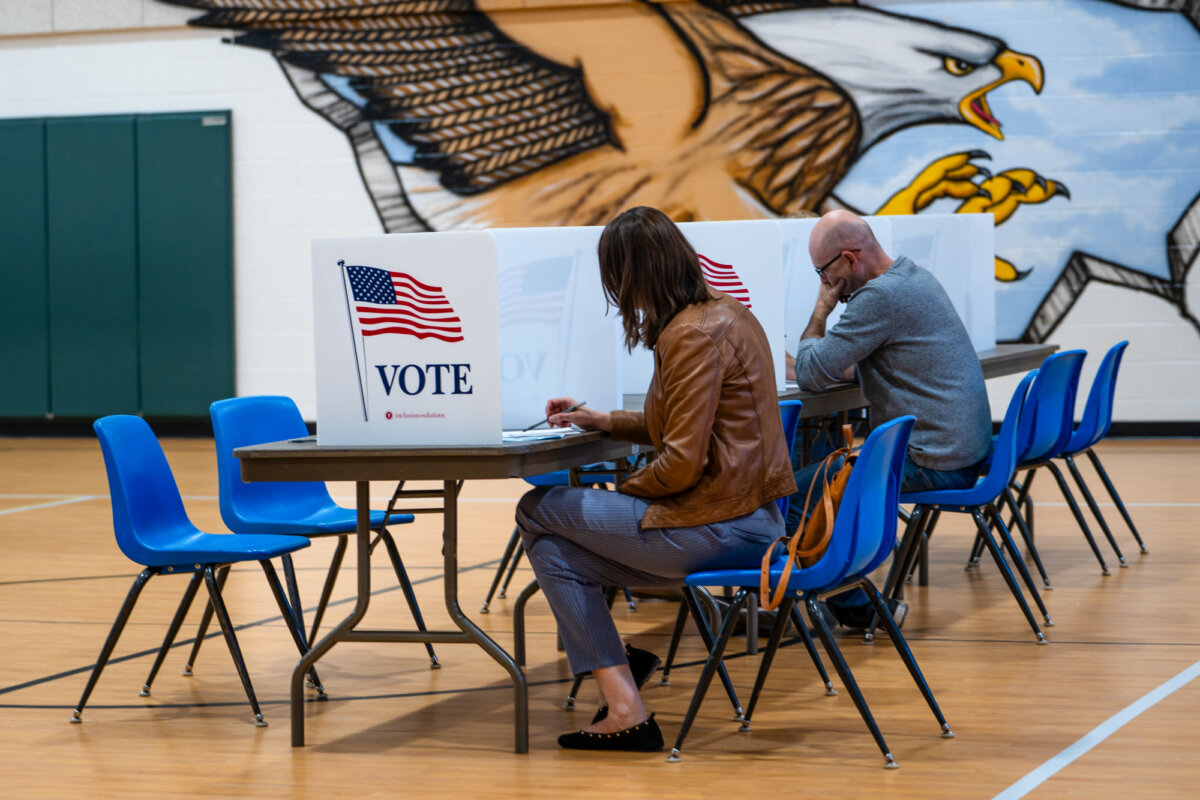
On the surface, this seems fair. One person, one vote. Equal voice.
But in practice, the consequences of those votes are not equally felt.
If you own land, you feel policy very differently. You feel it in property taxes that rise even if your income doesn’t. You feel it in water access, in zoning rules, and in environmental regulations that can determine whether your land remains productive or becomes unusable. If you run a business, you feel it in compliance costs, payroll burdens, and the slow accumulation of rules that make it harder to survive, let alone grow.
These are not theoretical concerns. They are immediate and often irreversible.
For many others, those same policies are more abstract. The cost is diffused, delayed, or absorbed somewhere else in the system. That is not criticism. It is simply the reality of how different lives interact with the same set of rules.
Which leads to an uncomfortable question.
What if voting were not entirely detached from stake?
What if the right to shape the system were tied, at least in part, to having something tangible within it to maintain, protect, and carry forward?
This is not an argument about identity. It is not about excluding people based on who they are. It is about aligning decision-making with responsibility.
The Founders wrestled with this idea. Early voting systems often required property ownership, not as a statement about human worth, but as a proxy for investment in the long-term health of the country. Ownership meant you had something to lose. It meant you were tied to outcomes beyond the moment.
Somewhere along the way, we expanded the vote without preserving that underlying principle.
Today, it is entirely possible to vote for policies that increase bureaucracy, expand spending, and place new constraints on production without personally absorbing the long-term cost. Over time, that creates a system in which decision-making drifts away from consequence.
We all understand, at a very human level, how ownership shapes behavior.
On my ranch, I see it every day. We have people who come and help, some paid, some volunteering, all well intentioned. But there is a clear difference between how people treat my equipment and how they treat something they personally own. The way someone handles a tractor they did not pay for is not the same as how they handle their own car. It is not about character. It is about accountability.
When something belongs to you, you carry the cost of how it is used. You maintain it differently. You think twice before pushing it too far. You are aware, even subconsciously, that you will be the one to deal with the consequences.
When that accountability is removed, behavior changes.
We have all seen this dynamic play out in different areas of life. The question is whether we are willing to look at it honestly in how we vote.
If a person is largely insulated from the long-term consequences of a policy, they will naturally evaluate that policy differently from how someone directly responsible for absorbing its effects will evaluate it. That is not a flaw in the person. It is a predictable outcome of human nature.
Ownership does not make someone morally better. But it does tend to make someone more accountable to reality.
And that distinction may matter more than we are willing to admit.
We see the results in the steady erosion of small businesses, in the consolidation of agriculture, and in the difficulty of owning land at all. We see it in a culture that often prioritizes short-term benefit over long-term stewardship.
What if our voting system were to reflect a different set of incentives?
What if the right to vote were tied not to gender or background, but to demonstrated stake, whether through property, business ownership, or some other long-term contribution?
This would not be easy to define, and it would be even harder to implement. In today’s system, it would likely be impossible. It would require a fundamental rethinking of what representation means and who it is meant to serve.
There are also valid concerns. What about those who have been priced out of ownership? What about people who contribute in ways not captured by property or business? These are real questions, and they deserve serious consideration.
But dismissing the conversation entirely leaves us with a system that increasingly separates power from responsibility.
At its core, this is not about taking something away from people. It is about asking whether a system where decisions can be made without bearing their consequences is sustainable over the long term.
The Founders believed that stake mattered.
We may not agree with their solution.
But it is worth asking whether they were right about the problem.
Views expressed in this article are the opinions of the author and do not necessarily reflect the views of The Epoch Times.
 Friends Read Free
Copy
Facebook
Tweet
Friends Read Free
Copy
Facebook
Tweet