
Commentary
Although the United States was a late entrant to World War I, it collaborated with its European allies to defeat an aggressive Germany. In World War II, American forces assisted European allies far more substantially in defeating Mussolini’s fascism and the Nazi war machine of the Third Reich by May 1945. It’s likely that Europe would have been rolled over by Hitler’s Wehrmacht without the help of the U.S. Armed Forces.
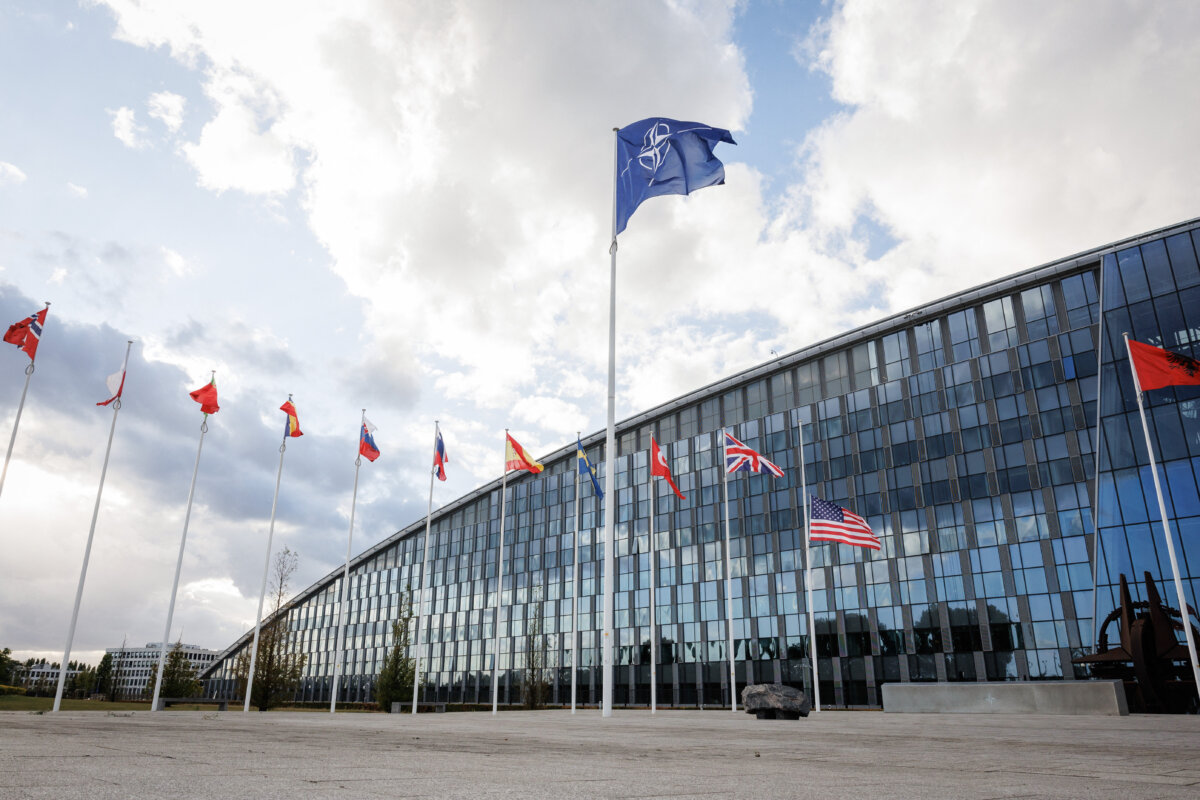
Following World War II, 12 European nations (1949) formed what is known as the North Atlantic Treaty Organization (NATO). More nations would join over several years, and now there are 32 member nations, including Canada and the United States. This treaty was formed to both deter aggressive nations and come to one another’s aid when attacked. Some favorable trade agreements flowed out of this mutual defense pact.
In addition, two years after NATO was formed, the European Coal and Steel Community emerged from the Treaty of Paris with an original six countries that desired economic cooperation. In 1957, the Treaty of Rome established the European Economic Community. By 1993, the European Economic Community, via the Maastricht Treaty, founded the common currency European Union, which now includes 27 nations.
The UK left the EU over some major disagreements in 2020. Most of the nations that are NATO members are also economically and militarily integrated into the EU. The United States has a number of military bases in some of the EU/NATO countries that were established to deter the Soviet Union.
When the conflict with Iran materialized, the Trump administration requested the use of some of these bases and permission to overfly airspace. It did not include Europe’s military platforms or troops. Major Western European allies refused this request, which was surprising in light of the fact that America has helped these nations at great expense over several decades. America isn’t supposed to shoulder most of the cost burden to sustain NATO.
Have these allies taken the United States for granted while benefiting from its security umbrella?
Aren’t defense treaties supposed to be two-way streets whereby an attack against one is an attack against all?
Iran has been striking its neighbors and free societies for decades and has developed the capability to target European cities with intercontinental ballistic missiles.
Unfortunately, our major allies in Europe spend about 2 percent or less of their gross domestic product on defense. Contrast that with about twice that amount or more spent by some allies in Eastern Europe and the Nordic region. Why do they spend more? Perhaps they realize the potential threats emanating from the Middle East and Russia.
Eastern Europe experienced the full weight under the heel of Soviet domination for decades until the dissolution of the USSR in the early 1990s. Although not fully democratic, the freedom that these states enjoy is too precious to jeopardize by underfunding national defense. Russia is at their doorstep in Ukraine, and Islamism is on the rise in parts of Europe.
Allies such as Belgium, Canada, the UK, France, the Netherlands, Italy, Germany, and Spain don’t appear to grasp the larger picture regarding their individual and collective security within NATO and its role in the global community. They fail to understand that European cities could be targeted by Iran’s long-range ballistic missiles as well as terror strikes by its surrogates. Do these nations want to remain dependent on energy supplies from a destabilizing Iranian regime or its enablers such as China and Russia?
Why are so many NATO member nations hesitant to assist Israel and the United States in their fight against an oppressive Iranian regime?
Mass migration from undemocratic countries into Europe has produced mixed results. Some of the immigrants assimilate into host countries. However, many others import supremacist views into Europe that collide with the Western values of responsible democracy, equal rights for women, and settled laws.
Some immigrant communities have created “no-go zones” similar to ghettos where police are reluctant to patrol. Are European leaders fearful of retaliation from these unassimilated groups?
If Western European governments aren’t willing to defend sound principles that have stood the test of time, what are they willing to protect?
If they can’t stand up to minority groups that subvert liberty and security and abuse social services, what does that say about their cultural principles?
What will it take for many European leaders to heed the blaring wakeup call?
Will a cutoff of energy sources from the Middle East and Russia or social uprisings get their attention?
Recently, the Iranian regime has been charging freighters and tankers a large fee to pass through the Strait of Hormuz en route to their destinations.
Using the strait as a tollbooth is a blatant violation of freedom of navigation operations under the United Nations Convention on the Law of the Sea (1994). Allies should cooperate to enforce this crucial law. The U.S. Navy is now utilizing a reverse blockade to stall Iranian ships and ports while allowing other international commercial ships to transit the strait. Hopefully, inbound and outbound traffic can move closer to normal soon.
Defending the principles of NATO requires much more than routine condemnations of rogue states’ violent aggression. It demands comprehensive capabilities to protect the time-tested values of free markets, ordered liberty, natural rights, and public safety. Western Europe should contribute a greater share of heavy lifting to bolster NATO. If they arise from their sleepwalking before it’s too late, the individual and mutual security of all member nations will be enhanced to meet emerging global threats.
Views expressed in this article are the opinions of the author and do not necessarily reflect the views of The Epoch Times.
 Friends Read Free
Copy
Facebook
Tweet
Friends Read Free
Copy
Facebook
Tweet