Commentary
The weekend was glorious thanks to a book I had long possessed but never read. It is the biography of Thomas Jefferson by Albert Jay Nock. It was published in 1926, when Nock was at the height of his literary power. His voice loomed large in American public life. The biography is brilliant. It’s not long and doesn’t follow a predictable linear path. With incredible detail on correspondence and life events, it is also focused on his ideas and the range of Jefferson’s astonishing achievements regarding human freedom, industry, aesthetics, architecture, and education.
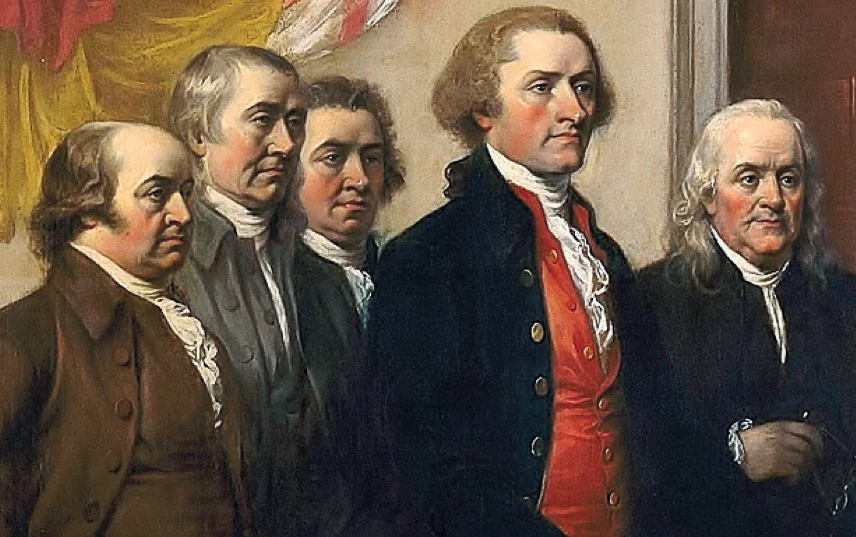
It’s impossible not to feel pride as an American that Jefferson belonged to this country. His Declaration of Independence rings out to the entire world to this day, a main template of human rights and government that continues to shape the ideals that the world holds dear. Jefferson himself was a towering intellectual with few comparisons in history, certainly a singular mind in the course of modernity. Indeed, he has shaped the structure of human life ever since he first put pen to paper.
Even as I have been in awe of Jefferson, I’m also deeply impressed by Nock himself. Even from his earliest writings through his postwar masterwork (“Memoirs of a Superfluous Man”), he never stops delighting with his style, his vocabulary, his ability to construct an argument, his radicalism, his good-sense voice, and his incredible insight. Everything in his writing is somehow understated but never shy. Once you get the hang of what he is doing, he inspires curiosity in the reader. And also respect for his depth, broadness, and sheer erudition.
A quick comment on “Memoirs”: It is the most compelling autobiography I’ve ever read that also somehow manages to say almost nothing verifiable about his life. Indeed, Nock’s own biographers have doubts whether even one word of it is true! He obtained a commission to write an autobiography of his life but seems to have rather played a trick on the publisher in delivering a manuscript that is somehow devoid of any factual detail. That said, it remains one of the most impactful books I’ve ever encountered. I recommend it to any mature man who has the intelligence and patience to take it on.
Still, the experience of reading both the biography and the biographer has left me with a serious question: Where are the intellectual giants of our times? It’s an alarming question. I’ve learned so much just from such people in the 20th century.
Pulling from a range of ideological outlooks, I would list Bertrand Russell, Nock, Garet Garrett, H.L. Mencken, John T. Flynn, John Maynard Keynes, F.A. Hayek, Joseph Schumpeter, Walter Lippman, Ludwig von Mises, Benjamin Anderson, Gottfried Haberler, Henry Hazlitt, and many more. These were all giants among men, thrilling and glorious. And among women: Rose Wilder Lane, Ayn Rand, Willa Cather, Edith Wharton, Isabel Paterson, and more.
So I’m looking at this list just from the 20th century, but if we go back a half-century earlier, we can add Lord Acton, John Henry Newman, Mark Twain, G.K. Chesterton, Ralph Waldo Emerson, Henry David Thoreau, John Stuart Mill, Harriet Beecher Stowe, and so many more.
Where are the giants today? I have a list, but it is a different one from that which I would have had six years ago. I had heroes, but strangely the COVID-19 experience ate many of them. Maybe it was a loss of knowledge of infectious disease. Maybe it was fear from departing from the norm. I’m not sure, but some of my intellectual heroes did not step up. These years have felled giants.
We are left to wonder: Where are the living, working great intellectuals of our times?
Before he died, I had the occasion to spend some days with Erik Maria Ritter von Kuehnelt-Leddihn (1909–1999). That is the closest I’ve ever come to spending time with a person educated in the old-world European system: vast historical knowledge, language facility including Greek and Latin and all European languages plus Arabic and a working knowledge of Sanskrit, deep appreciation of religious traditions, and so on. When you spoke with him, you came to realize that he carries in his mind a functioning map of the history of civilization from the ancient world to the present. There was no monarch in history about whom he did not have some fascinating anecdote, and his knowledge of ruling-class genealogy was second to none.
I recall wondering at the time: Will there be another like him? Ever? I have my doubts because the world that gave rise to intellectuals of such grand stature simply does not exist anymore.
Another possible solution to the problem I pose here is that “greatness” is often invisible in the here and now and only emerges with the test of time. After all, even someone such as Lord Acton was not that highly regarded in the years before his death. The same is true of Mark Twain, who became unfashionable in elite culture because of his passionate opposition to the Spanish–American War. Joseph Schumpeter, among my favorites, worked largely alone and without much celebration, in the decades before his death.
These days, we know that Acton, Twain, and Schumpeter are for the ages, but did we know it then? Not so much. My own mentor Murray Rothbard achieved fame in his time, but with a narrow sector of political opinion and certainly not by the broader academic community. And yet I have no doubt that his voice will ring through the ages of the future. Another figure who ranks very high is Thomas Sowell, who has contributed so much to economic and demographics.
And these cases raise other considerations. For hundreds of years, there has been a tendency to look toward academia as the home to the great minds. There are some who are still there but much has changed. Diversity, equity, and inclusion; ideologization; bureaucracy; politicized funding; and academic politics have scrubbed most research institutions of true great and fearless intellectuals.
The scientists of the Great Barrington Declaration, including other dissidents such as Dr. Scott Atlas, faced brutal censure in their own institutions and then censorship by government power in the broader culture. To see this happen to colleagues who dissent from regime priorities has a chilling effect on the whole. That said, plenty of great thinkers are still working in small private universities that put a priority on teaching. I’m thinking of places such as Hillsdale College, which remains a scene brimming with intellectual activity, research, learning, and old-world values.
Then there are the private research institutions. Sadly, most of them succumbed during the COVID-19 years, with embarrassing position papers that endorsed fake scientists and preposterous protocols, all of which raise fundamental questions about their own independence.
We founded Brownstone Institute with the main purpose of providing a home and community support for the scientists, researchers, writers, and journalists who faced brutal cancellation in those years. We are so proud today to support the work and writings of such visionary scholars as Tom Harrington, Toby Rogers, Jessica Rose, Aaron Kheriaty, Mattias Desmet, David Stockman, Gigi Foster, George Gilder, Joel Salatin, and so many others. Their output is inspiring, broad, and revealing of the themes and tempo of our times, offering analysis and a map for the future.
The giants are likely among them. And yet there is a deeper opportunity for all of us. We have at our fingertips access to tens of thousands of brilliant books right before us. No generation in history has had such opportunities. Maybe the idea of great intellectuals has been decentralized to all of us. Maybe the time is gone where we look to our geniuses to guide us. We’ve been given a tremendous literary gift from thinkers of the past. Let us use that gift.
In other words, you could be the intellectual giant we need.
Views expressed in this article are the opinions of the author and do not necessarily reflect the views of The Epoch Times.
 Friends Read Free
Copy
Facebook
Tweet
Friends Read Free
Copy
Facebook
Tweet