
This excerpt is from Eric Metaxas’s book “Revolution: The Birth of the Greatest Nation in the History of the World,” available now.
Commentary
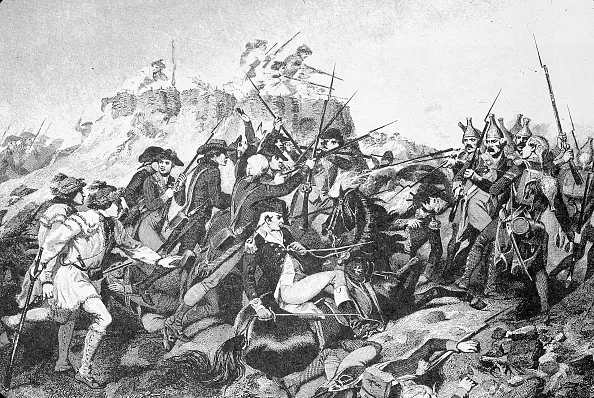
Most people know Benedict Arnold as the most despised figure in the American Revolution. His name quite literally became synonymous with “traitor,” and the hatred for him after he betrayed the Americans and George Washington almost knew no bounds. But before he turned into what we all remember him for, he was perhaps the greatest hero in the Revolution. He seemed more zealous than anyone for liberty and what many called “the sacred cause” of American Independence.
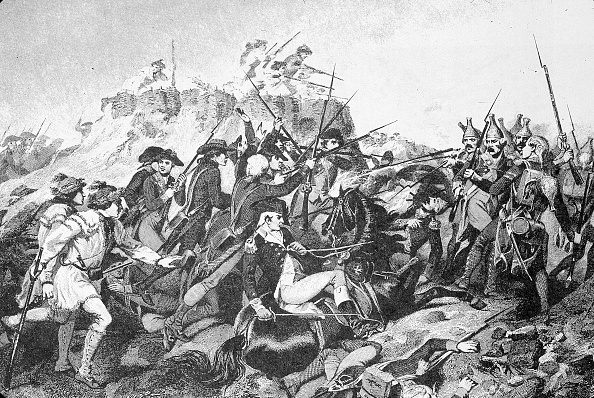
But something that he was involved in right at the beginning of the Revolution is among the strangest stories of the war. It was before he embarked on an utterly impossible trek through the harsh wilderness of Maine on his way to Canada. The hope was that the Americans could take Canada away from the British—and get Canada to join us in our rebellion against the mother country. And Arnold was the fiery leader of that ill-fated expedition.
But before they went inland through the wilds of Canada, Arnold and his 1,100 troops stopped in Newburyport, Massachusetts. It was September of 1775. Arnold and his officers and troops attended a church service in Newburyport, in the very church were the great evangelist George Whitefield had preached many times. And after the service, in which the preacher encouraged the troops about to embark on their expedition, Arnold and his other officers did something rather macabre. It was certainly theologically confusing and involved an extemporaneous ritual that can be seen as somehow simultaneously “Catholic” and “anti-Catholic.” And it involved opening the coffin of George Whitefield.
George Whitefield preached his last sermon in Newburyport in 1770 and died in the parsonage there soon afterward. Because he had preached there many times over the years, the church was considered to be a center of the Great Awakening, and Whitefield was buried in a crypt under the church’s pulpit. When Arnold and his men were in Newburyport—after the service especially inspiring sermon preached by their own chaplain, the Reverend Samuel Spring—they wanted to invoke a special blessing on their mission, which they knew would be difficult.
Spring himself told the strange story. “After the service the general officers gathered around me. Someone requested a visit to Whitefield’s tomb. The sexton was hunted up, the key procured, and we descended to his coffin.” What happened next is hard to fathom, especially today, but the “officers induced the sexton to take off the lid of the coffin.” In any case, they soon saw that the great evangelist’s body had already returned to dust. It had, after all, been five years. But Spring tells us that some “portions of his grave-clothes remained.” Of course, we must put things in context.
Whitefield was the greatest figure of the Great Awakening, and his preaching over the decades had undeniably led to the moment in which America now found itself. He had preached that we were all equal in God’s sight, and that we must therefore look directly to God, rather than look to priests as mediators. Jesus was the mediator, and we were to have a direct relationship with him. This idea was of course Reformation and Puritan theology and had led Americans to believe they could govern themselves, looking to no earthly king, but rather looking to God as the true sovereign. So that we would be in something similar to the covenant relationship that the Israelites had before they chose a king. So if there was anyone whose preaching and theology stood against the Establishment religion from which the early Massachusetts settlers had fled, it was Whitefield. And at the apex of the ritualistic and hierarchical theology would be Roman Catholicism. Nonetheless, Whitefield was as close to a saint as the Protestant Americans of New England could ever come, and the men in that crypt were awed to be standing before the moldering remains of the great figure who had in his preaching led them to this sacred moment in history. So the men in that crypt—wanting some visible and visceral token of their visit—would now essentially plunder the man’s grave for relics.
Spring remembers that Whitefield’s “collar and wristbands” were best preserved, and “were taken and carefully cut in little pieces, and divided among them.” It was as “Catholic” an act as can be imagined, and being done with the remains of the man who symbolized everything the Established churches of Europe stood against. What to make of this truly astonishing moment? Arnold and his officers—and of course Spring himself—clearly believed that in taking these tokens with them they would also take with them the blessing of the great man whose corpse they had been viewing. What would Whitefield have thought of their curious—and undeniably “Popish”—actions? We know that their intentions were to have Whitefield’s blessing. But when we consider the spectacular disaster that followed, the precise effect of their well-meaning ritual becomes impossible to know. But it happened. It’s one of the many bizarre but absolutely true stories of the American Revolution.
Views expressed in this article are the opinions of the author and do not necessarily reflect the views of The Epoch Times.
 Friends Read Free
Copy
Facebook
Tweet
Friends Read Free
Copy
Facebook
Tweet