
Commentary
On March 7, Caitlin Kalinowski—OpenAI’s head of robotics and hardware—resigned over her company’s Pentagon deal, stating that surveillance of Americans without judicial oversight, and lethal autonomy without human authorization, were lines that “deserved more deliberation than they got.”
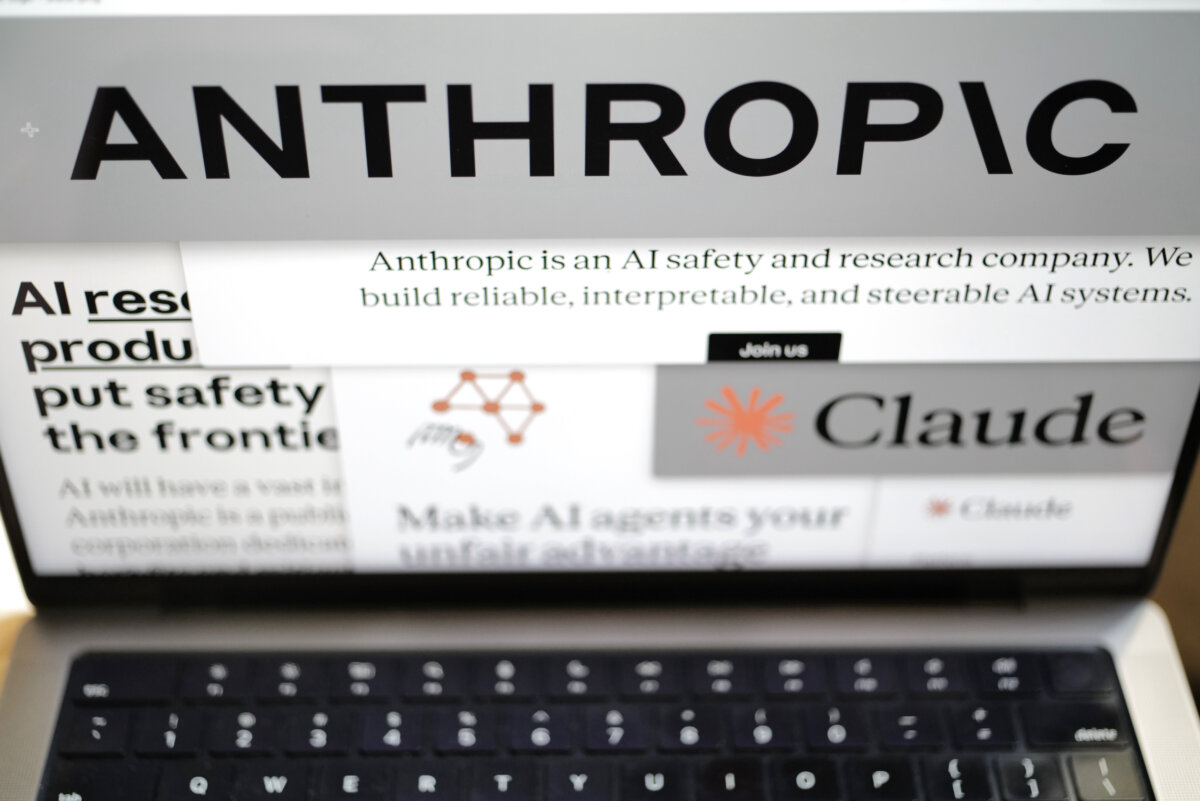
Her departure followed Microsoft, Google, and Amazon Web Services each independently issuing careful legal statements to their users that the Pentagon’s supply-chain risk designation against U.S.-based AI company Anthropic applied only to its federal contracts and would not affect access through their platforms for non-defense workloads.
The designation—the same instrument applied to Huawei and Chinese military contractors—was used, for the first time, against a domestic company. Its blast radius extended well beyond Anthropic’s federal contracts, threatening relationships with contractors, subcontractors, and enterprise clients across the economy. A six-month wind-down period would require every Pentagon contractor to certify it did not use Anthropic’s Claude AI in any workflow.
The trigger was Anthropic’s refusal to cross the same two lines Kalinowski cited in her resignation. The government’s answer was its most powerful regulatory weapon. Days later, the U.S. military used Claude during active operations in Iran—running intelligence assessments and combat simulations during the strikes.
On March 9, Anthropic filed two federal lawsuits—one in the Northern District of California, one in the D.C. Circuit Court of Appeals—challenging the designation on constitutional and statutory grounds.
The episode, as the latest resignation and platforms statements confirm, is not resolved.
The confrontation ultimately raises a broader question: Is corporate conscience a liability or a necessary safeguard in a healthy society?
When ‘Lawful’ Is No Longer a Sufficient Answer
The dispute between Anthropic and the Pentagon was not about the legality of what the government requested. No law was being broken. The two red lines Anthropic drew were not legal conclusions. They were moral ones—and the stakes of each deserve to be stated plainly.
The first concerned domestic surveillance. Your location history, purchase records, browsing patterns, and social connections are all legally purchasable from commercial data brokers. AI removes the last practical constraint on assembling them: the time, cost, and manpower that once made mass surveillance of an entire population prohibitively expensive. What required a totalitarian state apparatus in the 20th century—the systematic monitoring of every citizen’s movements, associations, and behavior—can now be accomplished with a contract and a capable model.
Anthropic’s refusal recognized a simple reality: Freedom has always depended less on what the law permits than on what the state is capable of doing. When that capability expands by an order of magnitude overnight, legal frameworks written for an earlier technological era can no longer serve as reliable guardians of the liberty they were meant to protect.
The second concerned autonomous weapons, machines that identify and kill human targets without a human decision in the chain. The objection here is not procedural. Delegating the decision to take a human life to an algorithm removes restraints that have historically limited the use of lethal force: human judgment, human hesitation, and human accountability. A soldier who fires answers to a chain of command, a legal framework, and ultimately a conscience. An autonomous system answers only to its training data and its objective function. Deployed at scale, such systems do not merely change how wars are fought. They change the threshold at which wars begin—and the scale at which violence can unfold before anyone is accountable. Anthropic’s position was that building such capability, regardless of legality, crosses a line no commercial calculation can justify crossing.
The Pentagon’s position was that lawful means lawful. That gap—between what the law permits and what the consequences of permission would be—is precisely the question Anthropic declined to let a contract resolve.
The Breakdown
The confrontation did not begin in March. On Jan. 3, the U.S. military used Claude during the Maduro capture operation in Venezuela—deployed through Anthropic’s partnership with Palantir Technologies across the Pentagon’s classified networks.
When reports emerged that Claude had been used in the Venezuela operation, an inquiry into how the deployment had occurred triggered what sources described as a rupture in Anthropic’s relationship with the Pentagon. A senior administration official told Axios that the Pentagon would be reevaluating its partnership: “Any company that would jeopardize the operational success of our warfighters in the field is one we need to reevaluate.”
Anthropic found no policy violations in the Venezuela deployment. The act of asking questions—whoever asked them—became the problem in the Pentagon’s response.
When the Iran strikes followed weeks later, the military used Claude again. The product the government could not contract with remained the product it could not do without.
The Path Most Businesses Take
OpenAI’s response to the same situation is instructive—not because it was cynical, but because it describes how most institutions navigate the tension between commercial survival and ethical constraint.
Hours after Anthropic was designated, OpenAI announced a Pentagon deal. Sam Altman stated his company held identical red lines. By the following week, those lines had moved. Altman acknowledged the deal was “definitely rushed” and “looked opportunistic and sloppy.” OpenAI renegotiated, adding domestic surveillance prohibitions that had not been in the original agreement.
Then, at the Morgan Stanley Technology Conference, Altman took a sharper position. He argued it is “bad for society” when companies abandon their commitment to the democratic process, and concluded, “The government is supposed to be more powerful than private companies.” The audience of institutional investors did not visibly dissent.
The statement is not without logic. Democratic governments do derive their authority from the people and, in that formal sense, outrank private entities. But the principle as Altman stated it contains no limiting condition—no account of what happens when governments are wrong, captured, or operating beyond the boundaries their citizens intended.
Compliance, presented as civic virtue, can be a business strategy dressed in the language of one.
Google once organized its corporate culture around a three-word standard: Don’t be evil. The phrase was eventually removed from its code of conduct—not through announced policy change, but through quiet revision. No explanation was offered. The removal was noticed mostly in retrospect.
The comfortable position for any large enterprise is to outsource the burden of conscience to the state and focus on compliance. That is a coherent strategy. It is also, historically, how the boundaries of state power tend to expand—not through the decisions of governments alone, but through the accumulated decisions of the institutions that serve them.
Conscience, however, has historically served another role in free societies: It is often the first line of defense when the law has not yet caught up to the power that technology makes possible.
What the Market Recorded
The market’s reaction suggests that corporate conscience does not always carry a commercial penalty.
Claude reached No. 1 on the Apple App Store on Feb. 28 and No. 1 on Google Play on March 3. Free users have grown more than 60 percent since January. Daily signups have tripled since November. ChatGPT uninstallations rose 295 percent on the Saturday following the designation. Claude’s servers crashed under the volume.
The institutional response was equally telling. The three largest cloud platforms reviewed the designation language independently and reached the same legal conclusion: The supply-chain risk designation does not extend to their enterprise customers. A regulatory instrument historically reserved for foreign adversaries had been turned on a domestic company—and the infrastructure that company depends on declined to treat it as one.
On the Habit of Trusting Governments
The American constitutional tradition offers protections that make the current situation categorically different from what happens when governments exercise unchecked regulatory power. Those distinctions matter enormously—and they are worth defending precisely because not every society has them to lose.
In October 2020, Jack Ma, the founder of Alibaba, delivered a speech at a Shanghai finance conference criticizing the conservative posture of Beijing’s financial regulators. Days later, Chinese authorities canceled the initial public offering of Ant Group, Ma’s fintech subsidiary. What would have been the world’s largest IPO, valued at $37 billion, was stopped without warning. Alibaba was later slapped with a $2.75 billion antitrust fine. Over the following years, hundreds of billions of dollars were erased from Alibaba’s market value. The mechanism was regulatory. The trigger was a speech.
Unlike Beijing, the American system is built for self-correction. American courts remain independent, the designation has been contested, and the public and the cloud platforms have the freedom to decline to cooperate.
Lord Acton addressed the underlying problem in an 1887 letter to Bishop Creighton. “Power tends to corrupt, and absolute power corrupts absolutely.”
Acton’s point was simple but enduring: Institutions remain healthy only when those who hold power are expected to answer to the same moral limits as everyone else.
The practical implication is not that governments are malevolent, but that they should not be extended the presumption of good faith that Acton argued historians had mistakenly granted to popes and kings. The American constitutional tradition internalized this skepticism structurally—in the separation of powers, the Bill of Rights, and the independent judiciary.
A society that outsources conscience entirely to the state—in which no private institution retains the capacity to say no and pay a survivable cost for it—is not a stronger society for having streamlined the arrangement. It is a more brittle one.
Altman is right that governments are generally more powerful than private companies. What that observation does not settle is whether governments should also be the sole custodians of conscience in their dealings with those companies. On that question, the American tradition has always had a different answer.
Holding the Line for the Rest of Us
What Anthropic did was hold a position that benefits the public while the public had no direct means of holding it themselves.
In that sense, the company held the line not only for itself but for others who may one day face the same demand—businesses, institutions, and individuals whose ability to say no depends on whether such refusals remain survivable.
The surveillance architecture the Pentagon sought to build will not vanish because of one refusal. But what Anthropic’s decision produced is something more modest and perhaps more important: a public record.
A line was drawn. A reason was given. A cost was accepted. And others—a resigning executive, protesting engineers, millions of users—showed that conscience is rarely alone.
And the larger principle may be even simpler: A healthy society depends on individual persons, corporations, and institutions capable of holding their red lines when conscience requires it.
Views expressed in this article are the opinions of the author and do not necessarily reflect the views of The Epoch Times.
 Friends Read Free
Copy
Facebook
Tweet
Friends Read Free
Copy
Facebook
Tweet