
Commentary
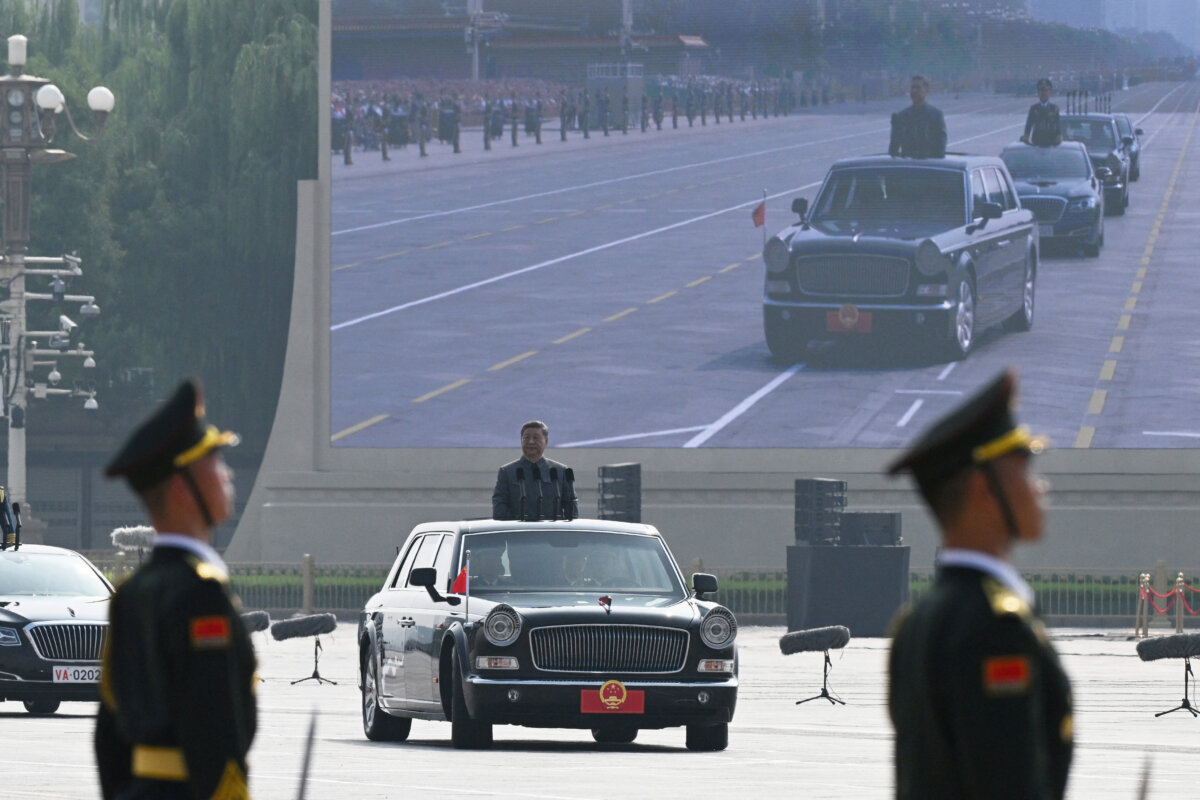
The failure of governments around the world to recognize the inevitability of Chinese Communist Party (CCP) leader Xi Jinping’s unsuitability, even for his own country, as a national leader—his lack of wisdom, disguised, perhaps deliberately, by ruthlessness—is at the heart of the strategic problems of the People’s Republic of China (PRC).
These became global problems and a disaster for the Chinese people.
And the Xi issue is but one of countless occasions in which wisdom has been missing in leadership, and unwise paths have been allowed to be followed. Every nation-state has produced such examples of low-wisdom leadership.
George Bernard Shaw, in his 1919 play, “Heartbreak House,” noted: “Old men are dangerous: it doesn’t matter to them what is going to happen to the world.”
This was a sober reminder that cynicism and apathy—often products of older age—can be as dangerous as the smugness and ignorance of youth in shaping national policy. It reminds us that wisdom, like intelligence, is not defined by any real constant indicators.
Is wisdom defined as the absence of the “dangerous” traits of old men, and only recognized in the “positive” traits of senior citizens? And how do we define positive?
Is wisdom, perhaps, best in part described as the gradual removal of the inevitable or original bias in each of us toward our homeland or home society, among other things, and a recognition of the validity of a logic that removes “local bias” without necessarily removing “local loyalty”?
To be fair, we really have not yet fully described “wisdom” to everyone’s satisfaction, preferring to describe it as something which “we know when we see it.” But we know a combination of intellect and experience shapes it. The more visceral a particular experience, the more it shapes—or mis-shapes—wisdom.
It is a challenge, then, to ensure that wisdom, which we can recognize in part as the lessons learned through life, does not become shaped by bitterness and negativity. Indeed, wisdom, like intelligence, can be moved toward positivism or negativism: excessive caution or excessive optimism, based on the events that have seared themselves into the individual experience, or acquired indirectly by broader exposure to history. Better, of course, for wisdom to emerge on the positive side of the ledger, to allow optimism to be coupled with that acquired learning and ensure that risks continue to be taken, tempered by the reality of learning.
The effects of wisdom on strategic decision-making can generally be ascertained by reviewing the track record of experienced officials’ or observers’ judgments on key issues, and whether their experience reflects a more holistic and less emotional approach to the subject under review, or whether their views are merely a repetition of career-long beliefs.
For younger or less experienced officials, the tendency is to respect and follow the decisiveness of leadership, particularly if it reinforces commonly-held beliefs, minimizing the need for introspection or questioning. How do we recognize when leadership has taken account of wise counsel? How do we choose our mentors wisely? In other words, how can we have the wisdom to recognize wisdom?
Does true leadership disguise a leader’s constant internal questioning of his/her own capabilities as well as of the strategic context?
Those in the intelligence community have long used the phrase that their mission is to “speak truth to power,” but then, what is “truth”? If we wish to “speak wisdom to power,” how do we temper “intelligence”—that is, the product of an intelligence service—with wisdom? How do we define and present “truth” in such a way that it reflects the context that determines what “truth” means?
Truth without context is as dangerous to policy as old men who have not acquired wisdom.
We have seen that governments and policymakers have risen to office without having had the experience necessary to shape wisdom. We see that in officials who have never faced the issues that challenge those in “the real world.” How often do we see modern and shallow concepts of “democracy,” which often ignore the more fundamental ethoses (or ethe) of lasting social contracts, encourage uninformed electorates to be wooed to elect unwise politicians?
How often do we see formal career paths in bureaucracies, including the military, continue to promote individuals beyond the level of their capabilities (the Peter principle)?
And, in seeing that, what can an individual do about the distortion of good practice? How can reason interrupt the path of unreasonable ambition?
Perhaps, in the current context, we can see—particularly in hindsight—the fact that Xi has hardly, since taking office in 2012, made a decision that has been in his own long-term interest, the interest of the CCP, or the interest of “China” as a geopolitical entity.
By 2025, that recognition had spread through much of China and the CCP, and the Communist Party was attempting remedial steps. But a failure in 2012 to recognize or question the logic of Xi’s suitability for his task—such as to lead the PRC and not to satisfy the country’s competitors, adversaries, or anyone else—was a root cause of a global crisis.
But where does this argument lead us? How can we benefit from reflective views?
Over the past six decades-plus of strategic analysis, I have found that my perspective is guided more by questions than by answers. I have an increasing number of questions, and they shape my views more than clear answers. Clear answers, in fact, are for dampening dinner party debates. The questions only move us further into the labyrinth of increasingly more precise questions.
It is in the questions that we find wisdom, not the answers.
Views expressed in this article are the opinions of the author and do not necessarily reflect the views of The Epoch Times.
 Friends Read Free
Copy
Facebook
Tweet
Friends Read Free
Copy
Facebook
Tweet