
Commentary
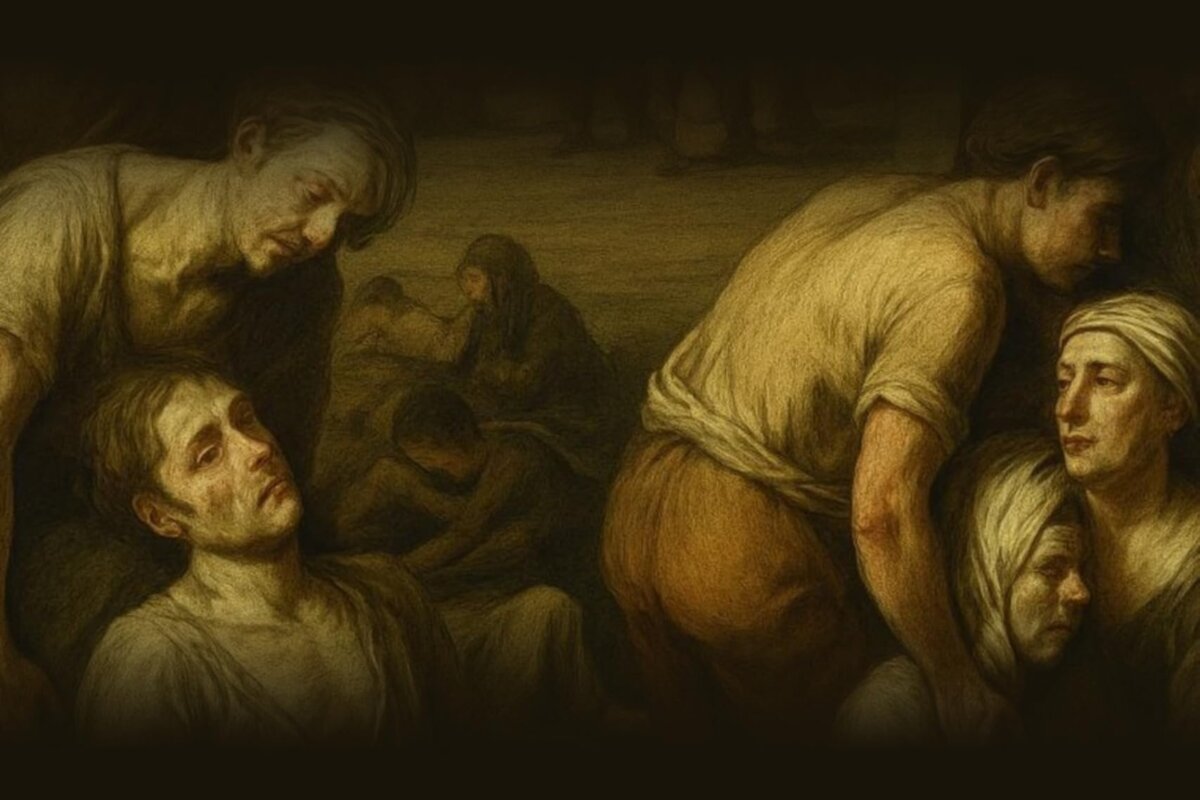
I’ve learned something about myself and perhaps about the human brain this past week. I can only describe what I learned as profoundly impactful at all levels: philosophical, spiritual, psychological, and physical. It can only compare to the feeling of post-traumatic stress disorder one might experience on the battlefield.
Vicarious PTSD: who knew?
I had been sent a very large document of small stories written by regular people of their COVID shot injuries. They were logged at the Centers for Disease Control and Prevention as part of their V-safe electronic reporting system that began in December 2020. More than 10 million people signed up to report any safety issues with the shot. The CDC said they would give a call back to people who are harmed and work through the problem.
Floods of reports arrived. Most were in the form of a check box. But thousands also filled out a free form text book which permitted people to tell their stories. People did this repeatedly, chronicling accelerating physical and mental decline, until they gave up or died. This is the source of the text I read. They were put in a vault and ignored by the CDC for years. The agency finally coughed them up once a federal judge forced their release.
The result is a book called “Cries for Help: Injury and Death Buried in V-Safe Data.” You can also download the full book for free, though if you get the physical, you can hand it on to your doctor or friends. We only have this document because the Informed Consent Action Network pushed the FOIA, a federal judge intervened, and the organization React19 did a careful audit. Brownstone Institute became the publisher.
As publisher, I was forced to confront an issue I suspect I have avoided for years. Partially as a penance for my negligence of the topic, but mainly to give these suffering souls a voice they hoped they had but were never given, I set out to do a live reading. My plan was to read live on X for two hours each day until all 1,048 pages were complete. Based on my pace, I knew it would take at least 50 hours. I calculated that I could finish by All Souls’ Day November 2, 2026.
People warned me not to attempt this, that it would be too soul crushing. My thought was that these are just words, I can read, it’s the reality we must confront, and it’s just time. I would read the book with focus and discipline. What could go wrong? I’m surely strong enough. I can face the truth like a man.
The first four days were grueling because I began to recognize the patterns of poisoning. The first entry would indicate a symptom, e.g. pressure in the ears. I began to notice where this was going: ringing in the ears, migraines, memory loss, depression, all before it moves to the back, skin, extremities, and finally lands in the heart and lungs, ending in total physical breakdown. Each report is slightly different but the patterns are striking.
Meanwhile, they tell stories of being unable to dress themselves, lethargy, stopping work, unable to drive, and financial hardship. If they made it to the primary care physician, the result was often the same. The doctor did not know how to explain this so he would prescribe a drug and refer the patient to a specialist. The tests would come and go and the bills would arrive, sometimes in the tens of thousands. The patient runs out of money as symptoms get worse. All the while, the person begs for a callback. It never comes.
This is not just a few cases but thousands, one after another, each different but each similar.
Keep in mind that the people writing were enthusiastic believers in the vaccine. They signed up for the system. They happily marched to the vaccination clinics. They were grateful to the CDC for keeping them safe. They wore masks. Many were terrified of getting COVID. Many had partisan biases against Trump and felt a tribal attachment to public-health demands to which they happily complied.
As a result, what we find in these thousands of small stories is a loss of distrust and a gradual realization that they have been deceived. It is extremely difficult to see this unfold not just once but thousands of times. Over and over and over. It gets to you eventually as you read. It’s not just about showing how completely wrong the public health advice was. What’s horrifying to read is the way lives were falling apart, one by one, in methods that ripped apart families and communities.
The V-safe program seemed innovative at the time. It was a way for real people to report their own authentic experiences. The program was coded by the company Oracle and it did seem rather brilliant even if the check boxes did not include what turned out to be the main adverse effect of the shot: myocarditis and pericarditis. Nor was the system prepared to log the sheer volume of death.
It often happened that the vaccinated had died from the shot. A spouse or son or daughter would check the email and respond that the person died. But because there was no trigger in the program to stop sending emails and because no one was actually reading them, there was no way to stop the check-ins. People kept saying over and over that the person died. They would scream it. No one was listening.
Another factor to consider: the person on the receiving end had to be well enough to check email and to respond to the survey. Those who were too injured to do so simply stopped checking email and responding entirely. It is arguable, then, that they were looking at the least-bad among the cases.
I set out to read all thousand-plus pages. After about 200, the sadness and pain began to weigh on me. I realized that it would not be possible to complete the task. It was too upsetting. I might still go back to it, get as far as I can, but taking a break is necessary. After my 10th hour, I could only sit and weep. The weeping kept coming back for several hours. That’s when I realized that the injury of others was injuring me as well.
As I think more about this, I’m coming to the realization that this document might be singular in history. We’ve never held such an extensive and granular autobiographical accounting of human suffering and personal betrayal in this form, literally the most horrifying piece of nonfiction ever assembled.
I’ve read Solzhenitsyn’s “Gulag Archipelago” and it is a masterpiece but it is one account. This is thousands of accounts of private torture and pain, experienced in extreme isolation, not in a prison camp but alone in a living room or bedroom. It happened all over the country and in your own town.
We cannot turn away from this. We cannot avert our eyes. I’ve read only one-fifth and still feel a burden of guilt for not having read more. I know I should not but I implore you to read and share with others. These are our friends, neighbors, fellow citizens, family members. These are their stories. They wrote to be heard. You can do your part in giving them voice.
Will there ever be justice for this? I’m not sure what that looks like. These lives cannot be brought back. Their legs, skin, brains, internal organs cannot be repaired and restored as good as they were before the poisons were introduced. We just have to accept it as a tragedy, one forced on millions. But acceptance is far better than averting our gaze and living in unknowingness.
Sometimes learning the right lessons from the stream of life requires grappling with horrifying levels of human suffering. I wish it were otherwise but this event did occur in our own country and to our own people. They deserve attention—and tears and a comforting hand—if nothing else.
Views expressed in this article are the opinions of the author and do not necessarily reflect the views of The Epoch Times.
 Friends Read Free
Copy
Facebook
Tweet
Friends Read Free
Copy
Facebook
Tweet