The Tiananmen student protest and massacre is still a censored topic in mainland China. Estimates of the death toll vary, ranging from hundreds to thousands.
However, in response to the second request, the chatbot said it could not generate images or visual content and referred to a "sensitive political context like the Tiananmen Square protests."
He has already been convicted of numerous other charges, such as lighting a candle to commemorate victims of the Tiananmen Square massacre. For that alone, he was sentenced to 14 months.
Apple Daily was shut down by the authorities in 2021.
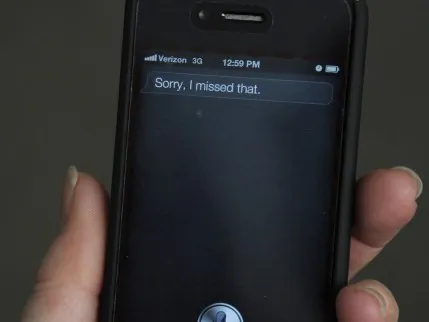
When you ask Siri about the Tiananmen Square massacre, the program replies in Mandarin: "I didn't find an appointment about Tiananmen Square," according to Want China News.
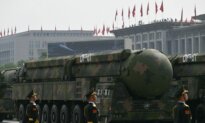
A CS-5000T drone during a military parade marking the 80th anniversary of victory over Japan and the end of World War II, in Beijing's Tiananmen Square on Sept 3, 2025.
Xi and Kim Jong Un last met in September 2025 in Beijing, where the CCP leader presided over a grand military parade in Tiananmen Square to mark the 80th anniversary of Japan’s surrender in World War II.
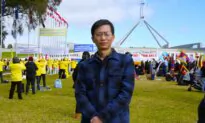
Senior Chinese diplomat Chen Yonglin (C) asks for political asylum in Australia during a rally marking the 16th anniversary of the Tiananmen Square massacre, in Sydney, 04 June 2005.
A secret British diplomatic cable alleged that at least 10,000 people were killed in Tiananmen Square, and thousands were wounded, arrested, jailed, and tortured.
Witnessing the Truth of the Tiananmen Self-Immolation
Eyewitness Testimony That the "Tiananmen Self-Immolation" Was a Hoax
An Account about the Staged Self-Immolation Event in Tiananmen Square by a Neighbor of Victim Ms.
Normally, the surveillance camera in Tiananmen Square covers a fixed area. But on this particular day, the camera follows the police to the scene and zooms in to focus on the incident.
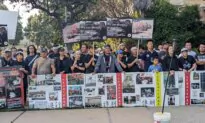
“Gao Zhisheng is a voice of conscience and a symbol of moral courage in the face of injustice,” said event host Feng Congde, who was a student leader and survivor of the 1989 Tiananmen Square massacre.
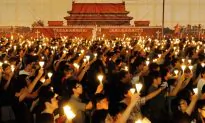
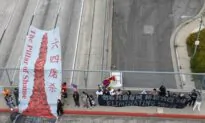
On June 4, 1989, China's communist regime ordered its troops to open fire on student protesters and unarmed civilians at Tiananmen Square in China's capital.
Kirkland added that while in Beijing, she also had a chance to visit Tiananmen Square and was reminded of the Chinese Communist Party's tragic massacre of students demanding democracy in 1989.
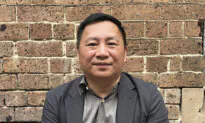
Wang was one of the main student leaders during the Tiananmen Square protest. He was later sentenced to prison for his role in the movement and went into exile in the United States in 1998.
The criticisms focus on the recent conviction of 14 political dissidents by CCP authorities, and come in the wake of recent CCP suppression in Hong Kong about discussions on the history of the Tiananmen Square massacre.
“That optimism was crushed just five years later in the wake of the 1989 Tiananmen Square Massacre, where hundreds if not thousands of students and pro-reform activists were killed,” the letter stated.
On Sept. 3, thousands of troops and advanced weapons paraded through Tiananmen Square, in what was seen as an effort to stoke nationalist sentiment amid economic strains and rising tensions with the United States and its allies.
In Liu’s case, she and her father, Arthur Liu, who fled China in the 1990s because of his involvement in the 1989 Tiananmen Square pro-democracy protests, rejected China’s recruitment attempts.
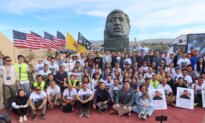
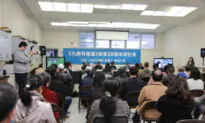
Fang Zheng, president of the Chinese Democratic Education Foundation and a survivor of the Tiananmen Square Massacre, described the "Nine Commentaries" as a "heavenly book."
That hope, the House lawmakers noted, was “crushed” by the 1989 Tiananmen Square massacre. Continuing the agreement, they argued, would be “at odds with American values” and would legitimize “a regime actively working against those principles.”
It surpasses the purge following the 1989 Tiananmen Square massacre, when Beijing ousted Zhao Ziyang, then-general secretary, along with another Politburo member who showed sympathy for pro-democracy student protesters.
The CCP had learned from the 1989 Tiananmen Square massacre how to better conceal its attacks on Chinese citizens, force submission, and demonise a group it wants to eradicate.