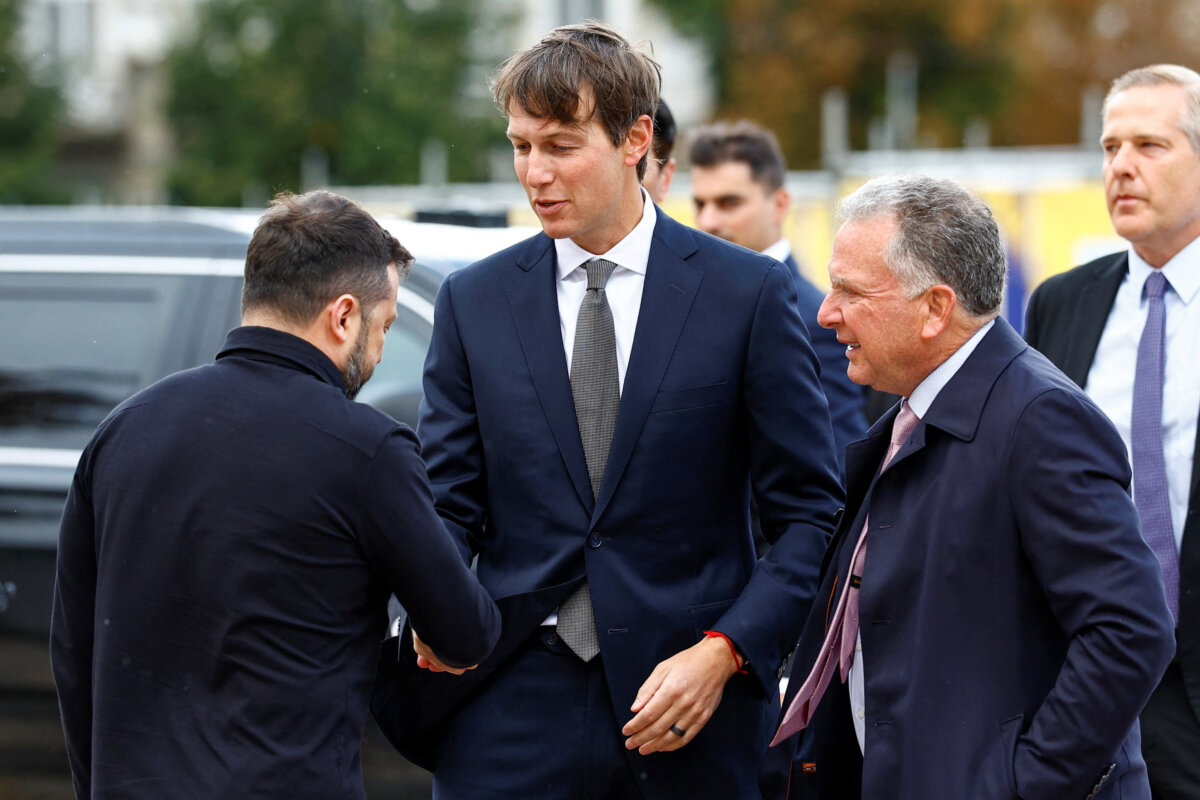

U.S. envoys Steve Witkoff and Jared Kushner hope to schedule another round of U.S.-mediated peace negotiations after they held separate meetings with Ukrainian President Volodymyr Zelenskyy and Russian President Vladimir Putin over the weekend.
The high-profile talks prompted both Kyiv and Moscow to agree to a three-day pause on strikes on the countries’ capital cities to ensure that the Trump administration’s envoys were able to safety travel across the region as they pushed to end the conflict.
It doesn’t appear that a breakthrough to end the years-long war was reached during the recent round of talks, but Witkoff told reporters in Kyiv that he was “very encouraged” by the conversations.
“We made a lot of progress in Moscow,” Witkoff said.
Zelenskyy said on Sept. 6 that they had three rounds of “very substantive” negotiations.
“Thank you for devoting sufficient attention today to the winter period and all the challenges that may arise,” Zelenskyy wrote in an X post.
“We hope that we will be able to reach arrangements with our American partners in this domain, and we hope for the support of European partners.”
Zelenskyy suggested that if the war lasts into the winter, his country is “heavily counting” on a plan to support Ukraine, including support for air defense and the energy sector and substantial volumes of American liquefied natural gas.
The Ukrainian president stated that the “territorial issue” has still not been resolved and said more needs to be agreed upon.
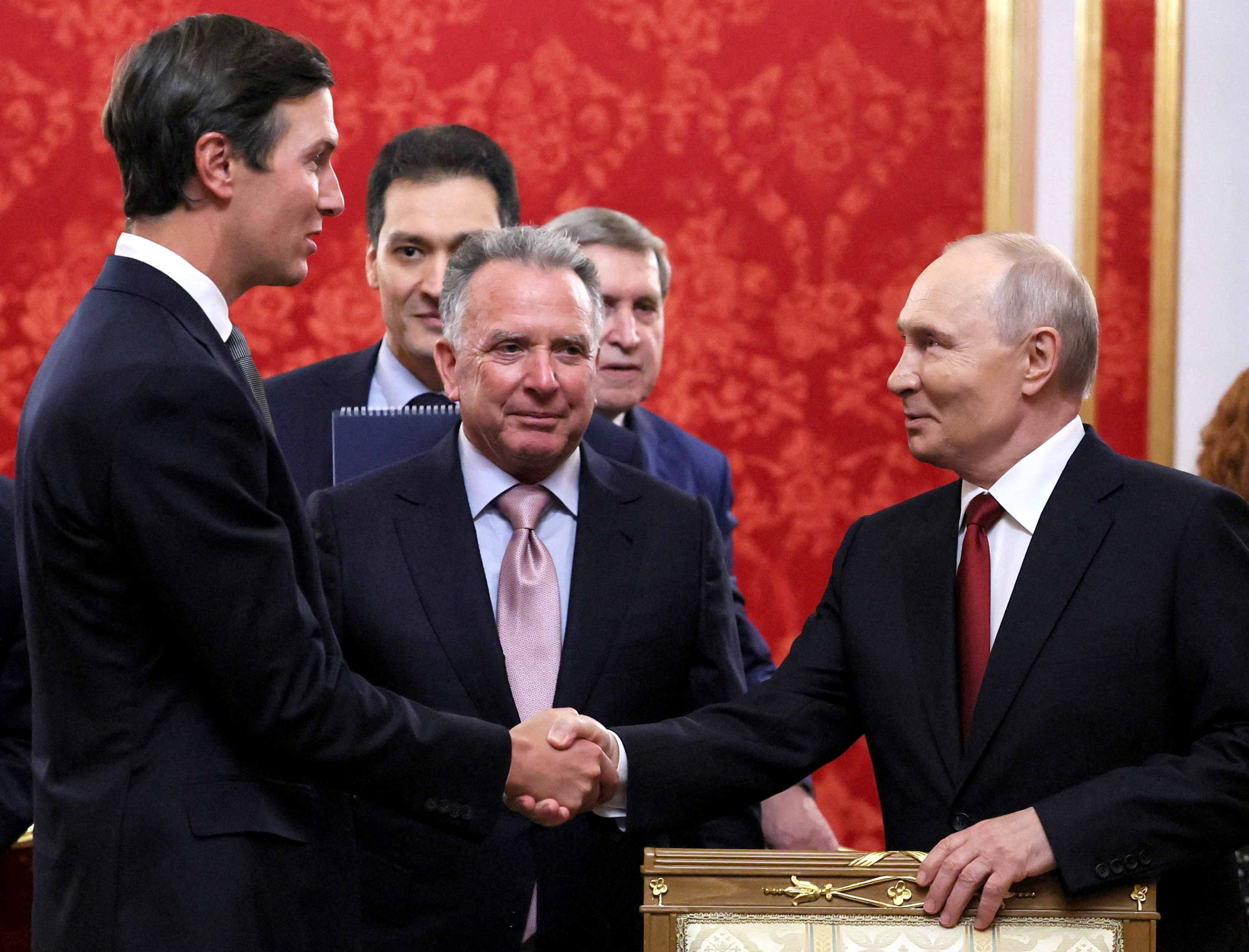 Russian President Vladimir Putin shakes hands with Jared Kushner, U.S. President Donald Trump’s son-in-law, as U.S. special envoy Steve Witkoff stands nearby during a meeting at the Kremlin in Moscow on Sept. 5, 2026. (Sputnik/Mikhail Metzel/Pool via Reuters)
“We are talking not only about security guarantees, but also about economic guarantees for Ukraine—to recover and rebuild. We all understand the challenges that lie ahead once the war ends, and we are discussing them among ourselves.”
The Ukrainian leader echoed Witkoff’s hopes for another meeting, noting that it was important that leaders from other European countries join in on the negotiations.
“We agreed that Ukraine, Europe, and the United States will meet in the near future,” Zelenskyy added.
Ahead of the Sept. 6 meeting, Zelenskyy said Ukraine wanted the meetings with the U.S. delegation to be constructive and focused on identifying realistic ways to end the war.
“We will see what proposals Steve and Jared bring and what they are told in Moscow in response,” he said.
The U.S. talks with Ukraine took place on the heels of talks with Putin in Moscow on Sept. 5 that lasted for more than three hours and that Putin called “highly useful.”
After the talks, Putin thanked U.S. President Donald Trump for continuing to pursue a settlement despite what he described as a difficult situation.
“While he understands that he’s entering a difficult situation overall, he’s not stopping his efforts to resolve and contribute to the resolution of the Russian-Ukrainian conflict,” Putin said.
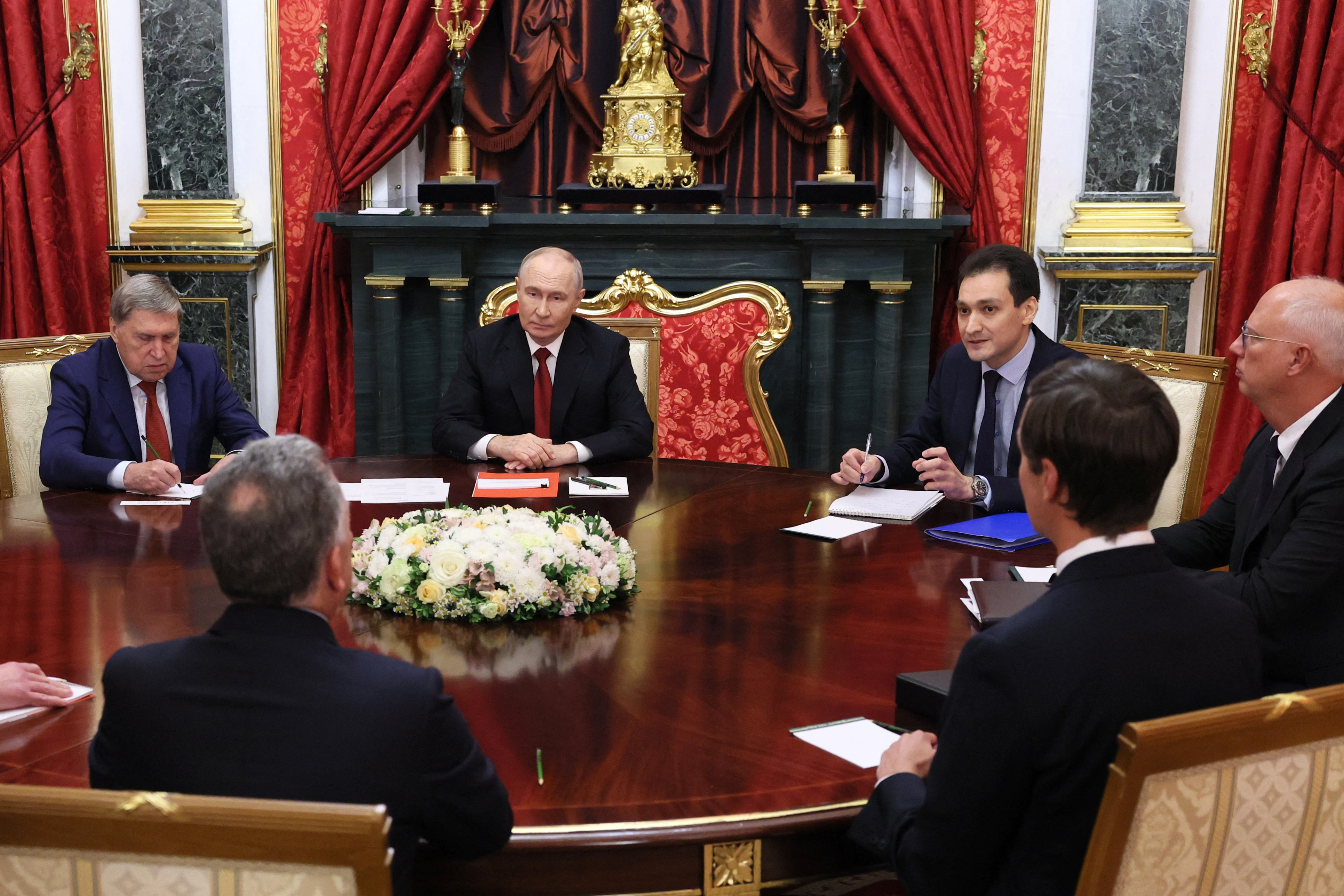 In this pool photograph distributed by the Russian state agency Sputnik, Russian President Vladimir Putin (2nd L), Kremlin foreign policy aide Yuri Ushakov (L) and Russian presidential envoy Kirill Dmitriev (R) attend a meeting with U.S. special envoy Steve Witkoff and U.S. President Donald Trump’s son-in-law Jared Kushner in Moscow on Sept. 5, 2026. (Mikhail Metzel / POOL / AFP)
Putin aide Yuri Ushakov told reporters that participants at the meeting at the Kremlin “outlined a number of ideas regarding possible avenues for a settlement.”
“The talks went beyond a mere exchange of views on resolving the Ukrainian crisis,” Ushakov said. “Economic issues and potential major, mutually beneficial Russian–American projects were discussed in some detail.”
Despite the ceasefire in the capital cities, fighting continued along the 750-mile front as Russia targeted Ukrainian cities on Sept. 5.
On Sept. 6, Ukraine confirmed that it struck the Ryazan oil refinery overnight, which sits about 300 miles inside of Russia.
Russia carried out six consecutive days of intensified attacks against Ukraine through Sept. 1, using swarms of drones, jet-powered drones, and ballistic missiles against Kyiv and nearby areas during the day and throughout the night.
Zelenskyy said the barrage killed 12 people, including seven at a Kyiv railway depot, and injured several others. Strikes also hit Odesa and other regions, damaging export infrastructure and a border crossing with Romania. Moscow said it targeted military and energy facilities used to store and supply weapons. Ukrainian officials responded by calling for more air defenses and sanctions targeting Russia’s missile production.
Russia’s war against Ukraine began in 2014, when Russia invaded and annexed Crimea and Russian-backed separatists seized territory in eastern Ukraine. Russia expanded the conflict into a full-scale invasion on Feb. 24, 2022. As of Sept. 6, the full-scale war has lasted more than 4 1/2 years, while the overall conflict has continued for more than 12 years.
Jacki Thrapp and Reuters contributed to this report.
 Friends Read Free
Copy
Facebook
Tweet
Friends Read Free
Copy
Facebook
Tweet