VANCOUVER—Canadian officials followed the law when they detained Huawei executive MengWanzhou at Vancouver's airport and the defence has no proof to substantiate its “conspiracy theory” that she was illegally arrested, the Crown says.
In this courtroom sketch, MengWanzhou, back right, the chief financial officer of Huawei Technologies, sits beside a translator during a bail hearing at B.C. Supreme Court in Vancouver, on Dec. 7, 2018.
VANCOUVER—Future court dates for Huawei executive MengWanzhou were set in a Vancouver court today, and the judge also allowed her to move to one of her homes in a more upscale area.
Huawei's Chief Financial Officer MengWanzhou, who was arrested on U.S. fraud charges in Vancouver last December, will challenge Washington's extradition request at hearings that are set to begin next January.
The company's chief financial officer, MengWanzhou, daughter of Huawei's founder, was arrested in Canada in December at the behest of U.S. authorities for her role in the alleged fraud. Meng has said she is innocent and is fighting extradition.
News analysis
Soon after MengWanzhou, the chief financial officer of Huawei, was arrested by the Canadian authorities in Vancouver, the Chinese regime prioritized her release.
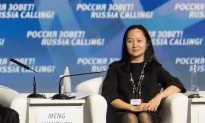
Huawei’s chief financial officer MengWanzhou, who faces extradition to the United States over allegations of skirting Iran sanctions, recently submitted an article to Japan-based magazine Nikkei Asian Review, defending Huawei’s funding to top universities
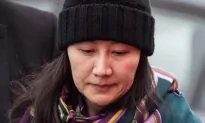
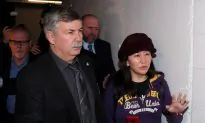
Huawei Chief Financial Officer MengWanzhou at a parole office, in Vancouver, on Dec. 12, 2018. (The Canadian Press/Darryl Dyck)
In a 13-count indictment, the U.S.
Kovrig and fellow Canadian Michael Spavor were detained for over 1,000 days in China in apparent retaliation for Canada executing a U.S. extradition warrant against Huawei executive MengWanzhou in late 2018.
Later in 2018, after Canada acted on a U.S. extradition request to arrest Huawei executive MengWanzhou in Vancouver on fraud charges, there was another "really significant impact" on the relationship.
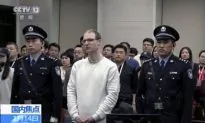
Schellenberg was originally sentenced to 15 years in prison in 2018 on drug trafficking charges, but his sentence was changed to death in late 2018 after Canada arrested MengWanzhou, a senior executive at Huawei, on a U.S. extradition request.
Kovrig, a China scholar, was detained in China for more than 1,000 days, along with fellow Canadian Michael Spavor, in apparent retaliation by Beijing after Canada executed a U.S. extradition warrant in late 2018 for Huawei executive MengWanzhou and
The increased engagement from the Trudeau Liberals ground to a halt after Canada executed a U.S. extradition warrant in late 2018 against Huawei founder's daughter MengWanzhou.
However, in the aftermath of Canada arresting Huawei executive MengWanzhou on a U.S. extradition request in December 2018, China changed Schellenberg's sentence to a death sentence, and also detained Canadian citizens Michael Kovrig and Michael Spavor
But she changed her views following the CCP’s conduct in the aftermath of the MengWanzhou affair, saying it served as the last straw showing that the regime isn’t changing its tactics.
October 22, 2025By Carolina Avendano, Omid Ghoreishi
In 2019, Beijing imposed a three-year ban on Canadian canola imports following the arrest of Huawei executive MengWanzhou in Vancouver just months earlier.
Trudeau had pursued a pro-China policy early in his term but the initiative ended with the MengWanzhou affair, leading to a freeze in diplomatic relations.
It took place amid strained trade relations marked by tariff disputes, as well as fragile diplomacy following the MengWanzhou affair in 2018 and recent revelations of China’s foreign interference and escalating transnational repression operations in
The two were detained in 2018 for more than 1,000 days by the Chinese regime in a retaliatory move for the arrest of Huawei executive MengWanzhou in Vancouver as the result of a U.S. extradition warrant request carried out by Canadian law enforcement
The regime put bans on several Canadian imports in 2019 after the arrest of Huawei executive MengWanzhou in Vancouver on a U.S. extradition request in December 2018.
Diplomatic relations between the countries have been deteriorating since 2018, when China arbitrarily detained Canadians Michael Spavor and Michael Kovrig in apparent retaliation for the detention of Huawei executive MengWanzhou in Vancouver.
As part of the long-running federal investigation into Huawei's business dealings, Huawei’s chief financial officer, MengWanzhou, also the daughter of the company’s founder, Ren Zhengfei, was previously charged and detained in Canada for nearly three