The U.S. State Department, on July 23, announced new sanctions targeting nine Cuban state-backed entities and two Cuban officials, amid a growing pressure campaign on Havana.
These latest sanctions specifically target Cuba’s energy sector, as well as business entities accused of helping evade previous U.S. economic sanctions. The new sanctions also target entities and individuals tied to overseas Cuban medical missions, which the U.S. government has alleged are sustained through forced labor practices.
Other recent rounds of U.S. sanctions have targeted Cuban leader Miguel Díaz-Canel, as well as Cuba’s military and its maritime trade sector.
“The Communist Cuban regime continues to pose a deep multifaceted threat to U.S. national security and hemispheric stability,” Secretary of State Marco Rubio said as he unveiled the latest sanctions.
Among the newly sanctioned Cuban entities is the Centro De Investigaciones Del Petroleo S.A. (CEINPET), which is the research arm of the previously sanctioned Cuban state-run oil company CUPET. Other sanctions target Empresa De Energia S.A. and Einarbo S.A., which both handle imports of gas products.
Other newly sanctioned entities include Terminal de Contenedores de Mariel S.A., Coral Maritima S.A., Orbit S.A., and CEIBA Investments Limited. All four entities are suspected of helping the previously sanctioned Grupo De Administración Empresarial S.A. (GAESA) continue to handle its assets.
GAESA is a business conglomerate operated by Cuba’s military. It was the target of new U.S. sanctions in May.
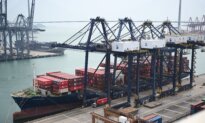
The State Department described Terminal de Contenedores de Mariel S.A. as a subsidiary of GAESA that handled operations at the Port of Mariel in Cuba, before transferring the asset to Coral Maritima S.A. in June.
CEIBA Investments Limited is based in the self-governing British territory of Guernsey, and handles investments in Cuban real estate. The State Department said a Panama-based subsidiary of CEIBA recently assumed ownership of a venture that GAESA held until earlier this year.
The State Department described Orbit S.A. as “a remittance processor almost certainly controlled by GAESA.”
Further sanctions targeted a Cuban state-run overseas medical mission known as Comercializadora de Servicios Médicos Cubanos S.A., and another entity responsible for recruiting Cuban medical workers for such missions, known as Unidad Central de Cooperación Médica (UCCM).
Cuban Minister of Public Health José Angel Portal Miranda and UCCM executive Gretza Sánchez Padrón were also targeted in the latest round of U.S. sanctions.
For decades, Cuba has run overseas medical missions as a form of diplomacy. Some of these missions have garnered international praise and accolades.
Though Havana has presented these efforts as a measure of global goodwill, the practice has come under increased scrutiny in recent years.
In its Thursday announcement, the State Department cited allegations that Cuban authorities coerce medical professionals to participate in these programs and often confiscate between 50 percent and 95 percent of their wages. The State Department described these overseas medical missions as among Cuba’s largest sources of foreign funding.
These new sanctions come just days after the State Department published a report that described Cuba as a nexus for communism’s spread throughout the Western hemisphere. The report accuses Havana of leading a multi-decade “campaign of subversion” against U.S. interests, including through government infiltration, espionage, and sabotage.
Some U.S. lawmakers have pushed back on the growing U.S. pressure campaign against Havana.
Rep. Mark Pocan (D-Wis.) said the new State Department report on Cuba was authored as a means to justify U.S. military action against Cuba.
Pocan was among four Democratic lawmakers who visited Cuba earlier this month. Following their trip, he and the other lawmakers questioned the idea that Cuba poses a pressing national security concern for the United States. They said recent sanctions and efforts to stymie oil flows to Cuba are exacerbating blackouts and worsening conditions on the island.
Pocan said Cuba is “hamstrung by U.S. sanctions that limit its access to financing, punish its workforce, reduce its customer base, and cut off its suppliers and export possibilities.”
 Friends Read Free
Copy
Facebook
Tweet
Friends Read Free
Copy
Facebook
Tweet