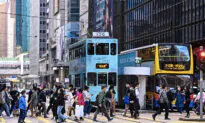
As a British colony, Hong Kong naturally formed part of the camp of democracy and acquired the identity of democracy as it was free from totalitarian terrors across the Shenzhen River, such as the Great Leap Forward and CulturalRevolution.
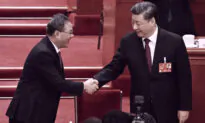
In a throwback to the disastrous CulturalRevolution of the 1960s and 1970s, Chinese leader Xi Jinping is now telling college graduates to “eat bitterness.”
“This is an extremely shocking situation—such things didn’t even happen during the CulturalRevolution,” he said. “It’s so evil.
“Logically speaking, these officials are their own people, yet they are treating them this way.
Commentary
Conservatives and traditionalists are often exasperated at the ongoing "woke" culturalrevolution in their midst.
How can America be turned upside down, as it is, when there is little public support for the things happening around us?
Adapted from a CulturalRevolution-era poster emblazoned with the words "Smash the Old World, Establish the New World." (The Epoch Times)
Buddhist statues are set on fire during the CultureRevolution.
Spring Festival celebration with the highest tension took place during the CulturalRevolution, when the motto of "destroying the four olds" was chanted every day, resulting in widespread violence.
(Public Domain)
Young Red Guards brandish copies of Chairman Mao's “Little Red Book” in Beijing during the CulturalRevolution in 1966. The Red Guards rampaged through Chinese towns, terrorizing people, particularly the elderly.
During the CulturalRevolution, CCP leader Mao Zedong warmed up to the United States, which led to Secretary of State Henry Kissinger visiting China in 1971 on behalf of President Nixon.
When China's universities resumed admissions of qualified students after the CulturalRevolution, higher education was rare, with only 2.7 percent of the college-aged population admitted to universities in 1978.
Mao Zedong, the first CCP leader, oversaw the 1966–1976 CulturalRevolution, a political movement that aimed to dismantle Chinese religious life and traditional culture.
The advent of the reform and opening up after the CulturalRevolution made the Chinese think otherwise, as they felt embarrassed being presented emblems by foreign cities when they formed friendship cities.
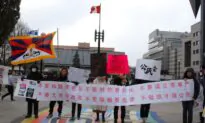
Peng's banner read in Chinese: "We don't want nucleic acid testing, we want food to eat; we don't want lockdowns, we want freedom; we don't want lies, we want dignity; we don't want CulturalRevolution, we want reform; we don't want [dictatorial] leaders
Although Mao himself carried out the self-criticism demanded by the conference, his political struggle eventually evolved into the 1963 Socialist Education Movement and, finally, the CulturalRevolution, which began in 1966.
But recent years have proven that the Left has no problem bringing about a culturalrevolution, even a cultural apocalypse.
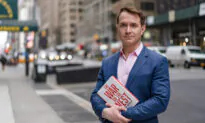
Michael Anton, one of the contributors to "Up From Conservatism: Revitalizing the Right After a Generation of Decay."
"Through campaigns like the CulturalRevolution, it has systematically uprooted traditional beliefs and destroyed ancient treasures, bringing 5,000 years of civilization to the brink of extinction."
Drawing on a more recent historical episode, a major feature of the CulturalRevolution (1966–1976) under Mao Zedong was the extermination of old ideas, old customs, old culture, and old habits.
Ya, ya, I know the folks in charge of it thought they were doing the right thing, but so did Chairman Mao when he unleashed his own culturalrevolution. It was wrong.
Chinese communist regime sent almost all scholars, literati, and teachers to rural areas to work as farmers, as well as humiliate them in public during the culturalrevolution.
It was this rekindling of China’s spiritual and moral foundation, quashed during the CulturalRevolution, that lit the ire of then-Communist Party leader Jiang Zemin in 1999, and the campaign to eliminate Falun Gong that continues today.
Guo, in the history of the CCP, the two most turbulent periods in society were the late CulturalRevolution (1960s-1970s) and the early stage of Chinese Economic Reform (1980s-1990s).