Australian shares experienced sharp swings over consecutive trading days as investors tried to assess the broader implications of the escalating tradewar.
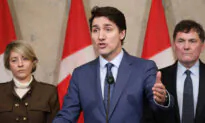
Trump imposed 25 percent tariffs on Canadian goods Tuesday and a 10 percent levy on energy, sparking a tradewar as Prime Minister Justin Trudeau responded with Canada's retaliatory tariffs.
Meanwhile, Beijing responded by saying it's ready to fight "a tariff war, a tradewar, or any other type of war" that the United States wants, on top of counter-tariffs and other retaliatory measures.
The Bank of Canada announced on Oct. 29 that it had lowered its policy interest rate to 2.25 percent as it said the tradewar with the United States had reduced Canada’s economic prospects.
Ottawa is seeking input from Canadians on defence spending and how to best strengthen the economy during an ongoing tradewar, as it prepares to announce a federal budget this fall.
The index also found that Canadians are not expecting much relief on their monthly grocery bills in the near future and are bracing for prices to continue to rise as the country’s tradewar with the United States persists.
Imposing such steep tariffs on the EU, he said, would effectively signal that the United States has no intention of maintaining normal trade relations with the bloc.
Concerns over a potential tradewar are mounting in Europe.
“Central banks are still buying, Trump’s tradewar is still going on, geopolitical risks remain elevated, and ETF holdings continue to expand—all underpinning gold prices at the current levels,” ING Commodity Strategist Ewa Manthey wrote in a note.
And while Blanchet supports responding to U.S. tariffs with counter-tariffs, he said Canadian leaders should avoid talking about "retaliation" or a "tradewar," terms that Foreign Affairs Minister, Mélanie Joly used frequently last week in Washington,
Concerns Over TradeWars and Spending
Conservative Party leader Kemi Badenoch warned of rising concerns over U.S. tariffs, tradewars, and the affordability UK’s military support for Ukraine.
"Other countries can't afford a tradewar with us," he said, adding that the economies of Canada and Mexico are a fraction of the size of the U.S. economy.
Both economies have sought to end a tradewar in which the United States escalated its tariff on Chinese goods to 145 percent and the Chinese communist regime hiked levies to 125 percent on U.S. imports.
The report said the country’s economy has “held up better than expected” despite a tradewar with the United States, with targeted support for impacted economic sectors and budget measures to encourage investment helping to “cushion the blow.”
Al Green
Trudeau: Canada Will Be in TradeWar With US
Trump: Tariffs Under USMCA Agreement Delayed
JD Vance Visits Mexican Border
USAID Contractors in Court Today Over Funds
Court Rules Trump Can Remove Agency Head
Department of Veterans Affairs
After recent reports suggested that Trump was considering lowering tariffs on China unilaterally to de-escalate trade tensions with Beijing as both nations engage in a tradewar, Treasury Secretary Scott Bessent rebutted on Wednesday.
Topics in this episode include:
25 Percent Tariffs on Canada, Mexico Go Into Effect
China Responds to Trump Tariffs
Mexico Will Impose Retaliatory Tariffs on US Goods
Trudeau: US Has Launched a TradeWar Against Canada
US Pauses Ukraine Aid
Canada's digital services tax is set to take effect just weeks before a deadline Canada and the U.S. have set for coming up with a new trade deal. The two countries have been in a tradewar for months, initiated by Trump's imposition of tariffs.
The first-term tradewar culminated in the 2020 Phase One trade deal, under which Beijing committed to buying an additional $200 billion in U.S. goods and services over two years, including $80 billion in agricultural products.
“A recession and a tradewar represents some of the most difficult times, you can't cut your way out of those things. You actually have to make investments," he said.
The defence-driven bump in real GDP also won't be enough to lift Canada out of the "tradewar-induced recession" that's already underway, Oxford Economics said in the report.
"Tradewars only hurt people," he says. "They don't benefit anybody. This is our message to Donald Trump. It's our message to all Americans. We don't want this fight. We didn't sign up for it, but that doesn't mean we're not going to arm ourselves."
He said monetary policy cannot undo the damage caused by tariffs, and that Canada’s GDP is on a “lower” path because of the tradewar.
“But I will add, there are things the country can do to get on a higher path,” he said.
Barclays no longer expects the United States economy to fall into a recession later this year and has revised up its growth forecasts following a temporary truce in the tradewar between China and the United States, it said in a note published on May
–China tradewar.
Trump's remarks came after he announced a temporary reduction in reciprocal tariffs on nearly all U.S. trade partners, lowering them to 10 percent for 90 days to allow time for bilateral negotiations.
“While protecting our automotive sector is important, the current approach has created a two-front tradewar that disproportionately impacts Western Canada.”
Foreign Minister Anita Anand met with her Chinese counterpart Wang Yi on Oct. 17.
Wall Street's main indexes were set to open sharply higher on Monday as the United States and China reached a deal to reduce tariffs, signaling a truce in a tradewar that had kept markets on edge for weeks.
Shortly after Trump took office in January, the United States escalated retaliatory actions in the tradewar between the world's two largest economies, which started even before China joined the World Trade Organization in 2001.