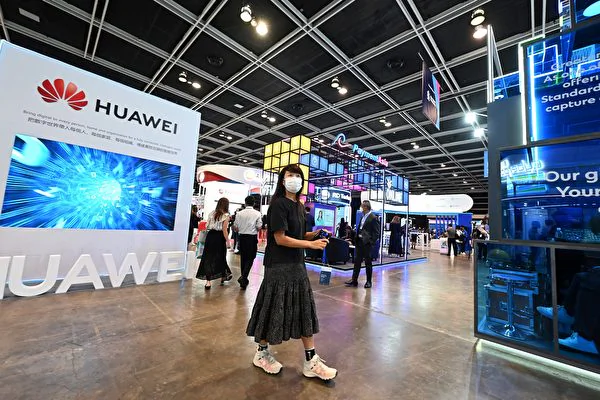
Carr also called for more funding for the "rip and replace" program, which would entail U.S. telecom providers removing all hardware produced by CCP-linked companies, such as Huawei and ZTE.
It also states that Chinese companies such as Huawei and ZTE often market them as public security tools.
However, in the hands of dictators, these tools are often used for monitoring political dissent, according to the report.
Tasked with Tariff Negotiation with Japan
Asian Markets Plunge Over US Tariffs
Oil Drops to 4-Year Low, China Metals Tumble
Police: Shen Yun Bomb Threats Likely Linked to Huawei
Lawmakers Want Answers About $1.7 Billion China-Linked Contract
The notice builds on earlier FCC efforts such as a ban on gear from Chinese tech companies such as Huawei and ZTE, the revocation of authorizations held by China Telecom and other state-linked carriers, and the creation of a Council for National Security
Carr said the scenario was a real possibility, as China-based Huawei, which the United States has banned and blacklisted, operated a test lab until last April.
Diplomatic relations between the countries have been strained since 2018, when Huawei executive Meng Wanzhou was arrested in Canada and China responded by detaining Canadians Michael Kovrig and Michael Spavor.
In 2019, McCallum was forced to resign his post at the request of the Trudeau government after publicly providing legal arguments in defence of the arrested Huawei executive Meng Wanzhou.
“Hundreds of patents have been generated for Huawei through these deals. The commercial rights go to Huawei and they can use this technology in any manner they want.”
Beijing-Ottawa relations began to deteriorate in 2018, when China arbitrarily detained Canadians Michael Spavor and Michael Kovrig in apparent retaliation for the detention of Huawei executive Meng Wanzhou in Vancouver, following a U.S. extradition request
The letter cited a list of documented cases involving the Chinese regime’s cyber espionage, an intrusion against the United States, including telecommunication equipment made by now blacklisted Chinese tech company Huawei, data collection by China-owned
He pointed to when the Chinese Communist Party slapped retaliatory trade barriers onto Australian exports after the former government demanded an independent investigation into the origins of COVID-19 and banned Huawei from being involved in the nation's
However, Trudeau’s attempts at closer ties unravelled after Canada executed a U.S. extradition warrant for Huawei executive Meng Wanzhou, who was accused of fraud, in 2018.
Relations with Beijing deteriorated in 2018, when the RCMP arrested chief financial officer Meng Wanzhou of the Chinese multinational technology company Huawei in Vancouver on a U.S. extradition warrant related to fraud charges.
Diplomatic relations between the countries had been deteriorating since 2018, when China arbitrarily detained Canadians Michael Spavor and Michael Kovrig in apparent retaliation for the detention of Huawei executive Meng Wanzhou in Vancouver on a U.S.
It may have taken the feds more than three years to ban Huawei from our 5G network—again a recommendation from our security agencies—but they finally got there. Maybe this is a new trend. Maybe the Carney-led Grits finally get national security.
In one such case in 2019, it imposed a three-year ban on Canadian canola imports following the arrest of Huawei executive Meng Wanzhou in Vancouver on a U.S. extradition warrant.
In 2019, Beijing imposed a three-year ban on Canadian canola imports following the arrest of Huawei executive Meng Wanzhou in Vancouver just months earlier.
In March, the agency announced an investigation into nine Chinese companies, including China Mobile, Huawei Technologies, ZTE, Hangzhou Hikvision, and China Telecom, to determine their current levels of operation.
Chinese AI developers, he has said, will simply turn to Chinese inputs from Huawei and others.
Evidently, neither Chinese developers nor Beijing is as confident in Chinese sources as CEO Huang seems to be.