of Beijing-linked technology companies such as Huawei; hacking and collecting information from countries targeted by Beijing; and using communication technology such as social media platforms to spread disinformation to create discord in society.
Over the past two years under the Trump administration, the Department of Commerce placed Huawei and roughly 150 of its affiliates on the sanction list in a bid to cut the firm from critical American technology and software.
BRUSSELS—Europe has ignored U.S. calls to ban Chinese technology giant Huawei from running 5G networks, with officials instead announcing a continent-wide security review of emerging cyber threats.
"Because it will either be Google, Facebook, Microsoft, and Amazon who set the international rules of the road when it comes to technology, or it will be Tencent, ByteDance, Huawei, and HikVision."
President Trump banned federal contractors from using Huawei equipment and on May 15 issued: ‘Executive Order on Securing the Information and Communications Technology and Services Supply Chain.’
The regime has been using networking equipment and social media technology to spy and steal data for decades. Huawei and TikTok are just two of many examples of that practice. The net result is a tremendous strategic advantage for China.
It meanwhile offers the most damning evidence that Huawei is a state actor in the field of science and technology just as Meng is a political figure in the eyes of the Chinese government.
Chang: President Trump was right to seek the extradition of Meng Wanzhou, the chief financial officer of HuaweiTechnologies. Biden, in a deal, released her. She did not even have to plead guilty to any Federal crime.
Department of Justice has laid charges of conspiracy, fraud, and obstruction against Chinese technology giant Huawei and Meng, who is the daughter of the company founder Ren Zhengfei.
Both Meng and Huawei have denied any wrongdoing.
Trump warned the rest of the world of the dangers of depending on China for information technology (IT). Moreover, he imposed tariff increases and banned Chinese tech giants, such as Huawei and ZTE, from using U.S. chip and other 5G technologies.
(Chinatopix Via AP)
The new law allows Beijing to retaliate against the United States, which in recent months has blocked Chinese technology firms such as telecommunications gear supplier Huawei, Bytedance’s TikTok app, and Tencent’s messaging app WeChat
Huawei has repeatedly denied using backdoors in its technology to spy on customers. In May, the Dutch newspaper Volkskrant reported that authorities in The Hague were investigating the company on such grounds.
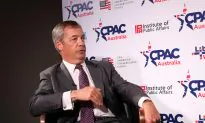
"You may think of Huawei as being a provider of technology, but they're just as much a finance house, backed, of course, by the Chinese Communist Party. ... It's almost like [telecoms providers] have become drug dependent upon Huawei," he said.
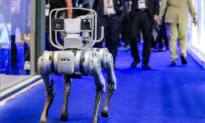
Citing China’s National University of Defense Technology, the lawmakers wrote that Unitree “is central to the PRC’s AI expansion alongside Huawei and SMIC,” also known as Semiconductor Manufacturing International Corporation.
The affected companies included the previously designated Huawei and ZTE, as well as Hytera Communications Corp, Hangzhou Hikvision Digital Technology Co, and Zhejiang Dahua Technology Co.
Department of Commerce toughened its export restrictions for non-U.S. chip companies requiring them to apply for licenses to use American technology and tools to supply chips to Huawei or its chip design division, HiSilicon, according to Nikkei.
Chinese technology company Huawei has not had particularly good press recently. Countries including Australia have excluded it from construction of a 5G network, while the U.S.
BEIJING—Chinese authorities summoned global technology companies for talks last week, following last month's U.S. ban on selling technology to China's Huawei, two people familiar with the matter told Reuters on June 9.
Most recently, Imperial College London struck a 5-million-pound ($6.3 million) deal with Huawei in May to help fund the building of a new technology hub on its campus in west London.