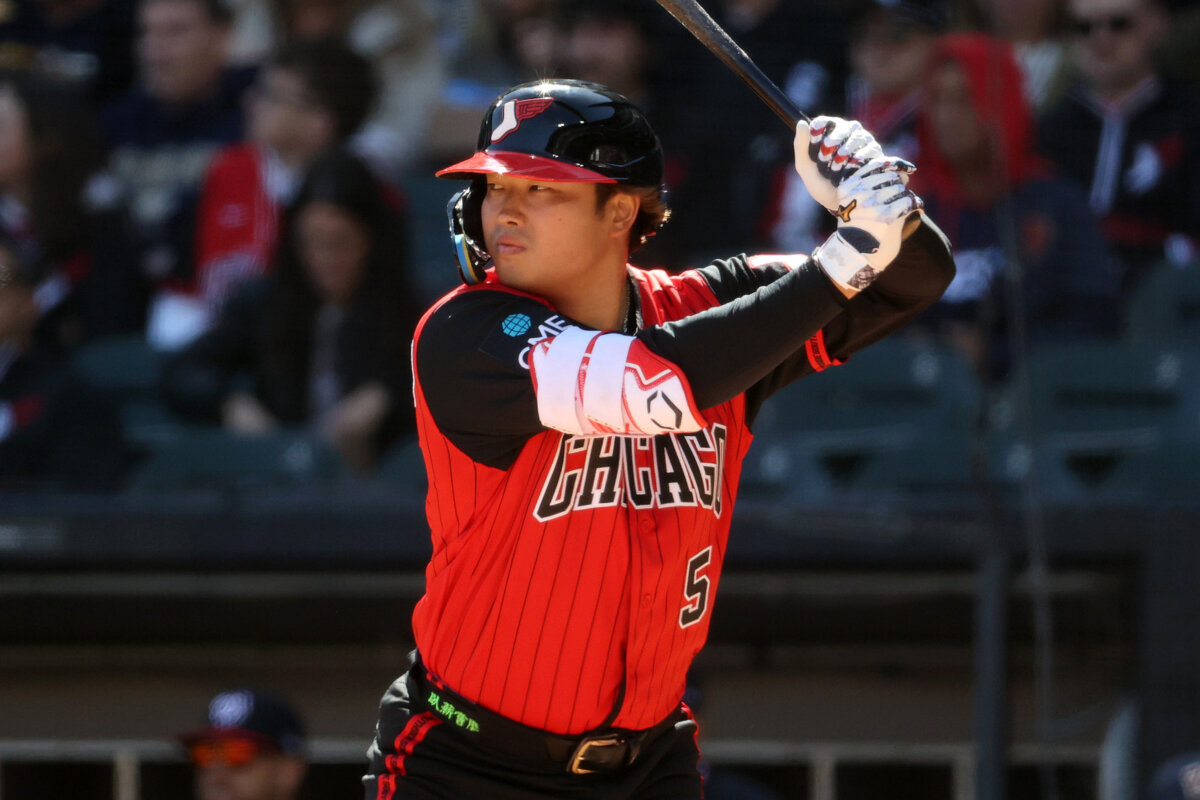

Baby-faced bopper Munetaka Murakami of the Chicago White Sox has packed a powerful punch since his first day as a pro in Japan. But his knockout strength has MLB pitchers understanding he can hit with the big boys.
The first-year Japanese import smacked his 11th longball of the season on Friday night in a 5–4 victory over the Washington Nationals, to add to the strong resume he is establishing early in his big league career.
Murakami, who plays first base for Chicago, tied an MLB rookie record on April 22, when he slugged a home run in his fifth consecutive game during a matchup against the Diamondbacks, an 11–7 loss to Arizona.
He and Chase DeLauter of the Cleveland Guardians have hit homers in their first three games, only the second time that has happened in MLB history.
When Murakami reached 10 homers, eight had come on the road—second most in the big leagues behind Houston’s Yordan Alvarez’s 11. The double-digit figure was also the most in MLB history by a Japanese-born player in his first 24 career games.
Murakami’s resume features 246 homers over eight seasons with the Tokyo Yakult Swallows. He eclipsed Sadaharu Oh’s single-season home run record with 56 blasts in 2022 (Wladimir “Coco” Balentien holds the all-time record with 60) and figures to have a productive career on this side of the Pacific Ocean as well. And he’s changing the way teams here view position players who make the jump from Nippon Professional Baseball to The Show.
“The problem NPB guys have against the heater is not that they can’t hit velocity, they haven’t seen it as much as guys who develop inside of Western baseball,” said former major leaguer and NPB player Bobby Scales.
“There are hard throwers over there, just not as many. So the velocity they are accustomed to is just lower. Average fastball velo in the big leagues right now is 94 mph. So, by definition, averages indicate a lot of pitches both above and below that number,” said Scales, who played for the Hokkaido Nippon Ham Fighters and Orix Buffaloes from 2011–2012.
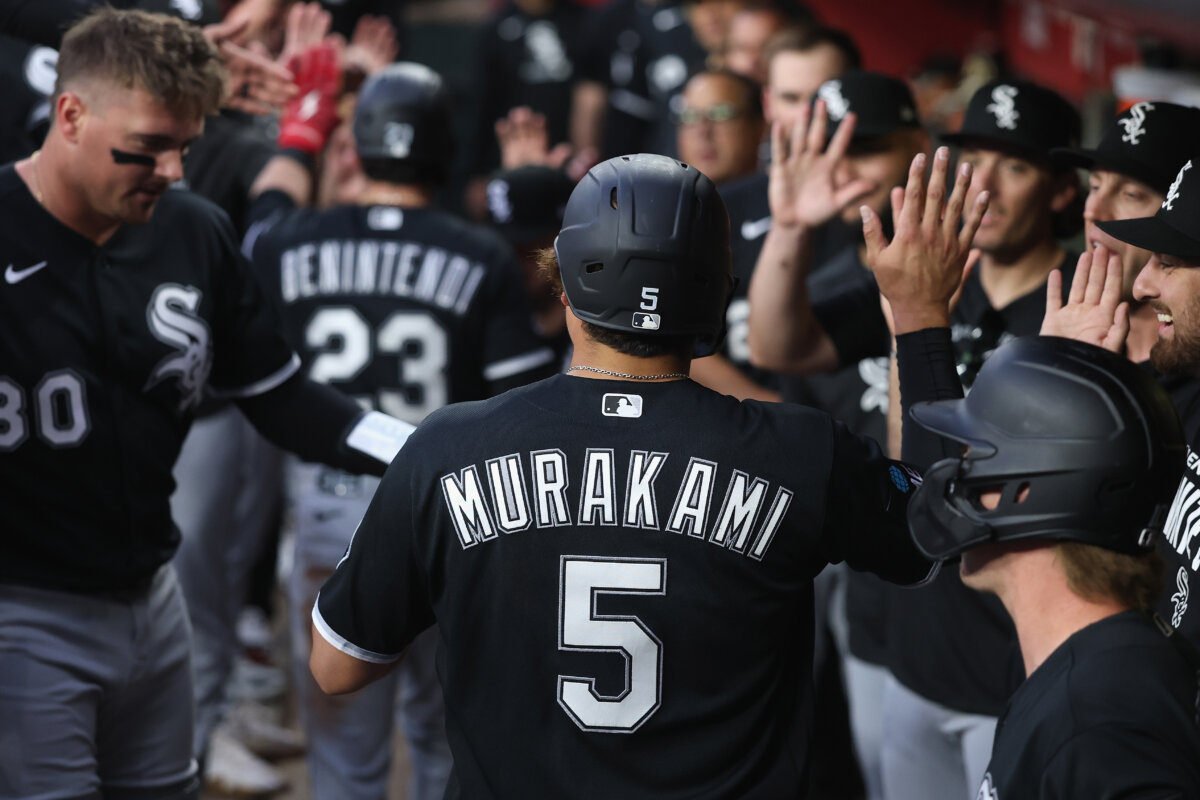
Scales offered a comprehensive evaluation of Murakami’s prospects as an MLB batter.
“He is only hitting .143 against fastballs 95-plus. Of his homers, only three have come on something above 93. You have to be able to hit the fastball without cheating to it. The question now is will he be able to do that here? Only time will tell as he sees more fastballs more often,” said Scales, who is a baseball broadcaster and also works in player development.
Japanese pitchers commonly avoid the notion of fastball counts, choosing to throw offspeed pitches in situations that normally call for four-seamers in the big leagues. Because of that, Murakami is very accustomed to mashing pitches with more spin than speed.
According to Baseball Savant, Murakami has more longballs on offspeed pitches than fastballs. The 26-year-old had four homers against fastballs, but two apiece on cutters and changeups, and has taken a sinker, a curve, and a slider out of the park.
“What I don’t understand is why pitchers are still spinning him—anything,” Scales said. “If my pitcher had 95-plus, I would absolutely bum-rush him with that at the top of the zone, and the second I had him sped up, spin him or change up below the zone.
“His whiff [rate] is high at 38 percent, but the chase is not, which means there are areas in the zone you can go to that he can’t get to. When you look at the heat maps it’s very apparent he doesn’t like the ball in the upper third of the zone.”
One of the concerns scouts had prior to the White Sox signing him—besides questionable work with the glove—was the slugger’s tendency to swing and miss.
“He doesn’t miss mistakes, that is obvious. He will hit 25–30 … homers 30–35 doubles. It’s real power. His numbers and results are really interesting. I like this dude, but he’s going to be about .230/.340/.500 and 840 OPS player,” Scales said.
Murakami, who is hitting in the .240 range, can not only take advantage of fastball counts, he has the Automated Ball-Strike System to help keep pitchers in the zone and minimize the impact of framing from catchers.
“One thing is that he will benefit from ABS,” Scales said. “One of the byproducts of the challenge system is that the top of the strike zone is smaller than in years past. So that same high fastball that was being called a strike just last year is a ball this year.
“Pitchers will have to come down a ball or two and that’s one he can hit. That said, I’m still attacking him hard up and hard in until he proves me wrong.”
 Friends Read Free
Copy
Facebook
Tweet
Friends Read Free
Copy
Facebook
Tweet