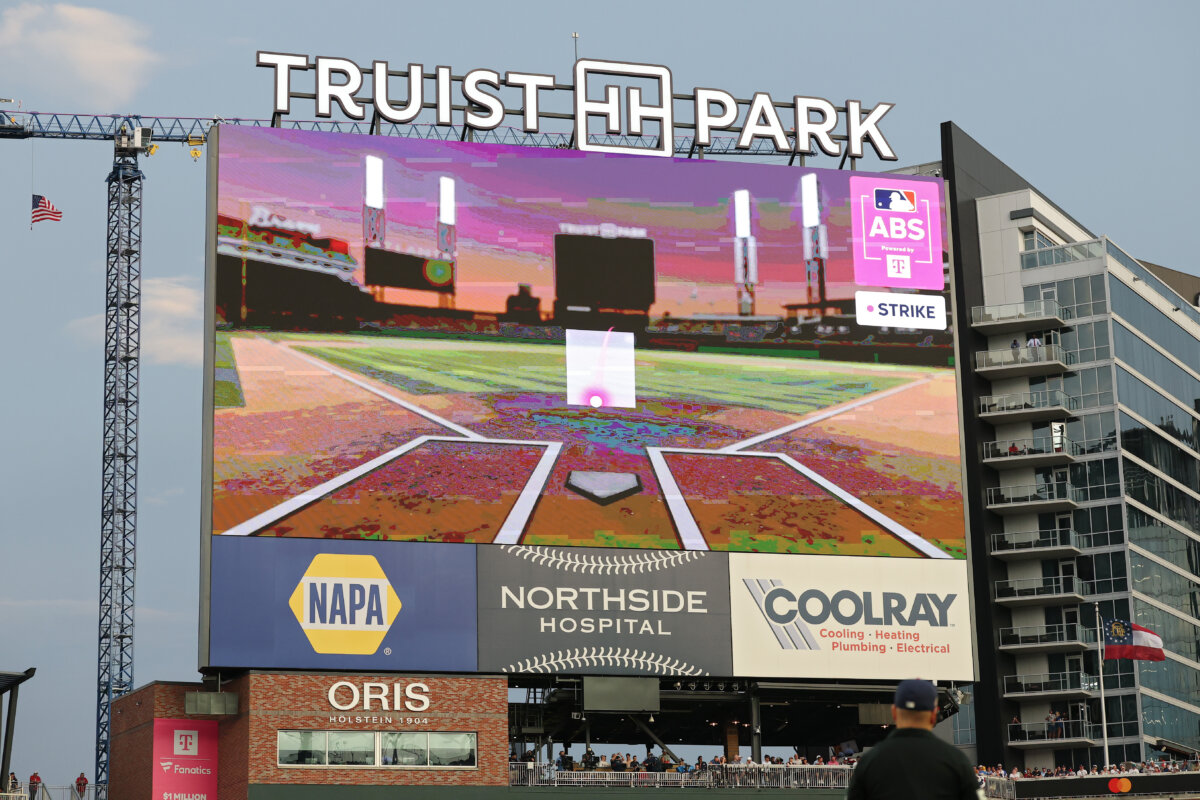

One week into Major League Baseball’s regular season, the Automated Ball-Strike Challenge System, called ABS, is striking a chord as a game-changer.
It’s making umpires look bad at times.
It’s changing the approach teams take each day.
It’s transforming the fan experience by eliminating many ball-strike arguments and providing a new dynamic to the game.
But it’s still early in a 162-game season.
The website Baseball Savant had the early count before Thursday’s action, showing that 55 percent of umpire calls—or 189 of 343 challenges—have been overturned.
Hitters have been right on 52 percent of their appeals (85 of 163), and batteries have been correct 58 percent of the time (104 of 180).
That leaves the umpires looking like the mighty Casey in Mudville, but with mud on their faces.
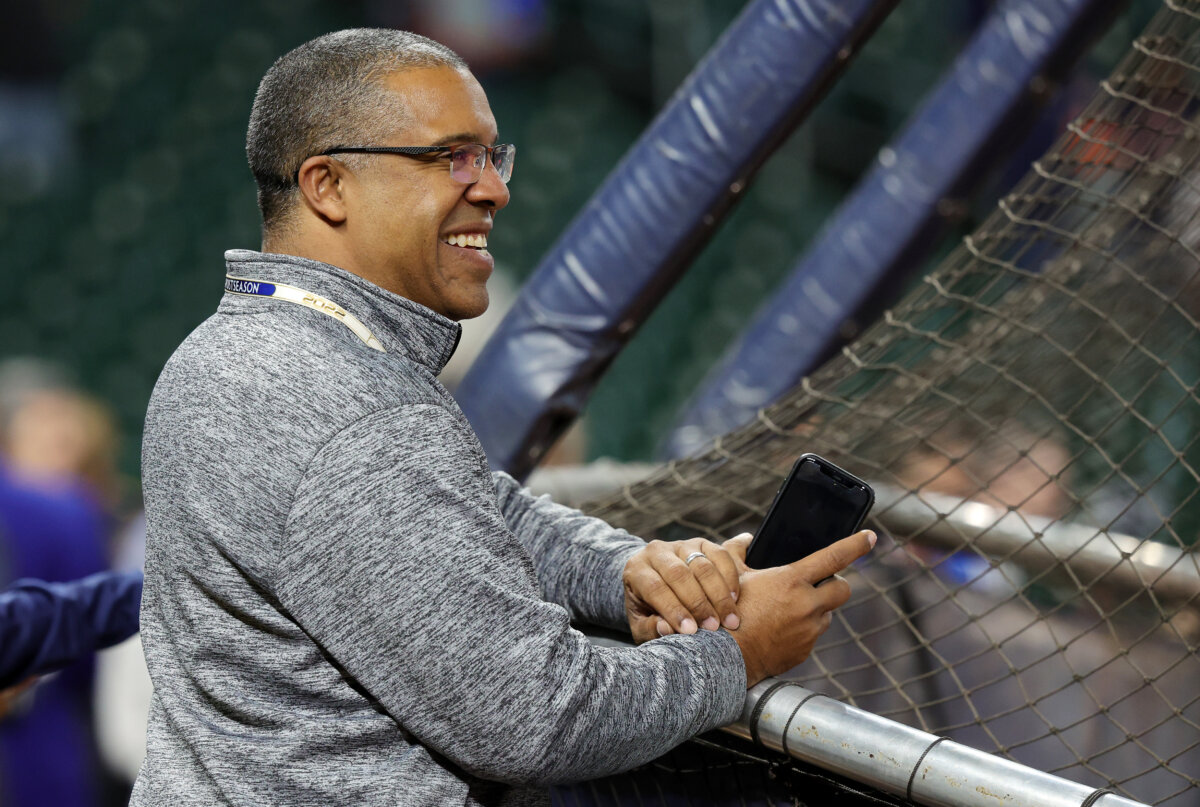
Former player, coach, and now prominent MLB color commentator Eduardo Pérez told The Epoch Times that umpires behind the plate are still making the adjustments to the new ball-strike game.
“It could be a little frustrating for a lot of the umpires as well,” Pérez said. “I think it’s helped even with umpires being off their feet longer when it comes to the clock [with fewer arguments]. The ABS system challenges the umpires, but you know what? At the end of the day, what the people want is to get the calls right.”
And they also want to get things right when it comes to strategy. Many teams are still educating themselves—especially veterans vs. inexperienced players employing technology to correct what they think is human error—on when to use the two challenges each squad is allotted to start games.
“Among teams, certain teams have had a game plan on how to use it,” Pérez said. “We’ve seen players who want to use it but are not allowed to use it, I guess, in certain innings. They know how important it is to have it late.
“I think certain teams still aren’t really knowing how to apply it to their strengths, but I’m seeing that a lot of leverage counts—1–1 counts, 2–2 counts, 0-0 counts—are being used to challenge some of the calls.
“The interesting thing is, a lot of the pitchers are not being allowed to challenge [by their teams], and it looks like it’s the right call, so far, for a lot of the teams.”
Observers seem to like ABS, particularly those fans in the stadium, where scoreboards show digital images of balls being just in or out of the zone.
“It reminds me a lot of when I go to the U.S. Open [in tennis] I see the [Hawk-Eye system on calls] down the lines and stuff,” Pérez said. “I think it’s more engagement for the fans.”
“And at the end of the day, this sport is played for the fans, and it survives because of the fans. And if there’s more engagement there, then I’m all for it.”
The umpires might not be all for it. In fact, ABS might be giving the well-known man in blue, C.B. Bucknor, nightmares the way it has righted many of his wrongs at the start of the season.
“The umpires have a tough job” narrative has been part of baseball for as long as the sport has been around. But the ABS system has put that into motion pictures on big screens around the country’s ballparks.
“Oh, we’ve always known it’s tough,” Pérez said. “I think it’s nothing new for the media or the players. I think that’s part of their gift, to be able to call balls and strikes.
“And it’s part of the art of the game that’s going to get lost—the balls-and-strikes discussions and all that. But now, we do have a system. And I think it’s really interesting [because] the fans have to know that broadcasters do not have that rectangular strike box in their monitors.
“So the broadcasters do not know if it’s close or not to being a strike, they can only use an educated guess. We’ll see how that turns out.”
It will be popcorn-worthy internet clicking to see which group of ball-strike rivals has the best percentage at the end of the season—hitters, batteries, or umpires.
“The [stats] have already been coming up. But I think it comes down to the catchers being able to get those numbers right or wrong,” Pérez said.
“You look at the Minnesota Twins, they’ve won the most challenges so far—the most overturned as the hitting team. You look at the fielding team as well, it’s been the Minnesota Twins who’ve been really aggressive with it.
“I think it’s going to be interesting. I’m going to keep an eye on Baseball Savant to see how the ABS overturns trend, and to see how it works and to see the challenges. And to see who’s getting them right and getting them wrong, and who’s being more aggressive than anyone else.”
 Friends Read Free
Copy
Facebook
Tweet
Friends Read Free
Copy
Facebook
Tweet