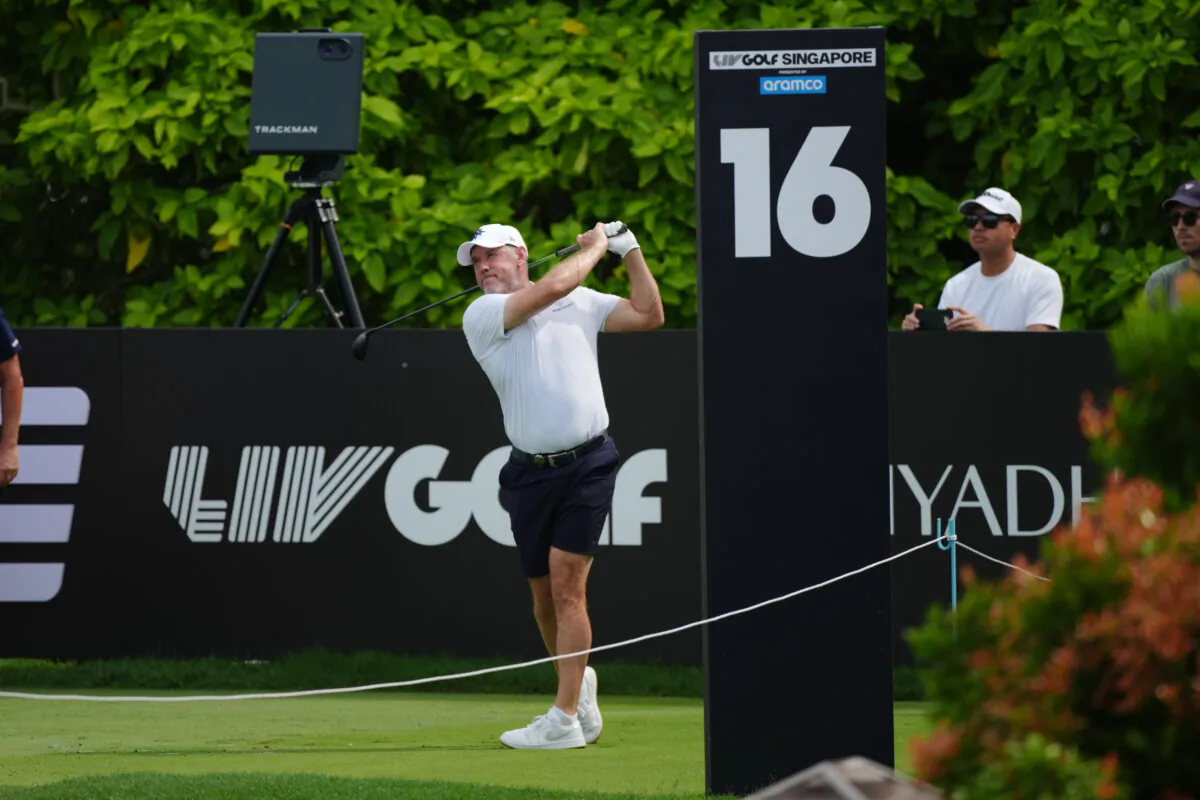

A controversial Saudi-backed golf league is expected to lose much of its funding in a shift that experts say could weaken it and further empower the Professional Golfers’ Association (PGA).
LIV Golf, which uses the Roman numerals for the 54 holes at its event, shook the professional golf world in 2022. Backed by billions of dollars from Saudi Arabia’s Public Investment Fund, it recruited top PGA Tour players.
Sponsorships and partnerships are up 40 percent year-over-year, while ticket sales have grown to over 130 percent, and broadcasts have reached nearly one billion households across 200 countries and territories, according to LIV.
The Public Investment Fund (PIF), Saudi Arabia’s sovereign wealth fund run by the country’s royal family, has spent more than $5 billion on LIV Golf.
Four years later, the league now faces an uncertain future after reports that the PIF plans to end its financial backing following the 2026 season.
“The substantial investment required by LIV Golf over a longer term is no longer consistent with the current phase of PIF’s investment strategy,” the PIF said in an April 30 statement.
“This decision has been made in light of PIF’s investment priorities and current macro dynamics.”
The Saudis initially invested in golf as part of the oil-rich nation’s efforts to diversify its economy and improve its image on the world stage.
Sports business experts told The Epoch Times that LIV Golf would struggle to survive without Saudi financing.
Joel Maxcy, a sports economist and professor at Drexel University, said LIV Golf would need another investor with resources comparable to the PIF—a prospect he considered unlikely.
“The big stars are already looking to move back to the PGA. Brooks Koepka already, and top players Jon Rahm and Bryson DeChambeau are believed quite likely,” he said.
“Without comparable star power, it’s unlikely LIV can remain a legitimate rival to the PGA.”
Lisa Delpy Neirotti, associate professor and director of sports management programs at George Washington University, said there was growing interest in sports investment and that LIV’s sponsorship base appeared to be expanding.
However, Neirotti said that attracting replacement funding would still be difficult.
“I think it will take a big name or names to make others comfortable investing,” she said.
She added that LIV Golf remained an expensive operation despite attracting fan interest.
“The question remains if costs can be cut and revenues maximized to generate a profit,” she said.
Mark Francis, associate teaching professor in sports business at the University of Oregon, said the reported withdrawal by the PIF was “one of the more predictable outcomes” he had seen in the sports industry.
“Even with the seemingly endless financial resources of the Saudi Investment Fund, I believe even for them, the extreme expenses involved in starting and continually propping up of an extremely unprofitable venture like LIV, simply was not sustainable,” he said.
Thomas Rhoads, an economics professor at Towson University, also expressed skepticism that LIV Golf could continue independently.
“I also see no reason another backer would want to step forward to rescue LIV Golf given the poor TV ratings,” he said.
“LIV Golf is only a unique product potentially capable of being a separate tour if they include their unique elements.”
LIV Golf has since moved to stabilize its future, announcing a new board and the search for long-term financial partners.
Lucia Dunn, an economics professor at Ohio State University, said a new investor would likely be necessary for LIV Golf’s nontraditional format to survive long term.
“However, right from the beginning, LIV was controversial, and some might think its chances for survival were not good even with the Saudi funding,” she said.
Experts noted that competing leagues tended to fail with the biggest one.
Maxcy said the situation surrounding LIV resembled other rival league challenges that had been unsuccessful. He pointed to the USFL in the 1980s, spending big on icons such as Steve Young, Herschel Walker, and Jim Kelly, with a slightly different format: the league played in the spring and summer, whereas the NFL plays in the fall and winter. LIV tournaments consist of 54 holes, whereas PGA tournaments consist of 72 holes.
“But ultimately the established league prevails, and the upstart goes under,” he said.
Francis argued that LIV Golf ignored decades of sports business history showing that rival leagues rarely succeed against entrenched organizations. He pointed to failed or merged competitors such as the AFL, WFL, and USFL against the NFL; the WHA against the NHL; and the ABA against the NBA.
Francis said professional sports were strongest when elite athletes competed within a single, unified league, creating consistent “best-on-best” competition that drove fan interest.
Reuters contributed to this report.
 Friends Read Free
Copy
Facebook
Tweet
Friends Read Free
Copy
Facebook
Tweet