U.S. Secretary of State Marco Rubio said on April 23 that Washington has no objection to Iran taking part in this summer’s soccer World Cup in North America but that nobody with ties to the Islamic Revolutionary Guard Corps (IRGC) would be allowed entry into the United States.
His comments were made after U.S. President Donald Trump’s special envoy for global partnerships, Paolo Zampolli, suggested to FIFA President Gianni Infantino and the White House that Italy replace Iran at the World Cup.
When asked about the issue by a reporter at the White House, Trump said, “I don’t think about it too much,” but said his administration “would not want to affect the athletes” in the tournament.
Rubio told the same reporter, “Nothing from the U.S. has told them they can’t come.”
“The problem with Iran would be, not their athletes, it would be some of the other people that would want to bring with them, some of whom have ties to the IRGC,” Rubio said, “We may not be able to let them in.”
Terrorists Posing as Soccer Coaches?
Rubio said it was up to Iran whether the team decided to come.
“What they can’t bring is a bunch of IRGC terrorists into our country and pretend that they’re, you know, journalists and athletic trainers,” he said.
But he said it was just “speculation” that Iran might decide not to come and that Italy would fill their spot.
The United States designated the IRGC as a foreign terrorist organization in 2019.
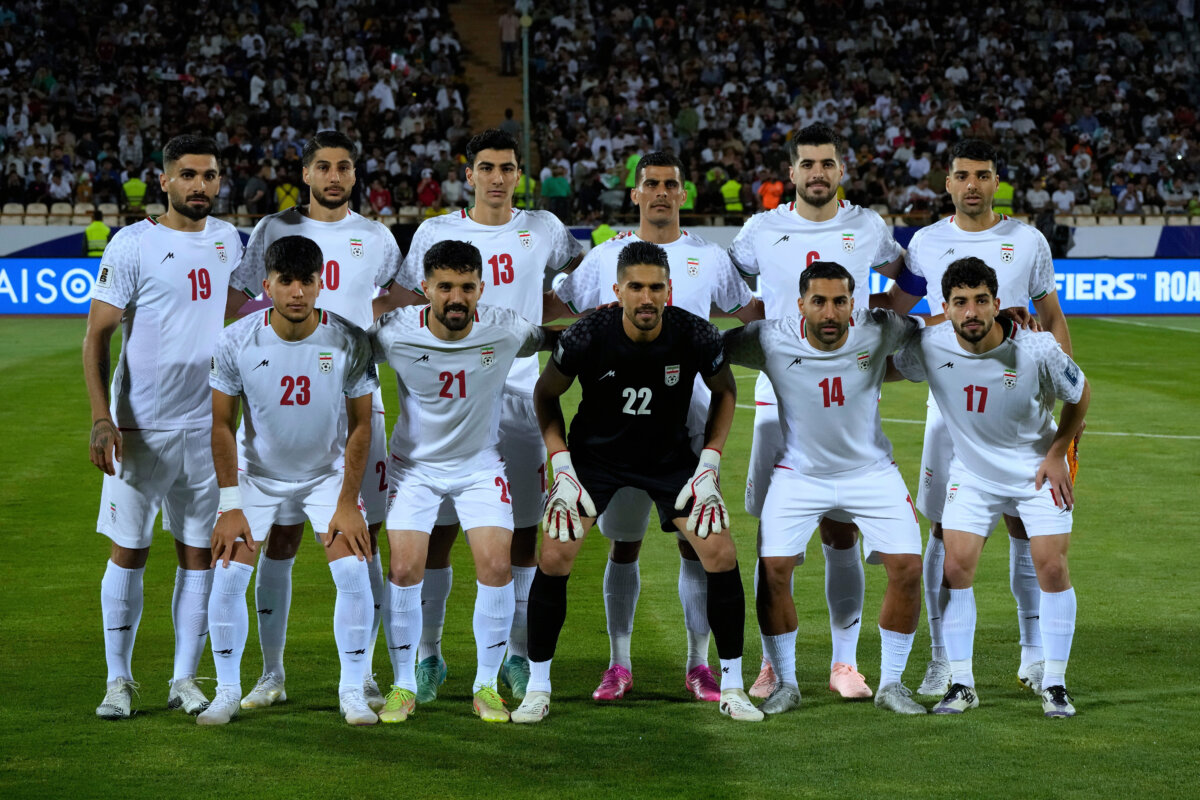
Since the United States launched Operation Epic Fury against Iran on Feb. 28, there have been doubts about whether Iran’s team could compete in the World Cup, which is set to begin on June 11 and will be hosted across the United States, Mexico, and Canada.
Iran’s three games are scheduled to take place in Los Angeles and Seattle, with the first match, against New Zealand, set to kick off on June 15.
Iran has asked FIFA to move the team’s three group matches to Mexico, but this has been declined.
Last month, Infantino met the Iranian team before they played a friendly match with Costa Rica in the Turkish city of Antalya.
“The Iranian team is coming, for sure,” Infantino said at the CNBC Invest in America Forum in Washington last week.
“We hope that by then the situation will be a peaceful [one]. That would definitely help. But Iran has to come if they are to represent their people.
“They have qualified, and they’re actually quite a good team as well. They really want to play, and they should play. Sports should be outside of politics.”
If Iran were to decide not to take part, its place in the World Cup would likely go to another country from the Asian qualifying group, or its place in the group would be left vacant.
The conflict between the United States and its ally Israel, and Iran and its ally Hezbollah, has been paused due to a ceasefire.
But tensions remain high, and the U.S. Navy is still blockading Iranian ports.
Most members of the Iranian squad play for soccer clubs in Iran, but a handful play abroad, including Mehdi Taremi, who plays for Olympiakos in Greece.
The captain of the Iranian team is Alireza Jahanbakhsh, 32, who previously played in England and the Netherlands, and is one of three players in the squad who plies his trade in Belgium.
Last month, Sardar Azmoun—who has scored more than 50 goals for his country—was removed from the squad after he posted an image of himself greeting the ruler of Dubai, Sheikh Mohammed bin Rashid al-Maktoum.
Azmoun spent most of his career in Russia or Germany, but joined Shabab al-Ahli in the United Arab Emirates in 2024.
Reuters contributed to this report.
 Friends Read Free
Copy
Facebook
Tweet
Friends Read Free
Copy
Facebook
Tweet