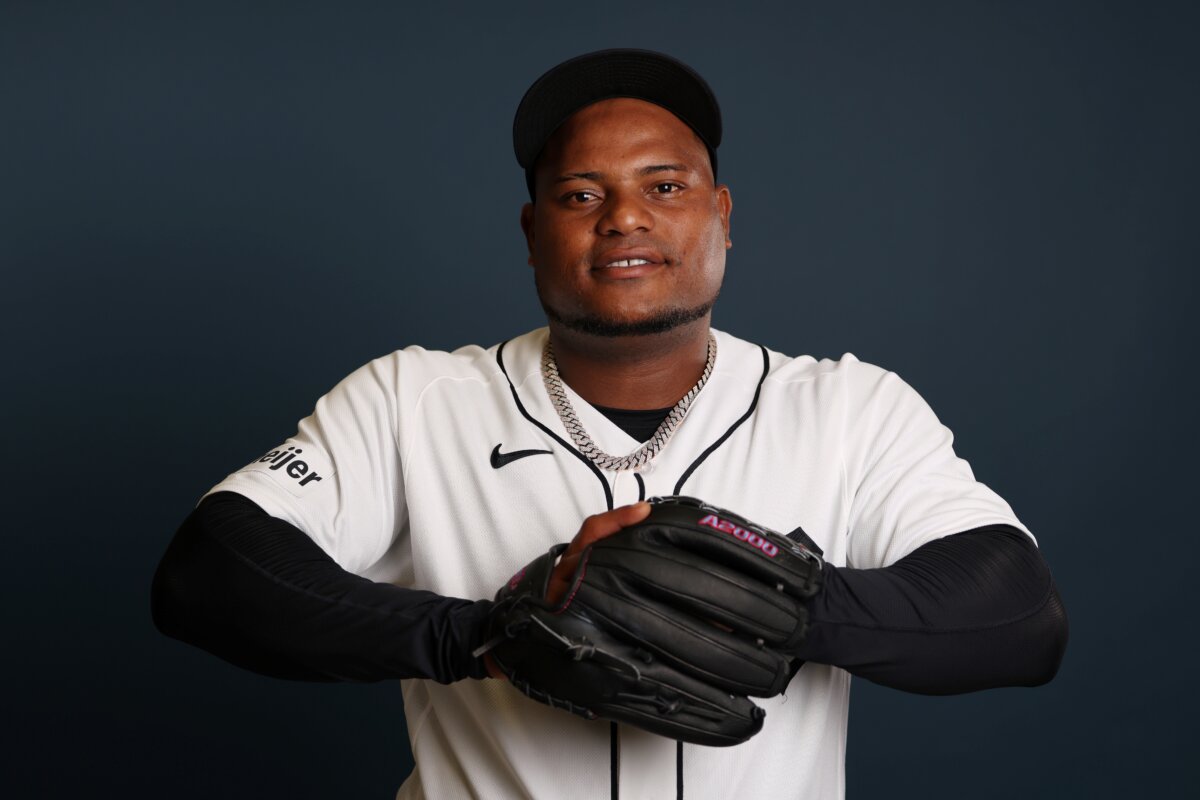

For the 2026 Detroit Tigers, anything less than a World Series championship is unacceptable.
There’s a sense of urgency swirling around the Tigers team going through spring training in Lakeland, Florida. General manager Jeff Greenberg and president of baseball operations Scott Harris assembled the roster for manager A.J. Hinch and his coaching staff to get the job done this season, because keeping the key pitching pieces together after 2026 is unlikely.
The leader of the starting rotation, Tarik Skubal, is all but assured to test his worth in the free agent market come fall. The Tigers took Skubal, winner of the past two American League Cy Young Awards, to salary arbitration, and the 29-year-old left-hander won his case. The arbitrator awarded Skubal $32 million for the upcoming season; Detroit had proposed $19 million.
The cost-conscious Tigers also went out and signed the prize of the free-agent pitching pack. Framber Valdez, after eight seasons with the Houston Astros and a World Series championship in 2022, was in search of greener pastures this past offseason. Valdez, 32, hit the baseball jackpot as the Tigers signed him to a three-year, $115 million deal, with a $20 million signing bonus.
Despite having two aces, Tigers management pursued another superstar arm: Justin Verlander, an old friend to Tigers’ fans, who spent 13 seasons in Detroit until being traded in 2017 to Houston. This month, Verlander inked a one-year, $13 million contract.
Verlander, 43, had a strong finish in 2025 that no doubt played into the club’s decision to take a chance on him for a 21st MLB season. Over his last 13 starts in 2025, he posted a 2.60 ERA. With 266 career wins, Verlander needs 34 victories to reach the magical 300-win plateau. Verlander is currently ranked 36th on MLB’s all-time wins list.
The No. 4 starting pitcher, Jack Flaherty, like Verlander and Skubal, is working on a one-year commitment. Flaherty exercised his $20 million player option in November.
Casey Mize, selected by Detroit in 2018 as the top overall MLB draft pick, this past January accepted a one-year, $6.15 million contract. Avoiding the often unpleasant salary arbitration process, Mize turned in an impressive 14–6 record in 2026.
With just Valdez guaranteed to be back in 2027, the time is now for the Tigers and their high-powered rotation.
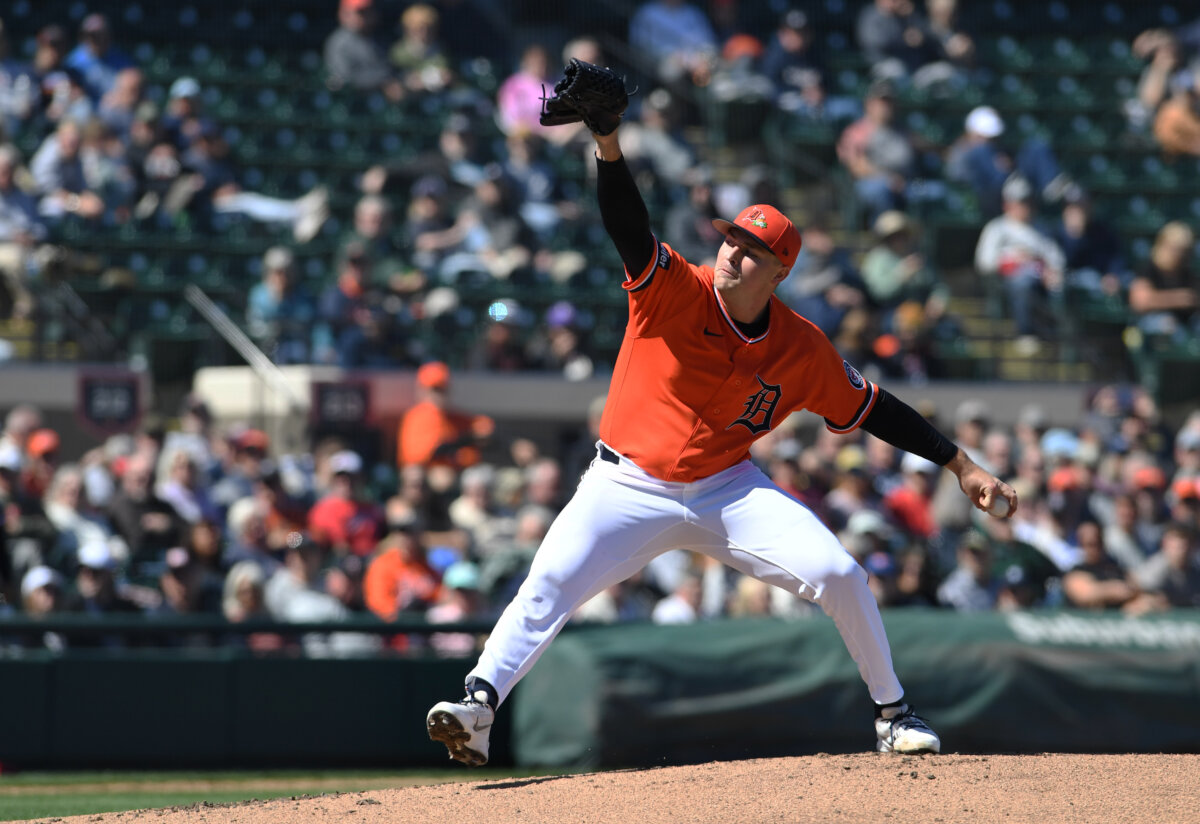
Aside from pitching, the other top story at the Tigertown training complex in Florida is infielder Kevin McGonigle, the team’s top prospect, and whether he will head north with them for the regular season.
McGonigle, drafted in 2023 by the Tigers, is the No. 2 prospect on MLB Pipeline’s Top 100 list. While speaking with MLB.com on “the McGonigle issue,” Harris remained uncommitted, at least publicly, on the infielder’s destination or what his position could be after the Grapefruit League schedule ends.
“McGonigle, No. 2 on MLB Pipeline’s Top 100 list, might have a chance to play his way onto the Opening Day roster in his first Major League camp,” writes MLB.com’s Jared Greenspan in a new article on Saturday.
“Sure, there’s not a clear spot for the 21-year-old in the Tigers’ infield, but these situations tend to work themselves out. McGonigle continues to turn heads, most recently winning MVP honors in the Arizona Fall League. Tigers’ president of baseball operations Scott Harris has said that McGonigle will play quite a bit of shortstop this spring, after playing primarily third base in the AFL. His short-term positional fit is worth keeping an eye on.”
As of now, Detroit’s starting infield when camp breaks is: Colt Keith at third base, Zach McKinstry at shortstop, Gleyber Torres at second base, and Spencer Torkelson at first base.
Hinch’s recent comments in the Detroit Free Press seem to be leaning toward the possibility of McGonigle beginning the year at Triple-A with the Toledo Mud Hens of the International League.
“One of the things the young guys need is to experience something. It sounds super simple, but just play with the guy—play next to that guy. You need that experience of doing something with the boys to start settling in.”
Last season, Detroit averaged 29,796 fans at home games, for a total attendance of 2,413,442. The Tigers’ highest home attendance came in 2008 at Comerica Park when it attracted 3,202,654 fans.
If the starting pitching remains successful and healthy, and if McGonigle does make the team coming out of camp and performs like so many are predicting, for the first time since the 2013 season, the club has a very real shot at topping the 3 million mark.
There are a lot of “ifs” associated with a ball club’s success, plus some luck sprinkled around the lineup, and the Tigers’ leadership is well aware of their short window to win big in 2026.
 Friends Read Free
Copy
Facebook
Tweet
Friends Read Free
Copy
Facebook
Tweet