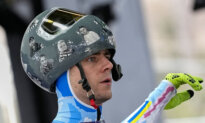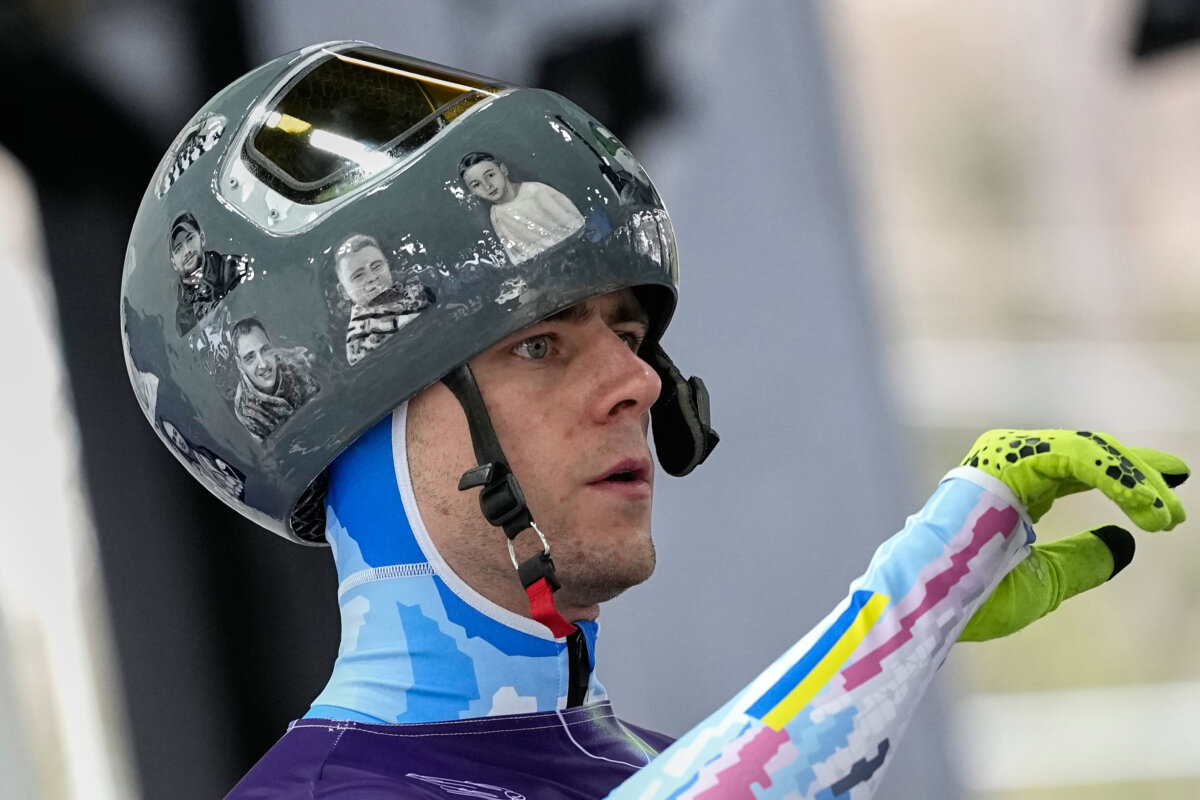
A Ukrainian Olympian was barred from racing in the men’s skeleton event on Feb. 12 after refusing Olympic officials’ demand to stop wearing a helmet honoring the Ukrainian athletes and coaches who have died during his nation’s war with Russia.
Vladyslav Heraskevych had been tipped as a medal contender at the Milano-Cortina Winter Olympics, but his Olympic dreams were cut short around 45 minutes before the competition started.
Heraskevych said he knew he risked being disqualified for wearing a helmet that the International Olympic Committee (IOC) says violates rules against making statements on the field of play.
The International Bobsled and Skeleton Federation (IBSF) said his decision to wear the helmet was “inconsistent with the Olympic Charter and Guidelines on Athlete Expression.”
Heraskevych, Ukraine’s first-ever competitor in the event, wore the helmet in training, but the IOC asked him to wear different headgear during the race. As concessions, it offered wearing a black armband or allowing him to display the helmet once he was off the ice.
“I believe, deeply, the IBSF and IOC understand that I’m not violating any rules,” the Ukrainian slider said.
“Also, I would say [it’s] painful that it really looks like discrimination because many athletes already were expressing themselves. … They didn’t face the same things. So, suddenly, just the Ukrainian athlete in this Olympic Games will be disqualified for the helmet.”
IOC President Kirsty Coventry went to the sliding center to meet Heraskevych ahead of the event and waited at the top of the track when he arrived around 8:15 a.m., at which point they met privately.
“We didn’t find common ground in this regard,” Heraskevych said.
“I felt that it was really important to come and talk to him face to face,” Coventry, herself a former Olympic gold medalist in swimming, said.
“No one—no one, especially me—is disagreeing with the messaging. The messaging is a powerful message. It’s a message of remembrance. It’s a message of memory.”
“It’s not about the messaging; it’s literally about the rules and the regulations. In this case—the field of play—we have to be able to keep a safe environment for everyone. And sadly, that just means no messaging is allowed,” she added.
Coventry said they tried to find ways to honor his message before he races, but “sadly, we’ve not been able to come to that solution.”
“We have these rules in place to try and be fair, and also to try and allow for us to do both things: to allow for athletes to express themselves, but also to allow for athletes to be safe,” she said.
Heraskevych said he would appeal to the Court of Arbitration for Sport, but the race went on without him.
The first two runs were on Feb. 12; the last two will be on Feb. 13, so regardless of the court’s decision, he will no longer be able to compete.
The IOC, having initially revoked his credentials, is now letting him keep them, meaning he can remain at the Games as an athlete, though he will not compete.
The decision to disqualify Heraskevych drew immediate condemnation from Ukraine.
“Sport shouldn’t mean amnesia, and the Olympic movement should help stop wars, not play into the hands of aggressors,” Ukrainian President Volodymyr Zelenskyy said in a Feb. 12 X post.
“Unfortunately, the decision of the International Olympic Committee to disqualify Ukrainian skeleton racer Vladyslav Heraskevych says otherwise.”
The slider’s coach and father, Mykhailo Heraskevych, said that the IOC has “destroyed our dreams.”
“It’s not fair,” he added.
There are 13 Russians competing at the games as neutral athletes, along with seven from Belarus. They are not allowed to compete under their national flag or anthem.
The Associated Press contributed to this report.
 Friends Read Free
Copy
Facebook
Tweet
Friends Read Free
Copy
Facebook
Tweet