Want to hunt down lost art stolen by Nazis? There’s an AI for that.
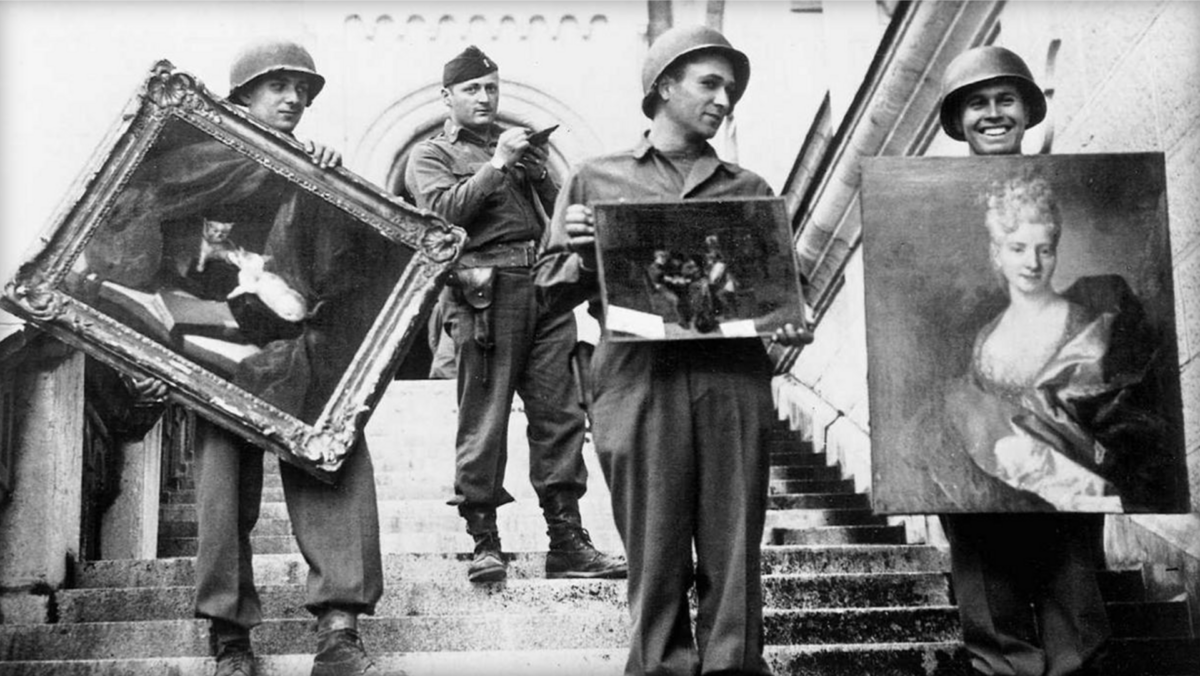
The largest art heist in history took place between 1933 and 1945, when the Nazis seized some 650,000 works of art, mostly owned by Jews. Hitler aimed to create a museum composed of a vast collection of classical art, and the effort accelerated after the Nazis occupied Paris in 1940. Led by Alfred Rosenber, the Reichsleiter Rosenberg Taskforce was a Nazi Party organization established specifically for plundering cultural property from conquered peoples.
In response, the Allies formed the Monuments, Fine Arts, and Archives Section, or “Monuments Men,” to protect and recover important cultural artifacts targeted by the Germans. It inspired a 2014 film.
The quest to recover and return the remaining 100,000 lost treasures continues to this day, and it’s now getting a 21st-century upgrade in the form of a Santa Clara University project called “AI Provenance Assistant.” A digital version of a provenance researcher, the AI Provenance Assistant scours a key database with information about lost works of art to streamline the process of tracing their history and possible locations.
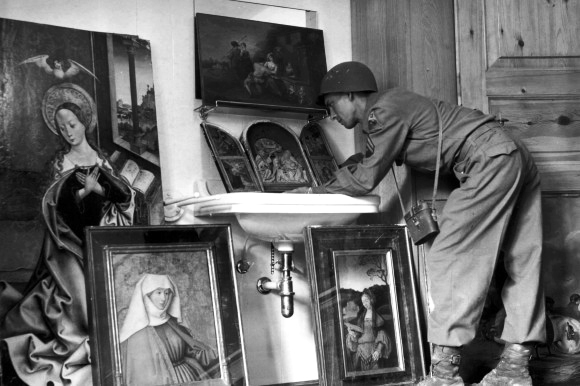 A monuments man washes his hand in a sink beside famous historical artworks. (Public Domain)
Not-so-Secret (AI) Agent
The tool was built by management professor Michael Santoro and information systems and analytics professors Haibing Lu and Michele Samorani of Santa Clara University, along with some student research assistants. They began by scraping data from the 30,000 items that passed through the Jeu de Paume museum in France after it was seized by the Nazis and used as a repository for stolen art.
“We are applying AI tools to make it easier to make the kinds of connections that seasoned researchers would have to spend a long time having to do manually,” Santoro told NPR.
As Deborah Lohse, writing for Santa Clara University, explained, the AI can receive a human inquiry in plain language, compare it to the database, and spit out a plain language response that explains why a certain record matches the request.
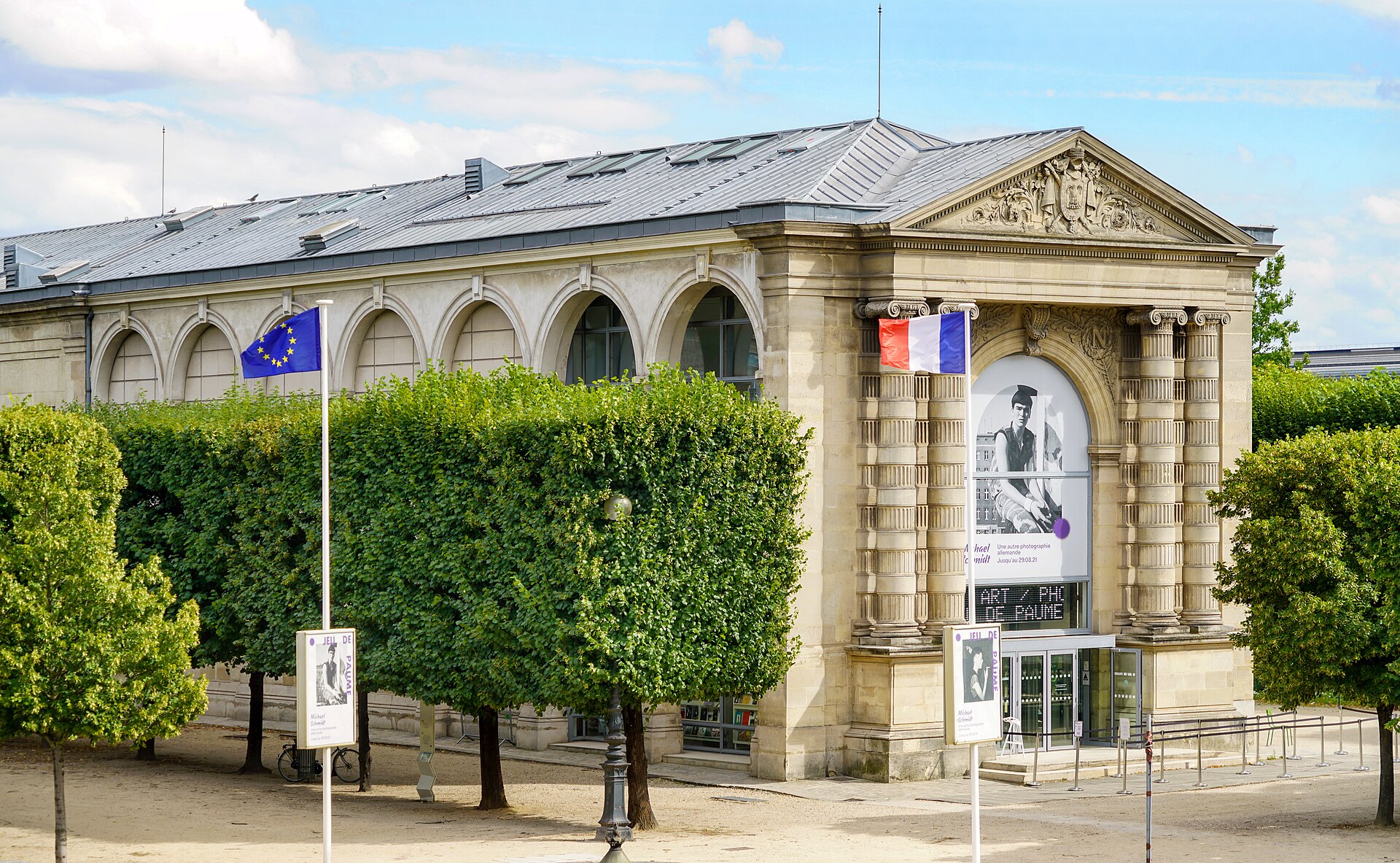 The Jeu de Paume musuem in France housed artworks stolen by the Nazis. (Jean-Pierre Dalbéra/CC BY-SA 2.0)
A researcher can ask the AI, “How many pieces of art were shipped to Nazi leaders?” or “Which records include URL images?” and it will provide an answer.
Santaro brought in Wendy Goldberg, an experienced tech strategist, to assist with developing the tool further. Goldberg told Lohse:
“When I was at AOL, it was all about making the internet as easy to use as the telephone and the television. This [new tool] is making using AI for restitution and tracking art as easy to use as any other technology application. You don’t have to be a genius to find the provenance and track the trail of stolen art.”
This approach could help knock a dent in the number of remaining lost pieces of art, which includes Raphael’s “Portrait of a Young Man.” This work of rare genius is reportedly worth $100 million, and is considered the most important painting to vanish in the smoke and travail of World War II.
When the Nazi war machine rolled toward Krakow in September 1939, the painting was hidden in an aristocratic house in the Polish town of Sieniawa. Unfortunately, the Nazis discovered it there a few weeks later. Raphael’s painting was taken to the residence of Hans Frank, head of the General Government, a colonial-style administrative structure established by the Nazis to rule central Poland. Eventually, “Portrait of a Young Man” found its way to Hitler’s own collection in Linz.
 Raphael’s “Portrait of a Young Man” was lost after WWII. (Public Domain)
From there, the portrait dropped out of the historical record, vanishing into the cracks of history.
The recovery of the remaining pieces of Nazi-looted art, such as “Portrait of a Young Man,” slowed after an alliance of museums that had been working together disintegrated. Most of the easily-identified and highly-valuable pieces (with the exception of “Portrait”) had already been recovered, reducing the incentive for further investigation. By streamlining the research process, the new AI tool could help reboot the effort to get the stolen property back.
Santa Clara University isn’t the only institution making use of AI to track Nazi-looted cultural artifacts. The Legacy Explorer is the Jewish digital Cultural Recovery Project Foundation’s artificial intelligence that allows users to search records and photographs of cultural property from multiple databases.
These tools, though in the early stages of development, may play an important role in finally righting the injustices committed during that turbulent period and restoring to their rightful owners the precious cultural heritage that was another casualty of war. Here, we have a use of AI that can serve to protect cultural heritage, rather than obscure or obstruct it. It’s a model for other digital humanities projects to consider.
What arts and culture topics would you like us to cover? Please email ideas or feedback to features@epochtimes.nyc.