

For many companies, artificial intelligence (AI) systems are supposed to streamline operations, cut costs, and unlock new revenue streams.
However, the corporate AI gold rush is proving expensive, and the returns on investment aren’t evenly distributed. Investors, business leaders, and analysts say the difference between making money from AI purchases and ending up in the red boils down to having a solid strategy and knowing where the technology creates actual value.
Research firm Gartner estimated global AI spending totaled $1.5 trillion in 2025. The United States alone is on track to invest $758 billion in AI by 2029, according to an International Data Corporation analysis.
While the lion’s share of that spending goes to hyperscalers such as Amazon and Google, small and medium-sized enterprises are also spending heavily. A 2025 SmartDev report noted that companies “routinely underestimate” AI project costs by upwards of 1,000 percent when scaling from pilot to production.
The analysis stated the average $50,000 investment in AI initiatives by small and medium-sized businesses will cost between $200,000 and $500,000 over five years.
SmartDev researchers attributed most of this to a lack of understanding surrounding their AI purchases, saying, “AI implementation resembles adopting a new employee more than installing software. You need training, ongoing support, regular updates, and infrastructure that grows with your business.”
An Ernst & Young survey supports these findings. From a pool of 975 executives interviewed at large firms, 99 percent reported financial losses tied to “AI-related risks,” with almost two-thirds reporting losses of more than $1 million. The average loss among the survey group totaled $4.4 million.
According to the survey, the most common AI risks are non-compliance with AI regulations, negative impacts to sustainability goals, and biased outputs.
“The widespread and increasing costs of unmanaged AI underscore a critical need for organizations to embed practices deep within their operations to not only reduce risks but also accelerate value creation,” said Raj Sharma, global managing partner for growth and innovation at Ernst & Young.
Alok Aggarwal, CEO and chief data scientist at SCRY AI, said the Ernst & Young survey “feels spot on.”
“I’ve watched companies dump cash into AI last year … Nearly all the big ones took losses, billions gone,” Aggarwal told The Epoch Times.
Bandwagon Effect
Aggarwal, who is in the AI industry and is also a former IBM researcher, has seen some AI investments go wrong.
“CEOs aren’t thrilled because those $1 million-plus gen [generative] AI spends go mostly to patching problems, not profits. Pilots never turn into daily workhorses,” he said.
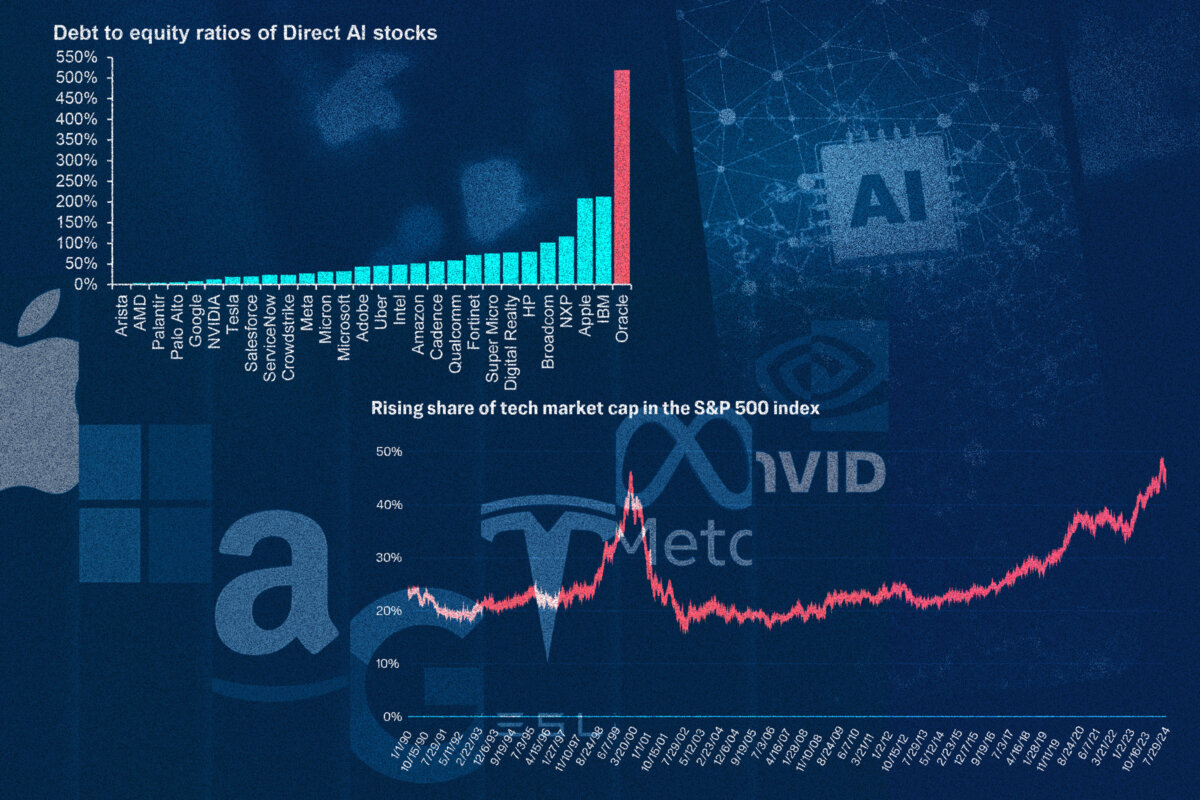
Emerging analytical frameworks suggest current return on investment calculations may overlook risk factors in AI projects, which may explain why some companies struggle to quantify value.
Paradoxically, research from Deloitte shows that while AI return on investment remains elusive for some, investment momentum continues.
Aggarwal believes companies need to carve out a specific niche for their AI purchases.
“Winners nail clear goals, clean data, and vendor teams over in-house builds. Losers chase hype without linking to real jobs. Firms picking ready-made stuff double their wins compared to custom jobs,” he said.
Meanwhile, companies of all sizes are making money from AI purchases. Some say the difference between those turning a profit and those losing money is investing as much into learning and training as the product itself.
“Many leaders are under pressure from boards to ‘do AI,’ which creates a rush to launch projects without discipline,” Joe Sagrilla, a faculty member at the University of Texas McCombs School of Business, told The Epoch Times.
“I’ve seen technology companies mandate AI usage, so employees comply by using it to summarize meeting notes they don’t actually need.”
Sagrilla said it’s “Goodhart’s Law” in action, an adage that states that when a measure becomes a target, it ceases to be a good measure.
“The metric becomes ‘AI adoption’ rather than value creation. Meanwhile, real value is being created but not captured,” he said.
Sagrilla has observed that many organizations treat AI like enterprise resource planning, which is a top-down system.
“But immediate AI [return on investment] is bottom-up: individuals finding efficiencies in daily work,” he said.
“Most companies haven’t figured out how to measure and capture that value back.”
Playing to Win
Aaron Whittaker, vice president of demand generation at Thrive Internet Marketing Agency, said adjustments were made after his company’s initial AI purchase, which is already starting to pay off.
“In our company’s experience, the [return on investment] gap is less about gen-AI capability and more about execution alignment,” Whittaker told The Epoch Times.
“We initiated our journey with an investment of approximately $100,000 across licensing, integration, and structured training, expecting visible efficiency gains within the first quarter. However, we quickly encountered a data hygiene wall,” he said.
“Since 25 percent of our reporting inputs were stored in disconnected files and inconsistent formats, the AI outputs required constant manual validation,” Whittaker said.
It was only after his team streamlined their documentation into a single reporting structure and assigned data ownership that this started to change.
“We also learned that using AI just to write things didn’t really help our bottom line. The real financial change happened when we stopped using it as a writing assistant and built it into our actual platform to handle specific tasks,” he said.
Whittaker believes CEOs who are losing money on their AI systems are running their business “the old way” and not creating a specific role for the technology.
“You only get your money back when you stop paying for the novelty of the software and start using it to strip away the grunt work that actually eats up your day,” he said.

Rocky Chai, CEO of Ultra Cleaning, almost lost six figures on an AI purchase before taking a hard look at the real-world “value add” for his business.
“I nearly made a $120,000 mistake. A vendor promised their system would ‘completely automate’ our operations, but after two months of testing, I realized it couldn’t handle the messy reality of service work where clients change requirements mid-job or weather delays everything,” Chai told The Epoch Times.
Ultimately, this led Chai to make a smarter AI investment that fits his operation and is already yielding positive results.
“Industries seeing returns are those with repetitive, data-heavy operations where AI actually excels. In our case, route planning and schedule matching gave us 23 percent fuel savings and 18 percent productivity gains within six months because those tasks are pure logic and data,” he said.
Chai also believes return on investment on AI spending is directly tied to implementation quality rather than the technology itself. “We spent three months training our team and adjusting the AI to our specific workflows before going live,” he said.
“Companies that skip this step and expect plug-and-play results typically see poor adoption and wasted investment. The disappointment isn’t about overhyped AI, it’s about poor implementation and unrealistic expectations about what AI can actually do versus what humans still do better,” he said.
Sagrilla shares this sentiment and said many business leaders lack the “digital fluency” to separate signal from noise.
“I’ve seen legacy automation projects relabeled as ‘AI’ to secure funding or claim wins. Organizations are taking a haphazard approach by releasing tools without strategy, launching projects without assessing data quality or workflow readiness,” Sagrilla said.
Only 44 percent of chief information officers were considered “AI-savvy” by their CEOs, according to a 2025 Gartner study.
“AI is not just an incremental change from digital business. AI is a step change in how business and society work. A significant implication is that, if savviness across the C-suite is not rapidly improved, competitiveness will suffer, and corporate survival will be at stake,” David Furlonger, analyst and Gartner fellow, stated.
Research from Kearney 100 showed that despite 78 percent of polled CEOs saying they felt confident about AI investments, the most successful businesses were the ones in which CEOs had a backseat role in AI strategy.
“The study uncovered a striking disconnect: the most successful companies are those where top leadership deliberately steps back from hands-on AI strategy. In high-performing firms, only 59 percent of CEOs maintain direct oversight, compared to 92 percent among less successful ones,” the Kearney report stated.
Operational execution and strategy were instead given to specialized teams, which proved more effective and yielded better results.
“The [AI] disappointment hits more from businesses skipping training and rollout than vendors talking big. Leaders forget to weave AI into everyday tasks, and it flops,” Aggarwal said.
 Friends Read Free
Copy
Facebook
Tweet
Friends Read Free
Copy
Facebook
Tweet