You may not be able to spot many retro inventions nowadays that for whatever reason failed to catch on in their day—like the 1950s “fifth wheel” to simplify parallel parking, or the inflatable Pump sneaker that popped up in the 1990s to make you jump like Mike.
But thanks to the efforts of Vincent Loveall from Jeffersonville, Indiana, who dreams of a vintage revival in agriculture, the perfectly round barn of the late 1880s may live on. Round barns aren’t being preserved, Loveall tells The Epoch Times. They’re falling down from neglect, which is why he first started photographing their unique beauty in 1994.
While folk heritage structures like the charming wooden covered bridges of olden days now benefit from state preservation, round barns do not.
“A lot of farmers just don’t know exactly what they have. I’m able to explain it to them sometimes,” says Loveall, 52.
Loveall, who says he’s among the nation’s top two most knowledgeable experts on round barns, founded Round Barns of America and a community of at least 150 round barn owners nationwide, as well as preservation specialists, so that if anyone needs a new round roof or curved wood siding, someone knowledgeable will be handy.
There are approximately 600-plus round barns across the United States, says Loveall, adding that he lost track of how many he’s driven to after 400. They’re scattered mostly throughout the Midwest but also westward from Washington state to California. There are fewer out east, where crops like corn are less abundant.
The round barn movement began in earnest in 1874 when colonists strove to advance agriculture and innovators noted they’d save on costs and labor by crafting perfectly circular structures out of brick or curved planks of wood.
“If you take it apart and make a rectangular barn, the round barn with the same wall space would contain a lot more area,” Loveall, said. “You have less material needed to build it, but you also have the layout inside where they’re just more advantageous.”
That layout usually involves a door that opens to an alleyway which leads to a donut-shaped passageway in the center, from which all the surrounding stalls on the outskirts are easily accessible.
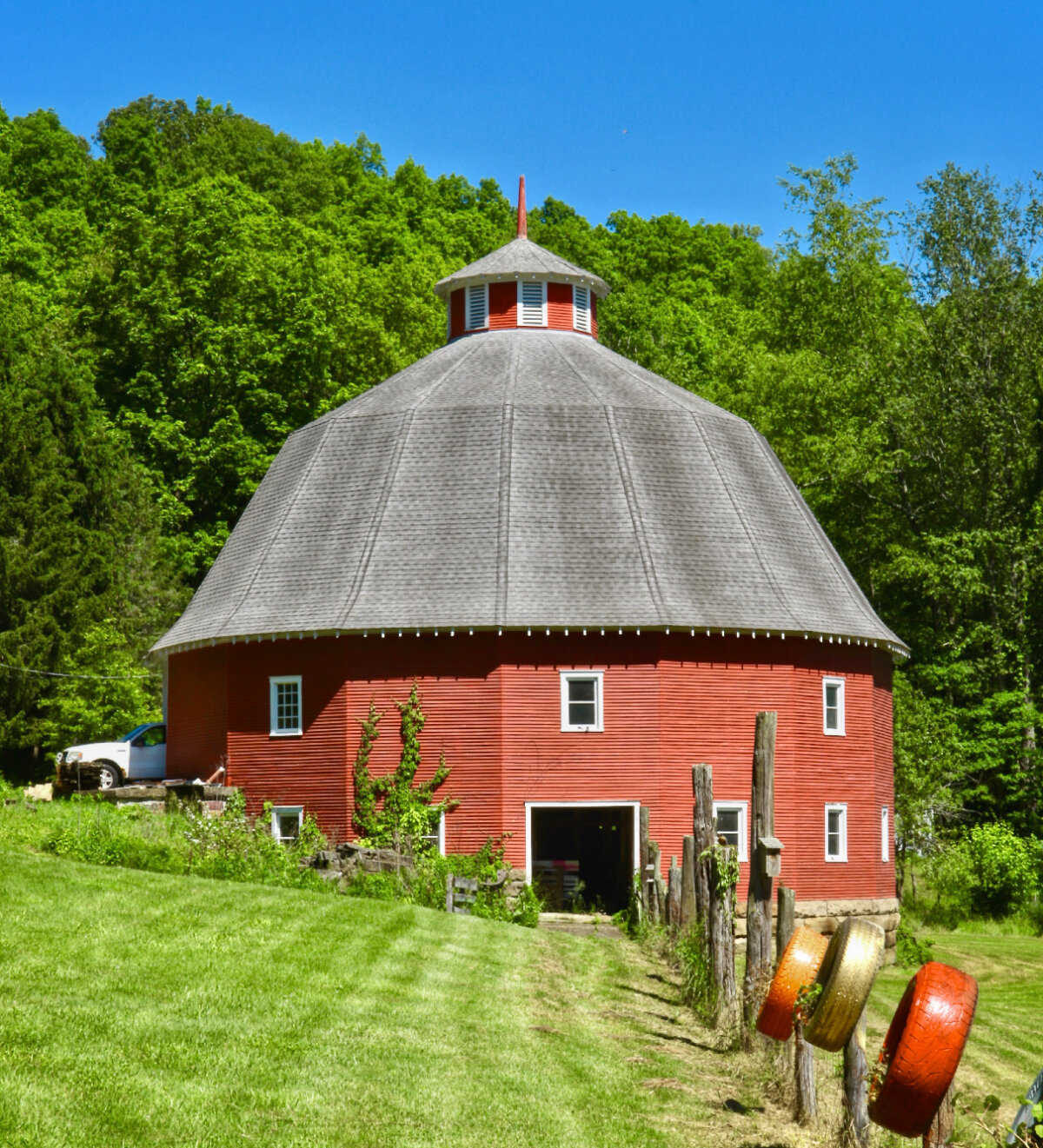
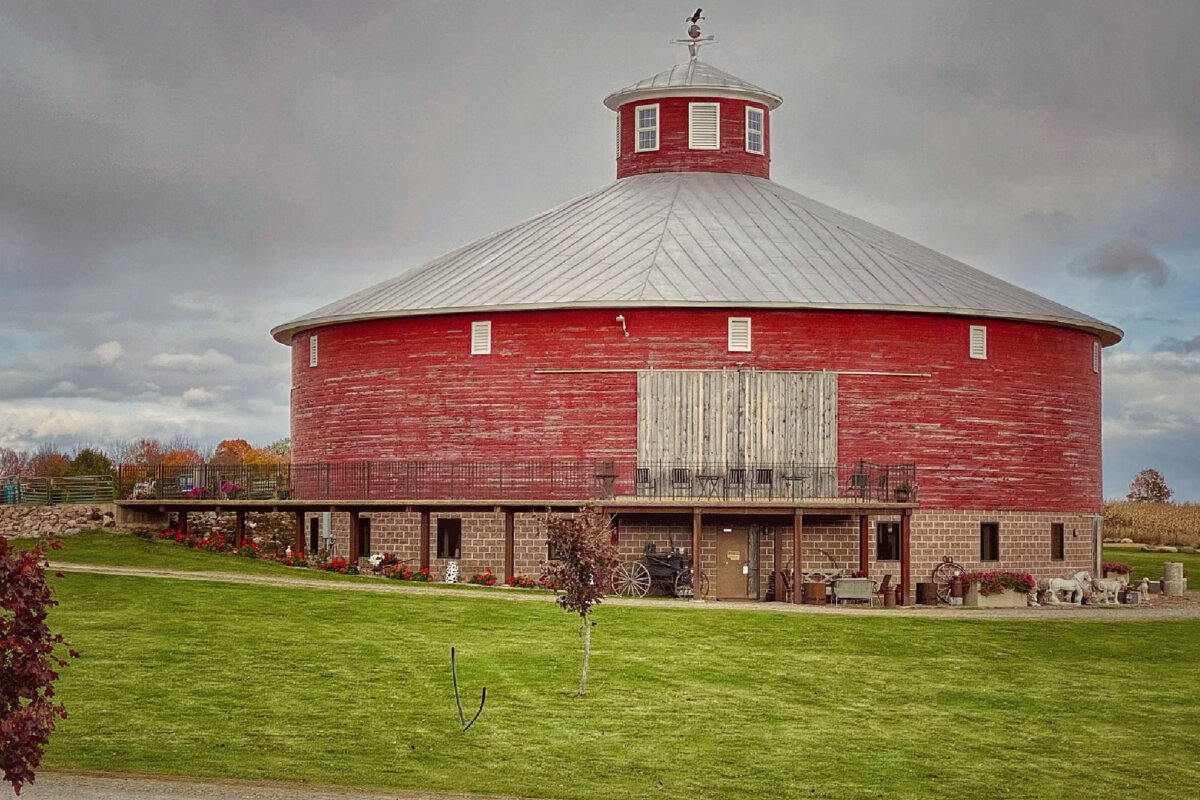
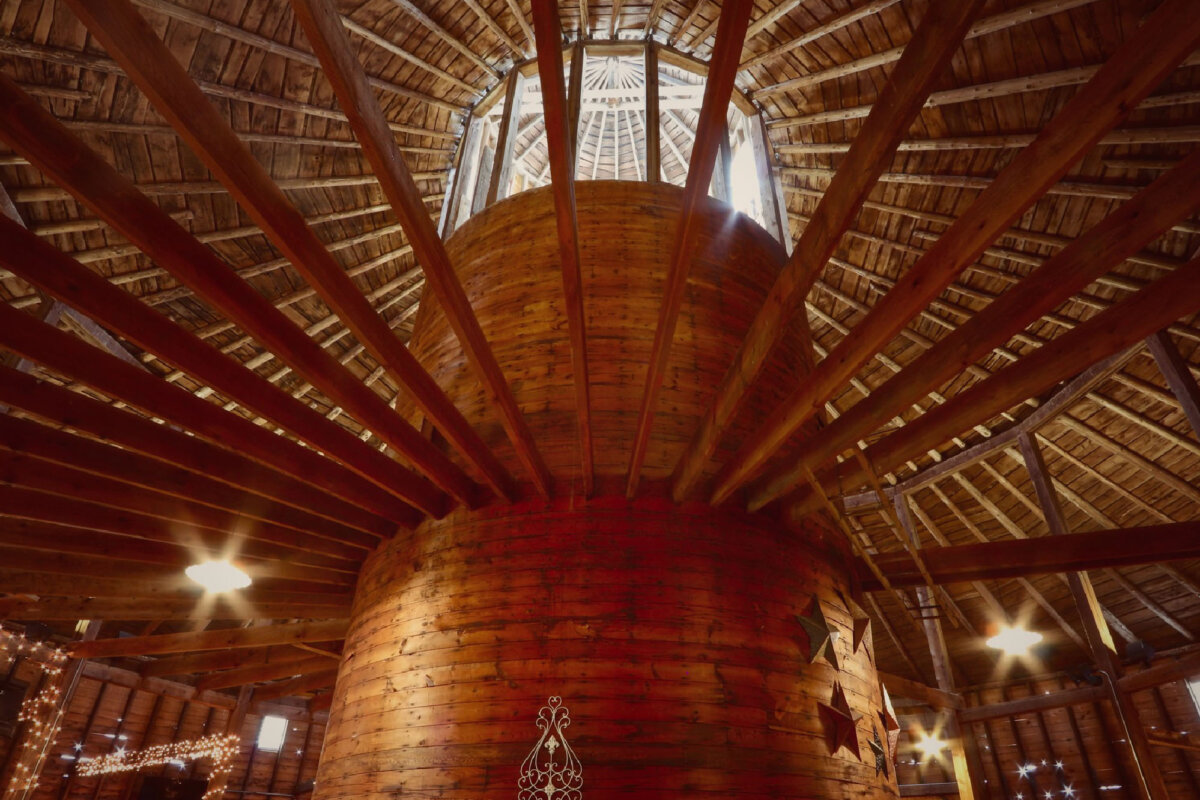
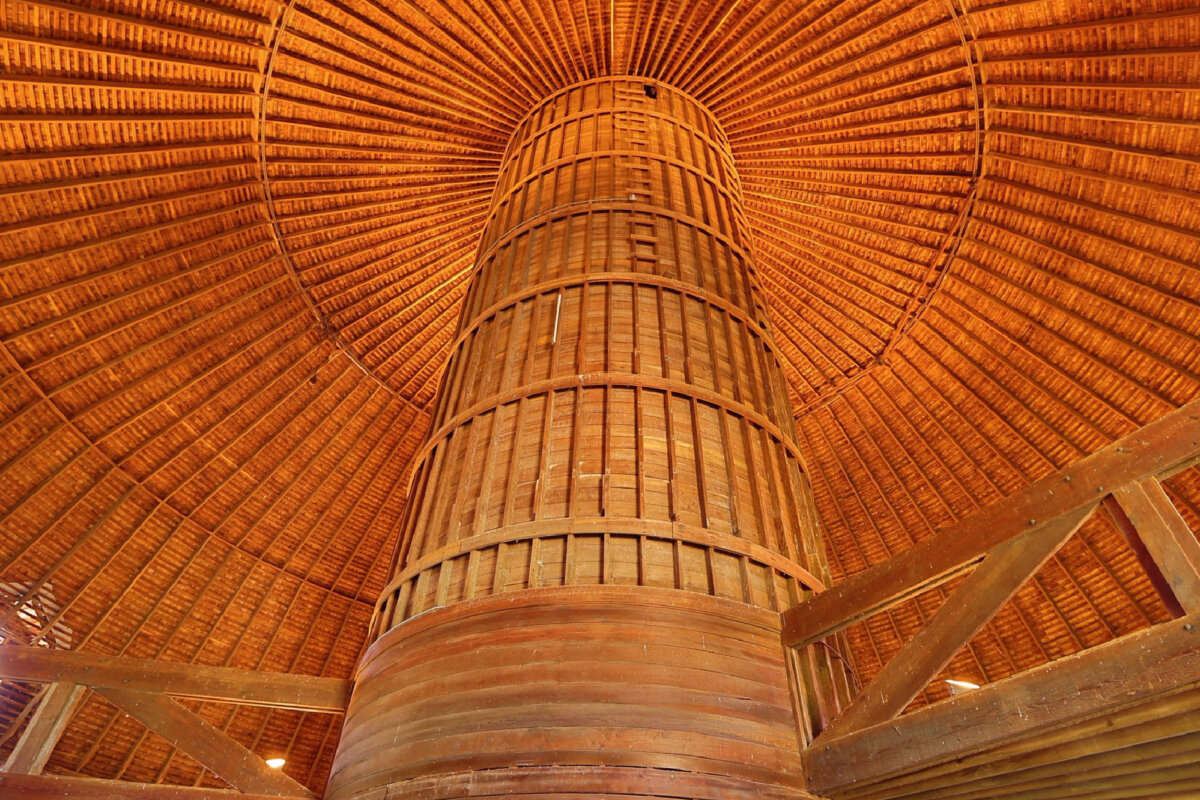
Loveall described more innovations. Many barns hid a grain silo in their hub which protruded out through the roof. Round barns housing dairy cows allowed farmers to feed all their livestock simply by walking a tiny loop. Some had self-supporting roofs so beams weren’t needed.
“Another advantage was wind,” he said. “Wind goes around a round barn better than a square one.”
Despite all the pros, however, most farmers probably just smiled and dismissed them as a novelty. The vast majority stuck to the rectangular barns they knew. Perhaps one in a thousand went with round, Loveall says.
Not only that, but by the early 1900s, mechanized farming made round barns redundant. Farmers who once sought to shorten distances measured in footsteps to deliver product to their cattle had entered a new paradigm.
“Once tractors came in 1910 and more people started getting tractors, who cares about footsteps?” Loveall said. “They couldn’t fit the tractors inside the barns properly, things like that.”
Expansion was yet another factor. “How do you expand a round barn?” he said. It’s easier to add onto a square one.
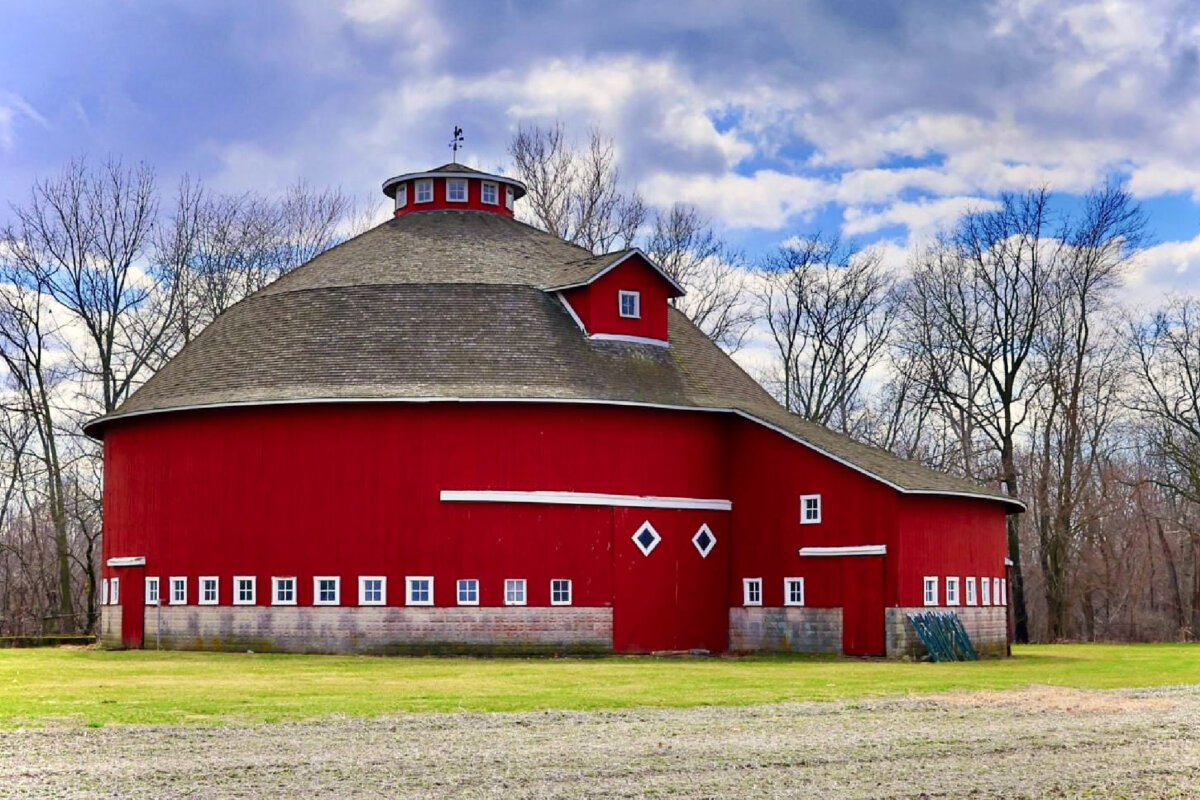
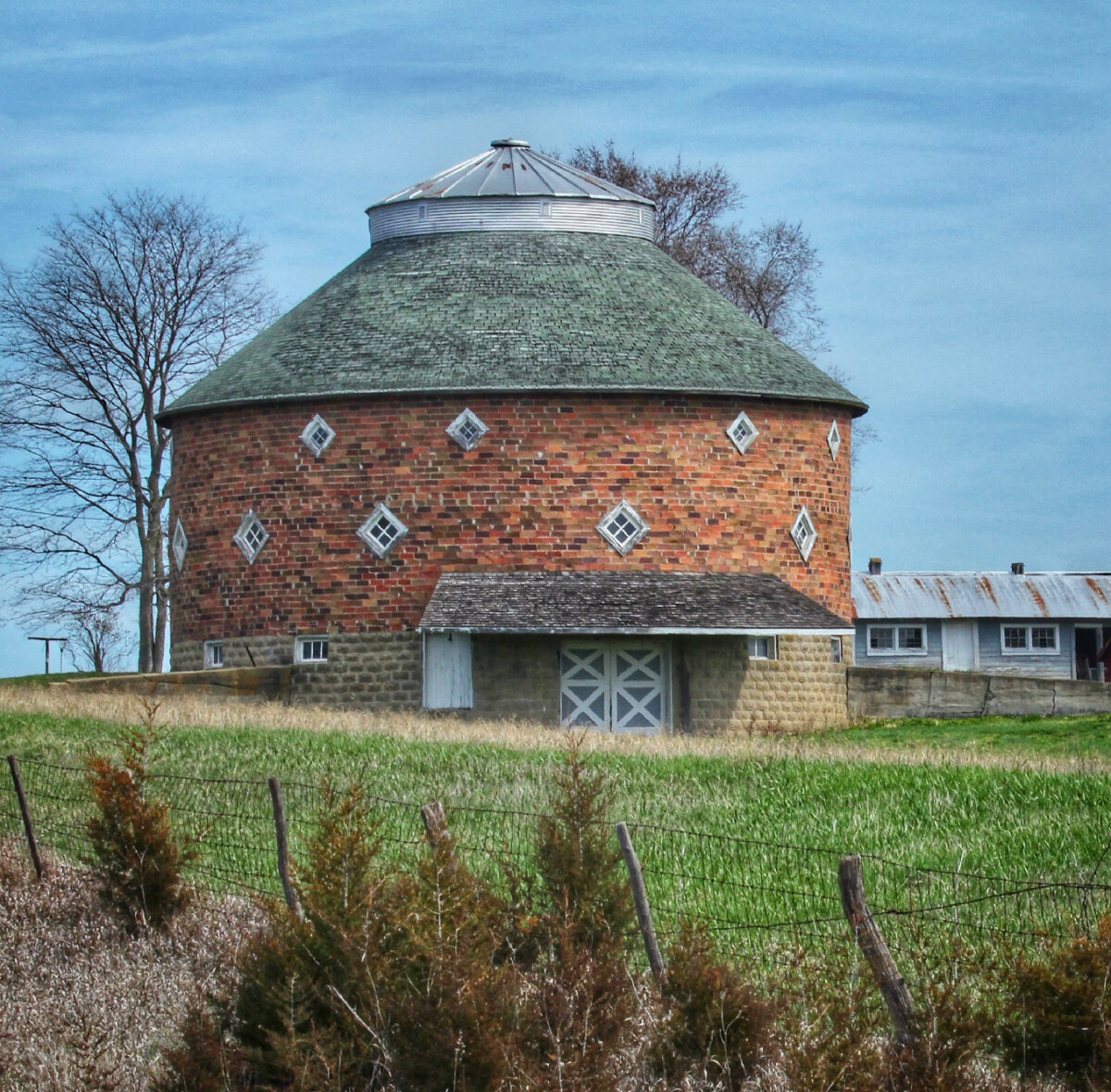
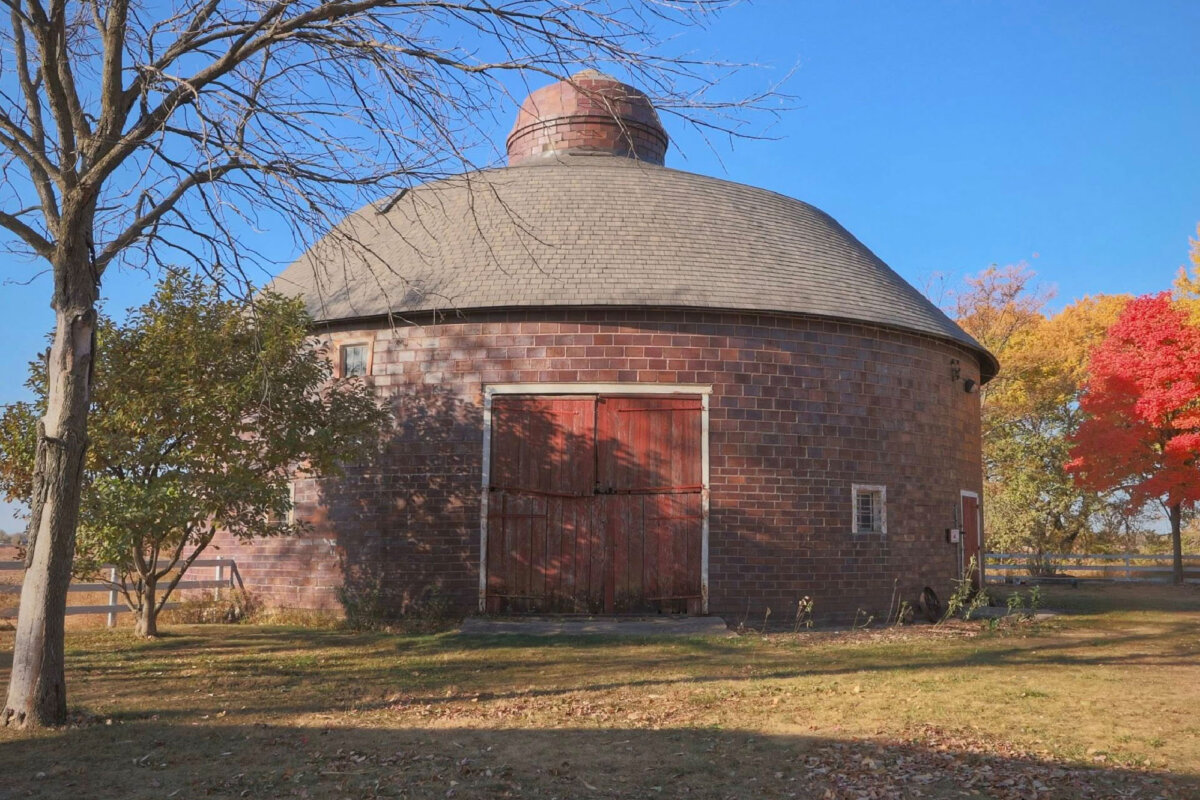
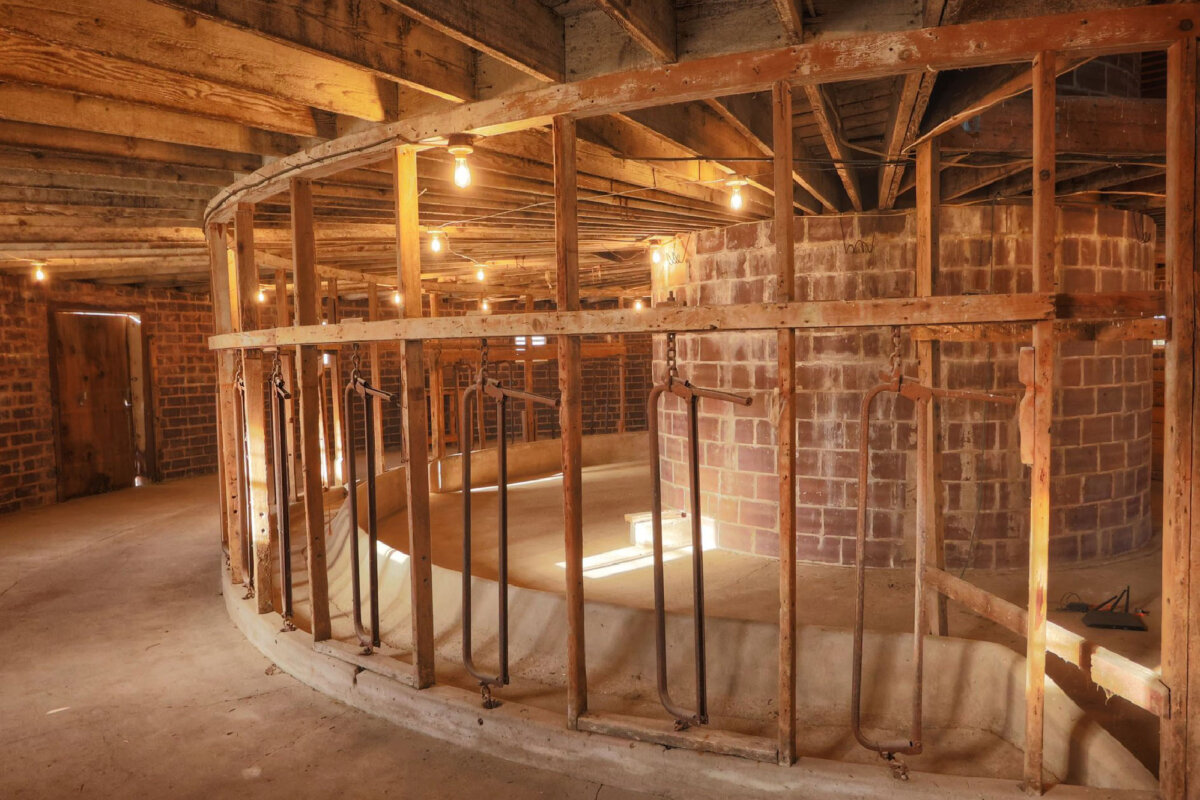
In their heyday, however, round barns were taken seriously by high-profile figures wanting to promote agricultural efficiency in the expanding colony—which is probably why round barns are quintessentially American (although Loveall says there are a few in Europe).
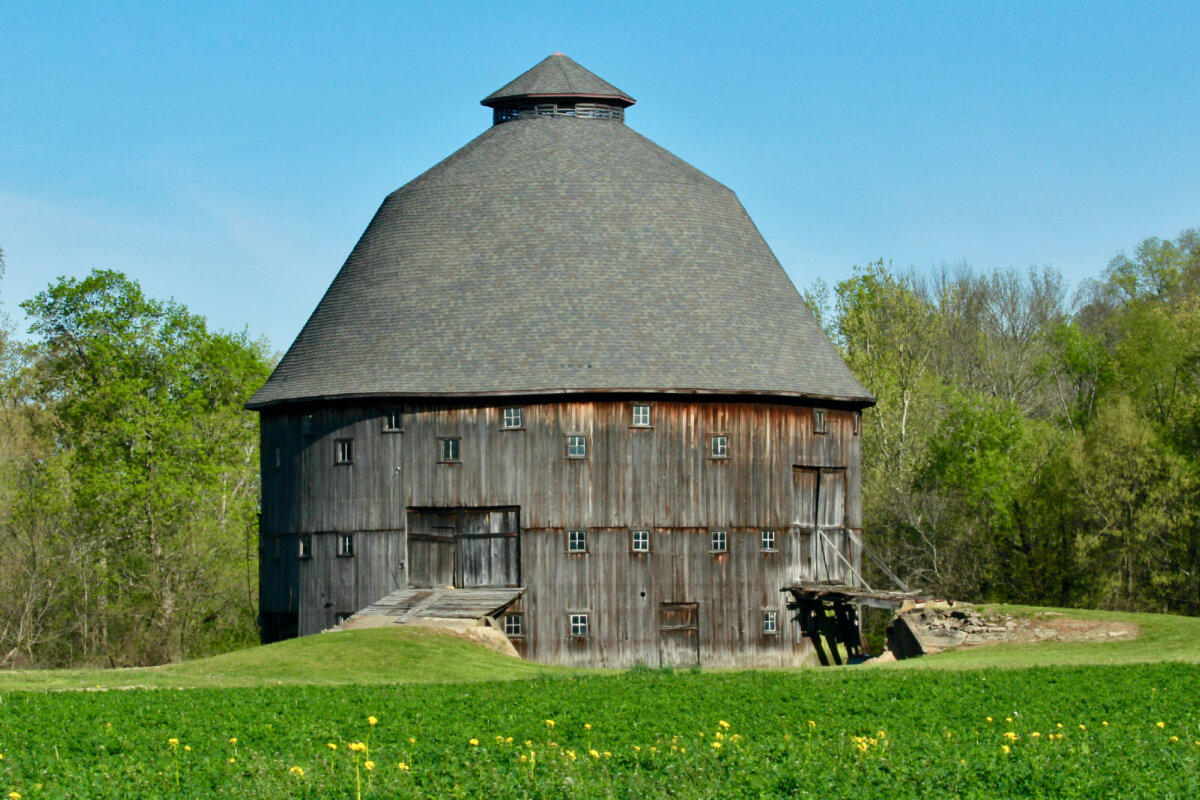
“In 1793, George Washington built on his property a 16-sided barn,” Loveall said. “Round barns are polygonally shaped or truly round.”
The New York Crystal Palace, which opened in 1853, was built in an octagonal shape with a huge central glass dome as America’s first exposition building. Loveall said this may have influenced county fairs and inspired round buildings for animals.
Officially, the movement was sparked by Elliott Stewart when his fully-functional octagonal barn was raised in 1874, though the first truly circular barn—complete with curved horizontal wood siding—was built in 1889 by Franklin King, a professor at the University of Wisconsin. The barns were promoted by the Agricultural Experiment Station and patented by individuals—like Frank Littleton, the lawyer/state representative from Indiana who owned the state’s largest round barn, 102-feet in diameter, and patented its self-supporting roof.
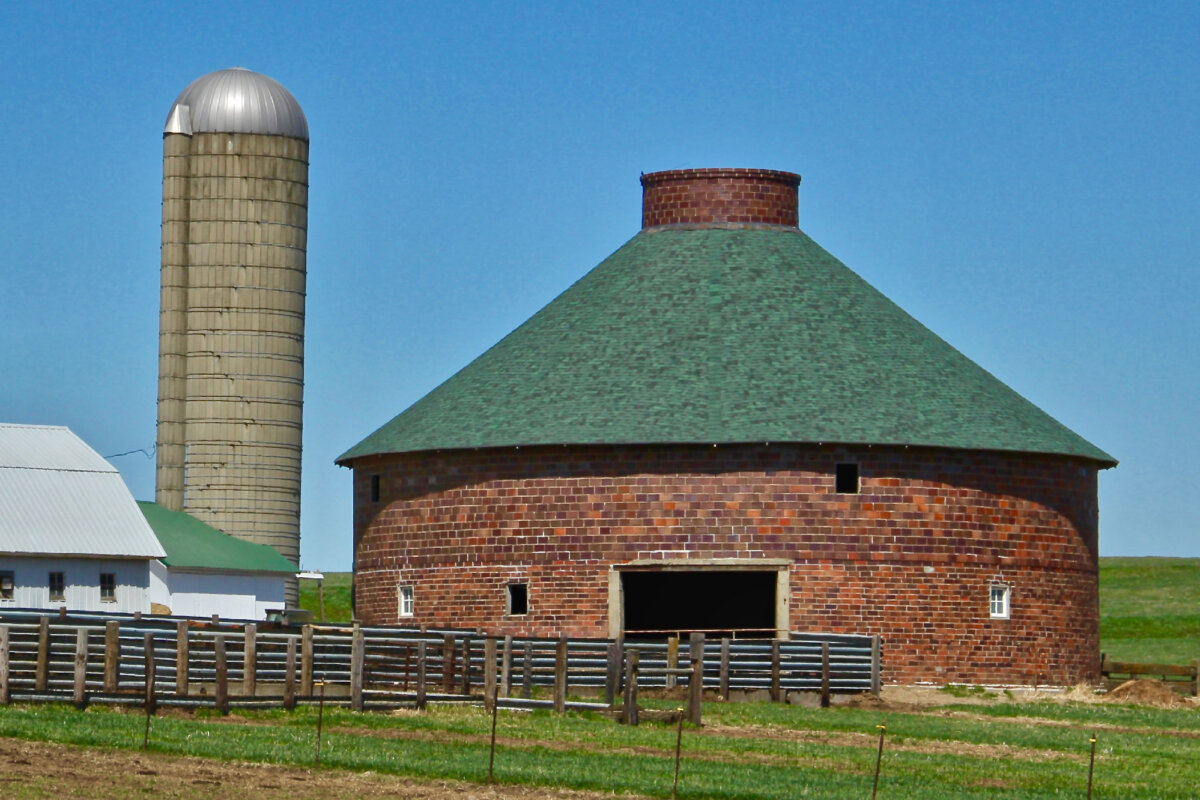
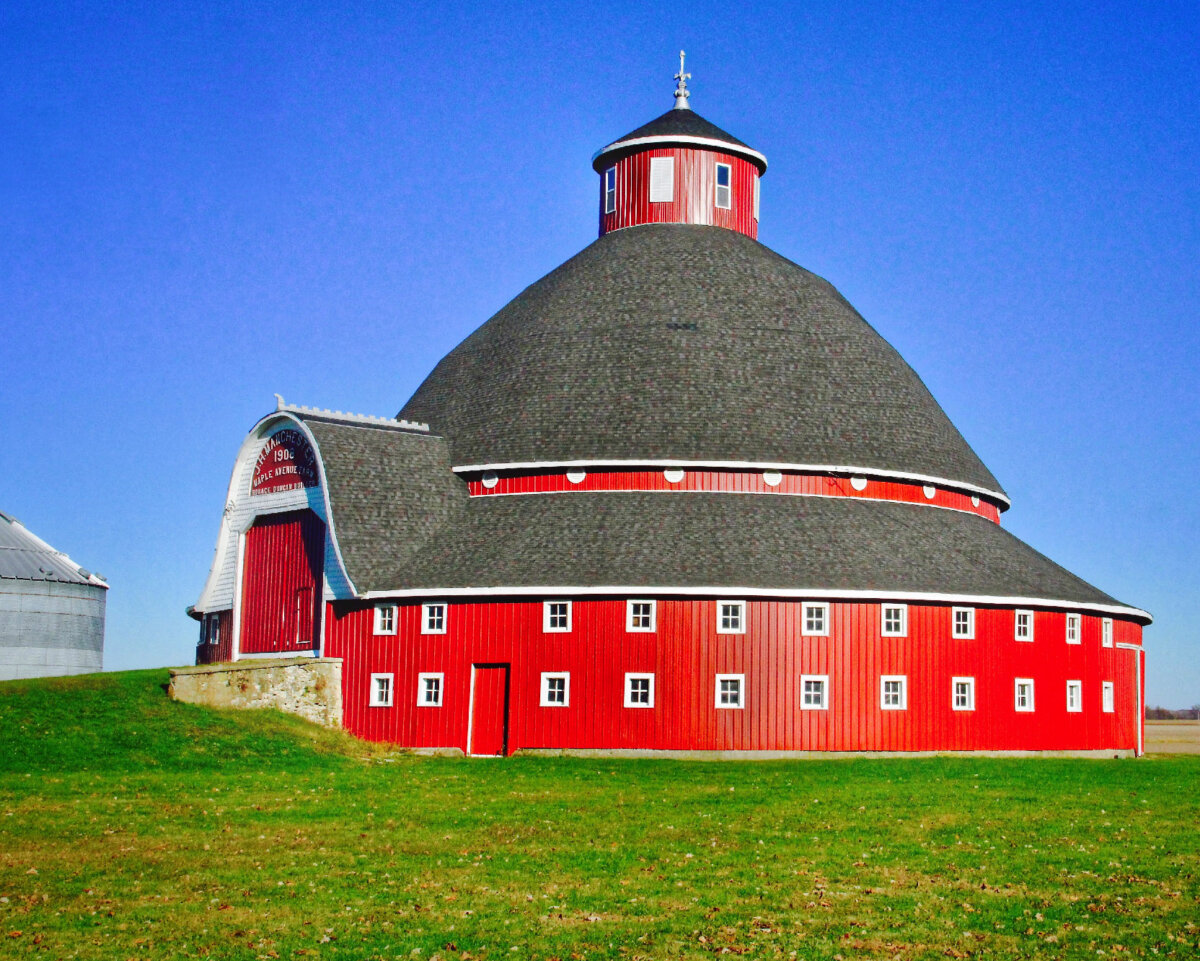
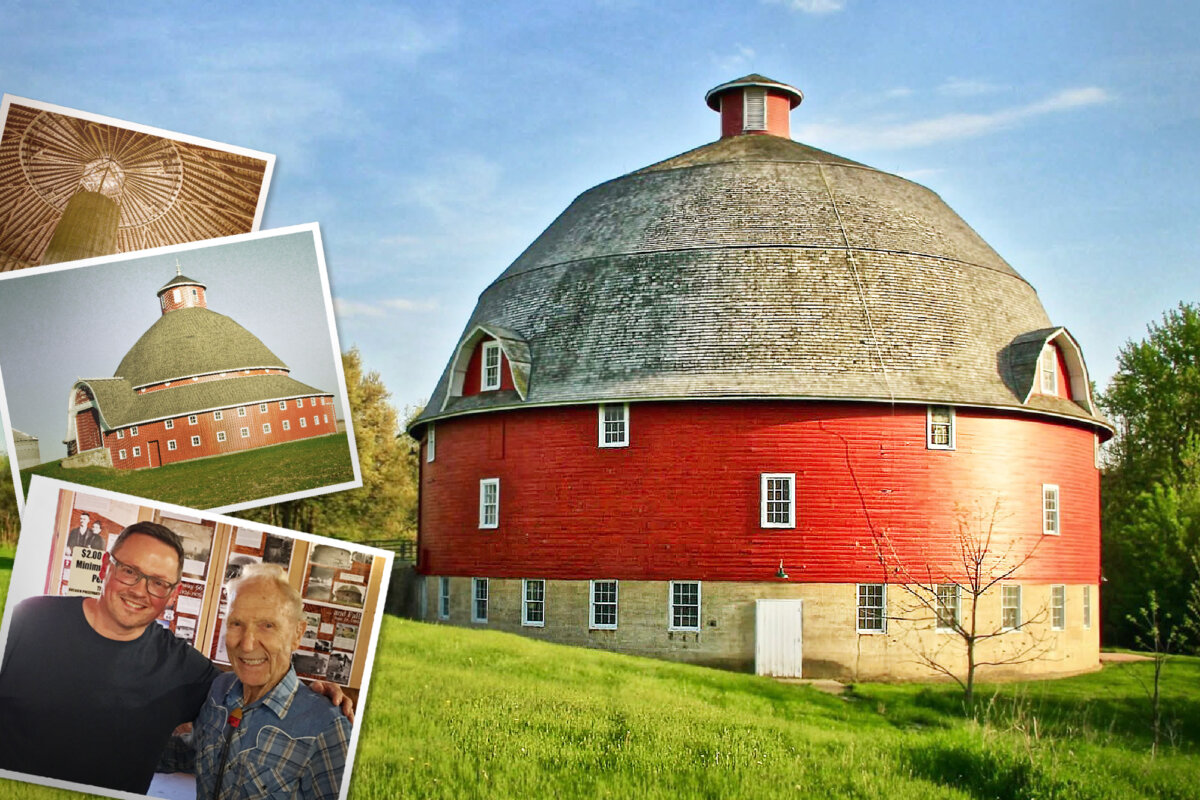
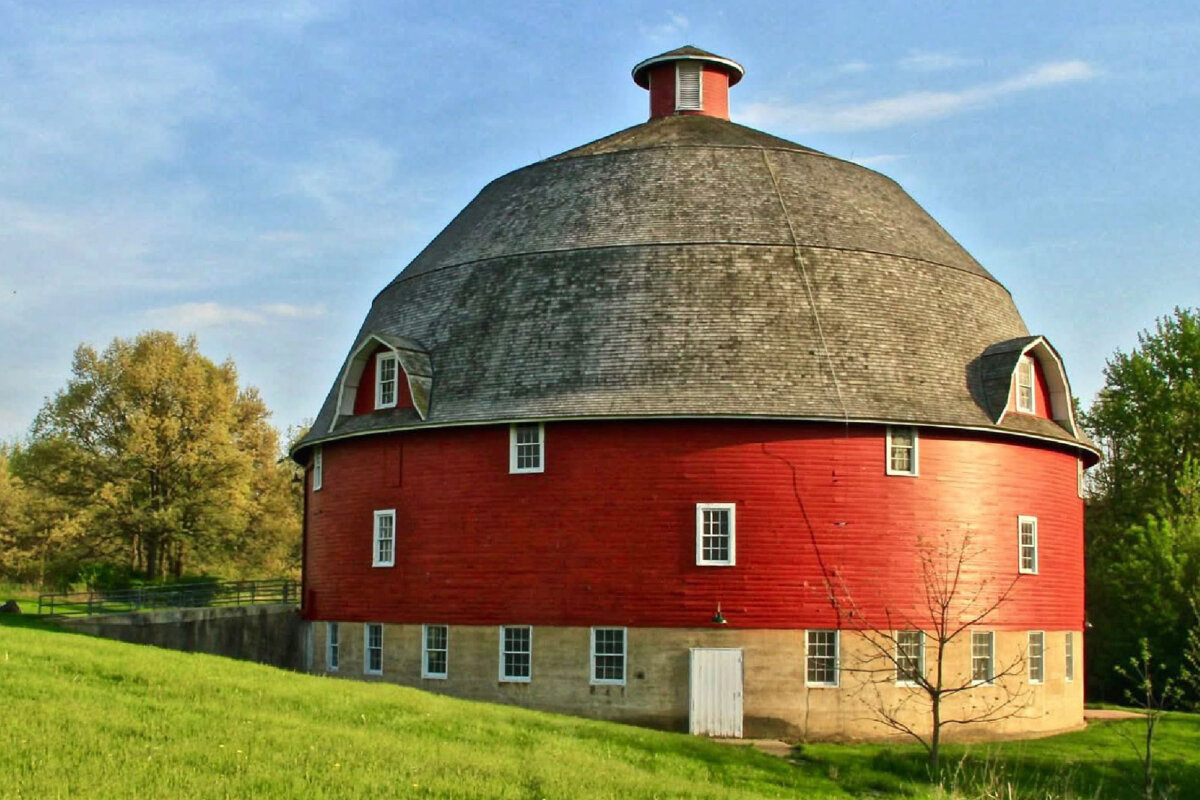
In 1908, Horace Duncan, who was also in on the patent, built what many consider the largest, most impressive round barn in all of America. Matching Littleton’s in diameter, it was the largest in Ohio and was featured in the documentary “The Barn Raisers.” It was repainted bright red in 2008 to celebrate its centennial.
What resulted from all this promotion? Nothing less than a short-lived round barn explosion across the Midwest. Books were written about round barns touting their efficiency, professors had round barns built on campus at the University of Illinois, and thousands of newspapers praised them, igniting a round barn fad far and wide.
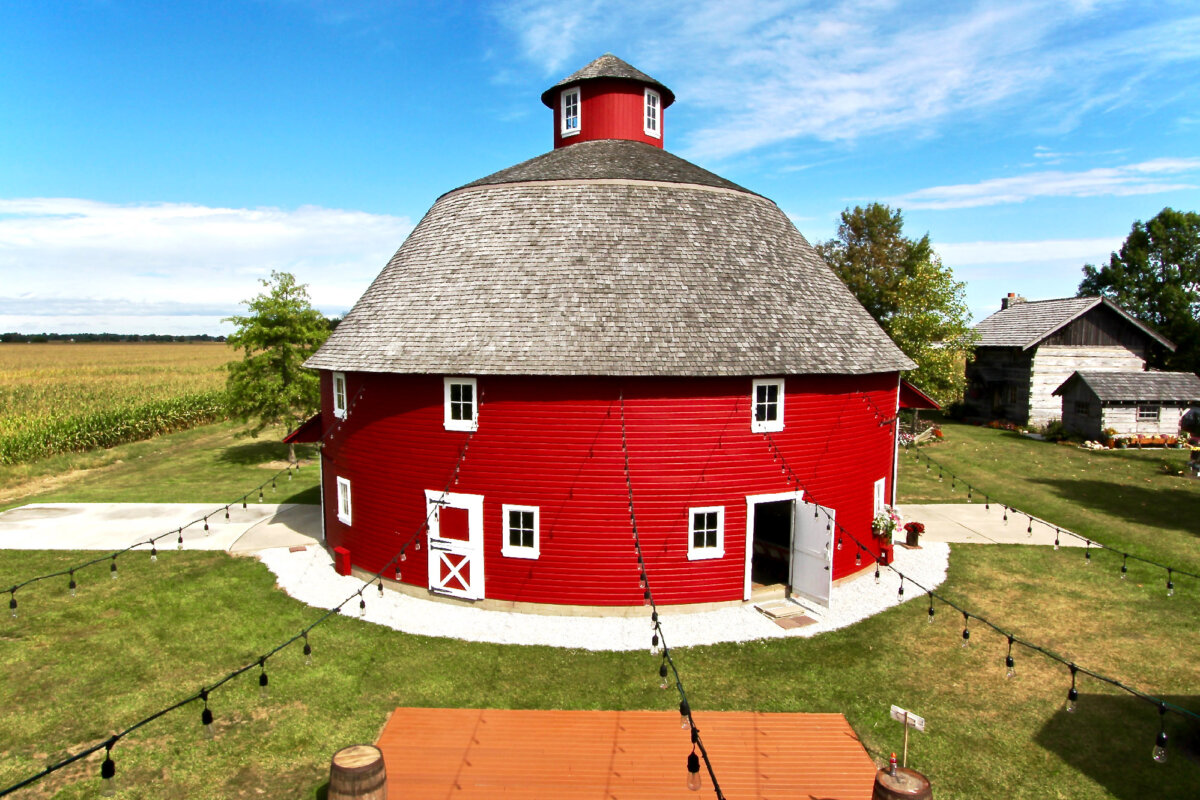
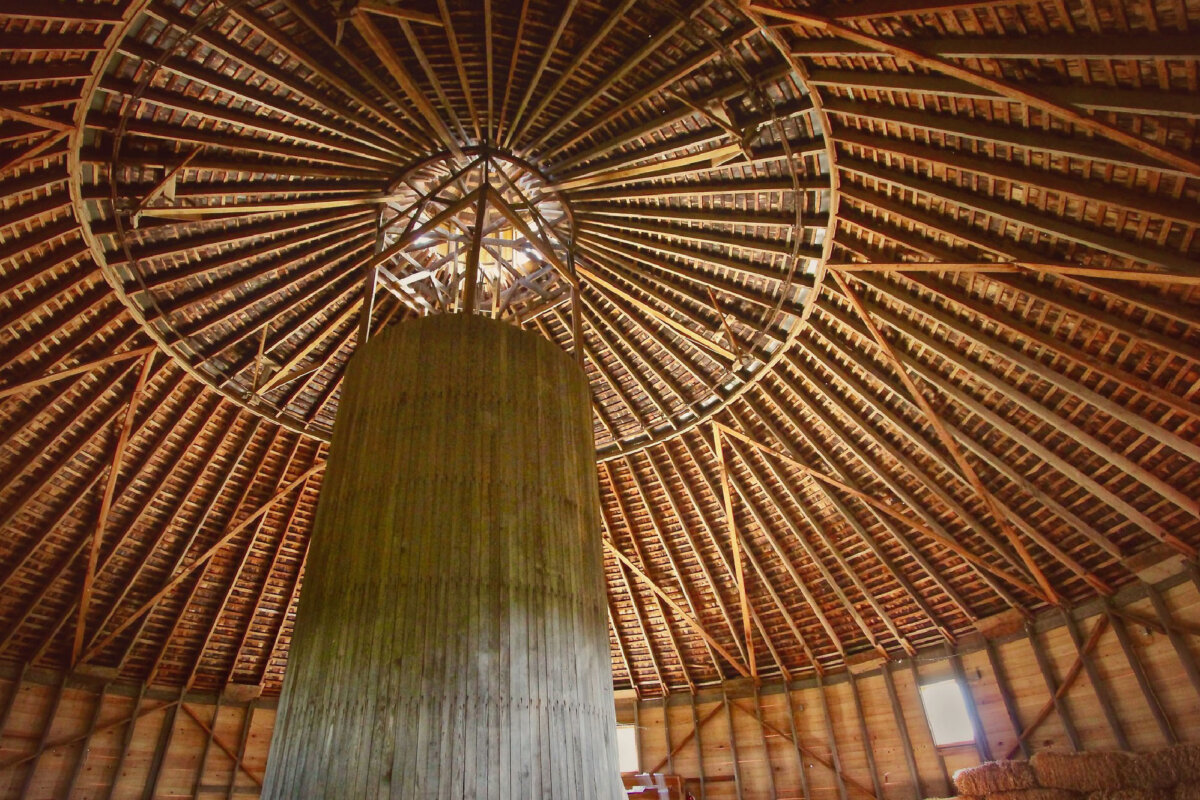
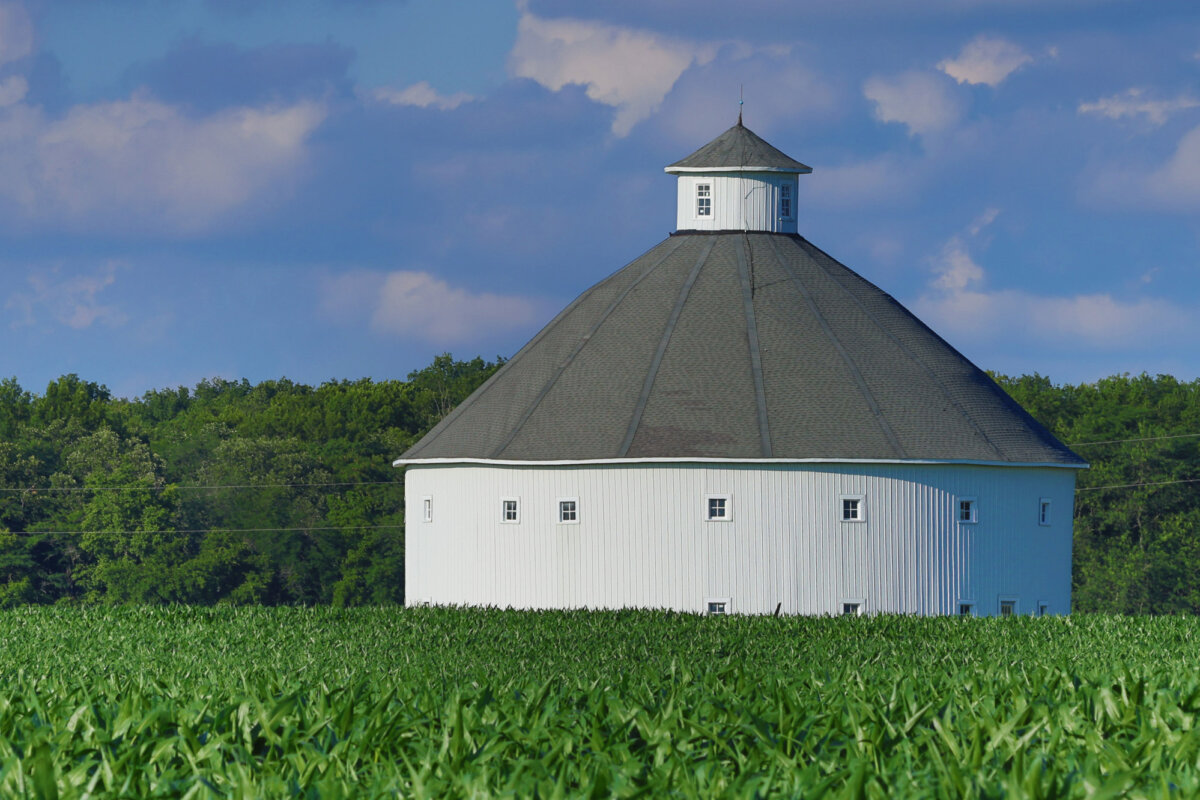
But that was “the final wave of round barn construction,” Loveall said. “To this day, there are three round barns on the University of Illinois campus.”
Afterward, though, the movement “kind of fizzled out,” he added. The end of World War I saw the rise of large machinery—the final nail in the coffin for round barns. Yet Loveall is calling for “a revival.” Nowadays, “some of the round barn bugs have been coming out,” he said.
Whereas in the past, round barns were neglected and left to the mercy of the elements, Loveall says, “starting around 2000, groups of people would save he historic round barns and move them to a more visible location.”
“They’re no longer working round barns,” he says. “They’ve been restored for reuse for other purposes like wedding events and venues.”