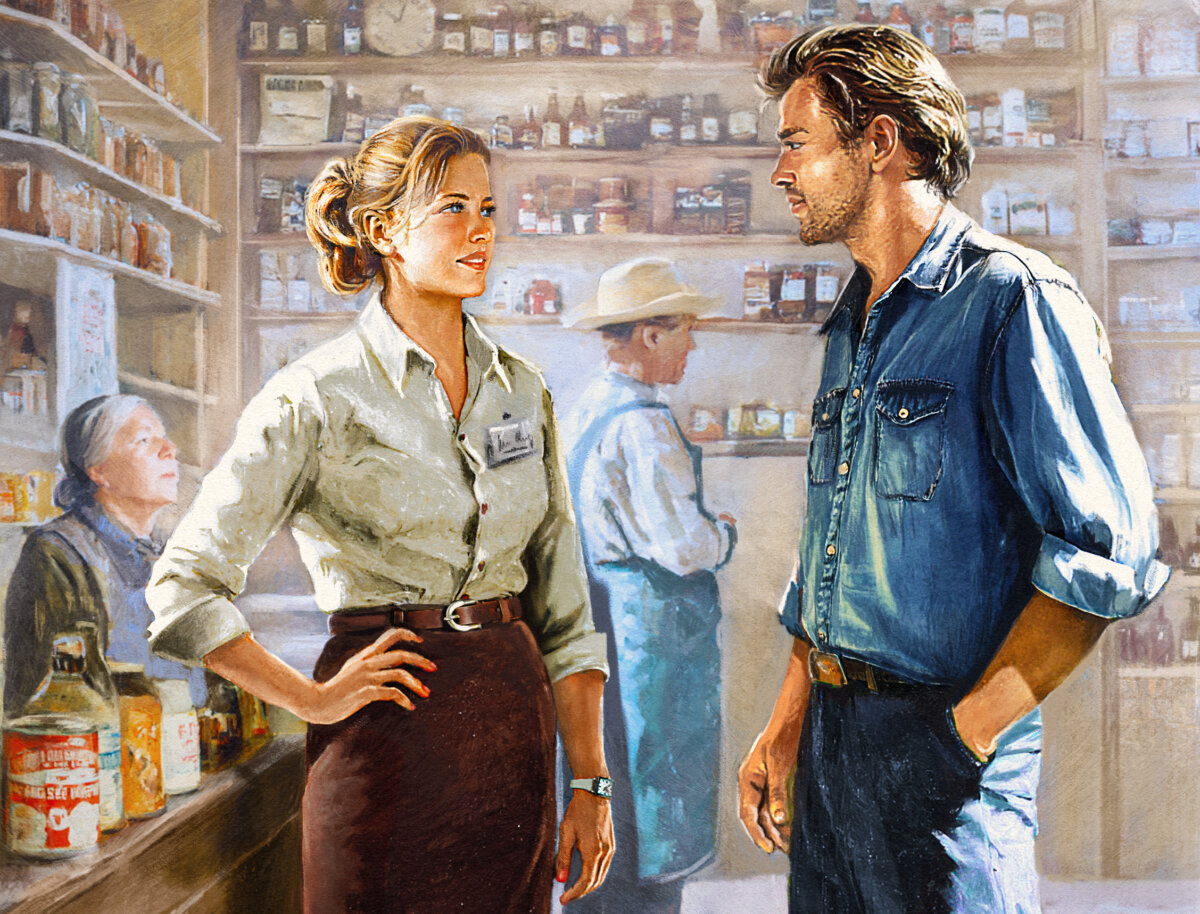
Hallmark movies are synonymous with snowflakes, Santas, and sweaters—in other words, all things Christmas.
But as my cousin laughingly informed me last year, Hallmark movies no longer dwell solely in the realm of winter wonderlands. There are fall Hallmark movies, spring Hallmark movies, Christmas in July Hallmark movies, and Hallmark movies for just about any reason in between. Even other non-Hallmark companies produce knock-off Hallmark movies!
I saw an advertisement for one of these latter movies the other day while roaming the wilds of the online universe. You’ll never guess the plot. In an earth-shattering move, this forthcoming movie takes place in a small town, has a career-girl-meets-country-boy love story, and hints at values such as faith, hard work, and perhaps even redemption and sacrifice.
Okay, I know, typical Hallmark fare, right? So typical, in fact, that most of us could write the script.
But the fact that Hallmark—and many other companies—keep making these cookie-cutter storylines suggests that they’re highly popular. And the fact that they’re popular also suggests that they speak to a desire that many of us have deep down: belonging.
A Place for You and Me
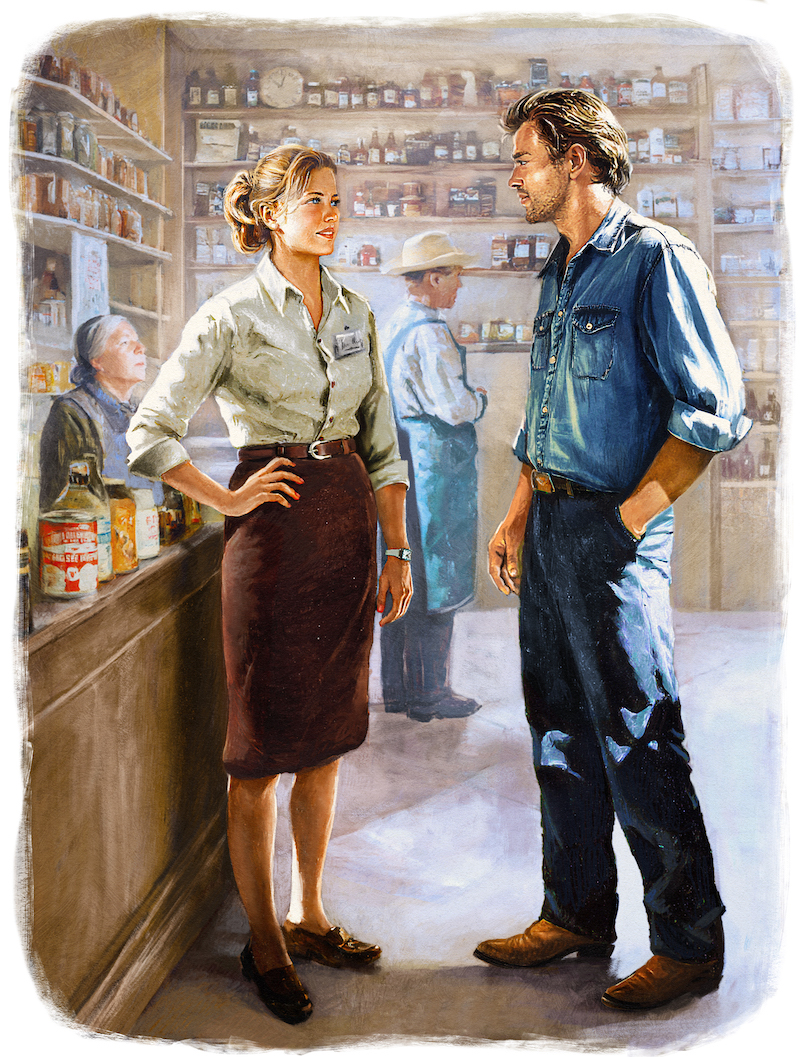
Belonging is written all over Hallmark films. It’s in the secondary characters who make up the quaint little village to which the long-lost city character comes home. It’s in that same city character who finds that things haven’t changed in the old hometown and that he or she is still fondly remembered by people from years before. It’s in the team mentality that happens as the characters work together to save the town, a business, or somebody’s pet project. And it’s in the love that the main characters somehow magically find in a matter of a few days, giving up lucrative jobs in exchange for the comfort and care of a family.
Admittedly, I’ve mocked Hallmark movies for their impractical and unrealistic nature. But when I look at them through this lens of belonging, I wonder if such mocking is undeserved, tinged by an unhealthy postmodern mindset that forgot the need for belonging long ago.
Disordered Priorities
American sociologist Robert Nisbet connected this unhealthy mindset with the quest for materialism. Similar to Abraham Maslow’s hierarchy of needs theory, Nisbet described our human needs as a pyramid, with physical needs at the bottom and social and spiritual needs at the top.
“During a period when a population is concerned largely with achieving satisfaction of the lower order of needs—satisfaction in the form of production and distribution of material goods—the higher order of needs may scarcely be felt by the majority of persons,” Nisbet wrote in his book “Quest for Community.”
In Maslow’s pyramid, love and belonging are on the third tier, just after physical safety and physiological needs.
That explains how we got to where we are in today’s society. Focused on material goods, gaining wealth, advancing in the world, and staying ahead of the pack, we’ve pushed other things—such as community, connection, and things with deeper meaning—away. This is the mindset that practically every Hallmark movie begins with: a hardcore career person fighting his or her way to the top, forgetting everything else in the process.
“But with the satisfaction of the prime, material needs, those of a social and spiritual nature become ever more pressing and ever more decisive in the total scheme of things,” Nisbet said. “Desires for cultural participation, social belonging, and personal status become irresistible and their frustrations galling.”
Ever wonder why every Hallmark character suddenly finds the small-town life appealing? Nisbet’s description explained why. Their material needs are fully met, but they still find emptiness and realize that reconnecting with faith, family, and community can fill the void that they haven’t been able to solve on their own.
Just as Nisbet said, “Material improvement that is unaccompanied by a sense of personal belonging may actually intensify social dislocation and personal frustration.”
We Can Change Our Reality
We certainly see that a lot in today’s culture, and many of us run around scratching our heads over how to solve this problem. Perhaps Hallmark movies have been hinting at part of the solution all along.
Yes, we scoff at the simplistic nature of settling down in a small town with a niche business, surrounded by family and friends, shaking our heads over how unrealistic such a move is. But instead of rolling our eyes over how unrealistic the move back to local, small-town communities is, perhaps we should begin looking for ways to make it more attainable for the average American.
What if we pursued policies that made it easier for people to start a local business or settle down and start a family in a small town? Yes, there would be far more struggles and difficulties than are ever shown in the hour-and-a-half screentime of a Hallmark movie, but we may also witness a decline in anger, frustration, aloneness, and perhaps even the chase after material goods that never really satisfies.
Nisbet offered one more benefit that comes when we foster the spirit of belonging: the reduction of partisan vitriol.
“[Political power becomes more attractive] when all other forms of association have been destroyed or weakened,” Nisbet wrote. “If the individual is prevented, by law or public opinion, from participating in ordinary associations, and if he feels, as men commonly do, the need to belong to something larger than himself, he will seek close membership in the one association that is open to him … the state.
“The state becomes powerful not by virtue of what it takes from the individual but by virtue of what it takes from the spiritual and social associations which compete with it for men’s devotions.”
Yes, Hallmark movies can seem a bit silly on the surface. But then, so is the constant bickering, vitriol, and focus on petty partisanship that we see today. If we want to get rid of the latter, perhaps we need to reconsider the wisdom in the belonging advanced by those same movies at which many of us are prone to scoff.