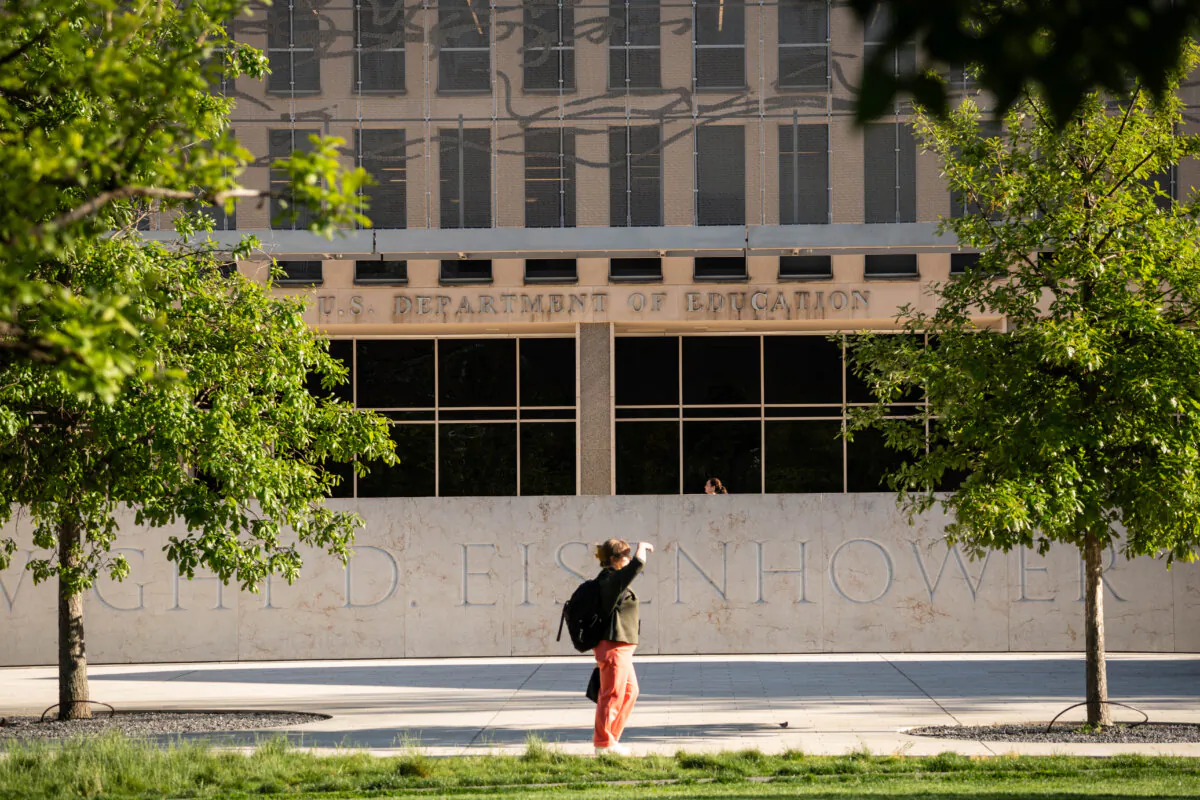

Seventeen states filed a federal lawsuit on March 11, seeking to block the U.S. Department of Education’s policy requiring colleges and universities to collect data showing that they are not considering race in admissions.
In the lawsuit, filed in federal court in Boston, the states are challenging a new component added to the mandatory, annual surveys administered by the Department of Education, which would be used to assess colleges’ compliance with the Supreme Court’s 2023 ruling ending affirmative action in higher education.
President Donald Trump ordered the new policy in August after he raised concerns that colleges and universities were using personal statements and other proxies to consider race, which he said was illegal discrimination.
Under the memorandum, additional information—including acceptance rates, enrollment figures, incomes, average applicant grade point averages, and standardized test or SAT scores by race and gender—is due on March 18.
“Race-based admissions practices are not only unfair, but also threaten our national security and well-being,” the president wrote in the Aug. 7 memorandum. “It is therefore the policy of my administration to ensure institutions of higher education receiving federal financial assistance are transparent in their admissions practices.”
The survey was altered after the president’s memorandum cited a lack of data to assess whether race remained an admissions factor after the Supreme Court’s decision, given the “rampant use of ‘diversity statements’ and other overt and hidden racial proxies.”
The memo directs Education Secretary Linda McMahon to require colleges to report more data “to provide adequate transparency into admissions.” The National Center for Education Statistics was tasked with collecting the new data, including the race and sex of colleges’ applicants, admitted students, and enrolled students. McMahon said in August that the data must be disaggregated by race and sex and retroactively reported for the past seven years.
If colleges fail to submit timely, complete, and accurate data, McMahon can take action under Title IV of the Higher Education Act of 1965, which outlines requirements for colleges receiving federal financial aid for students, according to the memo.
Since 1986, the government has used the Integrated Postsecondary Education Data System to gather information from thousands of colleges and universities that receive federal aid.
The states argue that the department lacked statutory authority to add new components to the surveys and violated the Administrative Procedure Act by failing to conduct privacy impact assessments for its plans to collect data on the race and sex of students, as required by the E-Government Act of 2002 and the Paperwork Reduction Act.
The states say the new requirements turn the Integrated Postsecondary Education Data System “from a reliable tool for methodical statistical reporting to a mechanism for law enforcement and the furthering of partisan policy aims.” The coalition also argues in the lawsuit that the new data collection demands jeopardize student privacy.
Massachusetts Attorney General Andrea Joy Campbell said in a statement, “There is no way for institutions to reasonably deliver accurate data in the federal government’s rushed and arbitrary time frame, and it is unfair for schools to be threatened with fines, potential losses of funding, and baseless investigations should they not fulfill the Administration’s request.”
New York Attorney General Letitia James said in a statement that the administration is attempting to stretch the federal government’s authority to serve its own political agenda and target diversity, equity, and inclusion initiatives.
California Attorney General Rob Bonta described the demands as making it “all but impossible for colleges and universities to submit usable data for review.”
He warned that unreliable data could trigger “costly and harmful investigations and enforcement actions against colleges and universities to further partisan political ends.”
An Education Department spokesperson defended the collection of data.
“American taxpayers invest over $100 billion into higher education each year and deserve transparency on how their dollars are being spent,” the spokesperson said in a statement. “The Department’s efforts will expand an existing transparency tool to show how universities are taking race into consideration in admissions. What exactly are State AGs trying to shield universities from?”
Aaron Gifford, Reuters, and The Associated Press contributed to this report.
 Friends Read Free
Copy
Facebook
Tweet
Friends Read Free
Copy
Facebook
Tweet