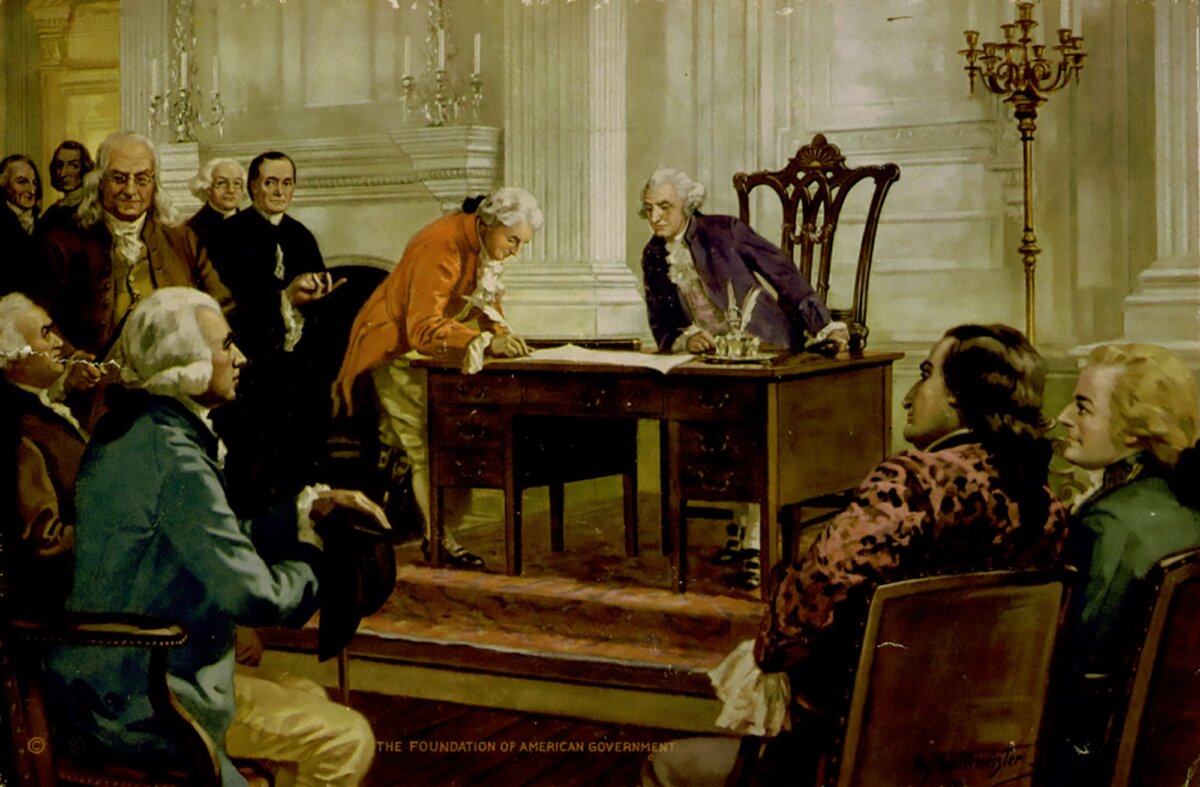
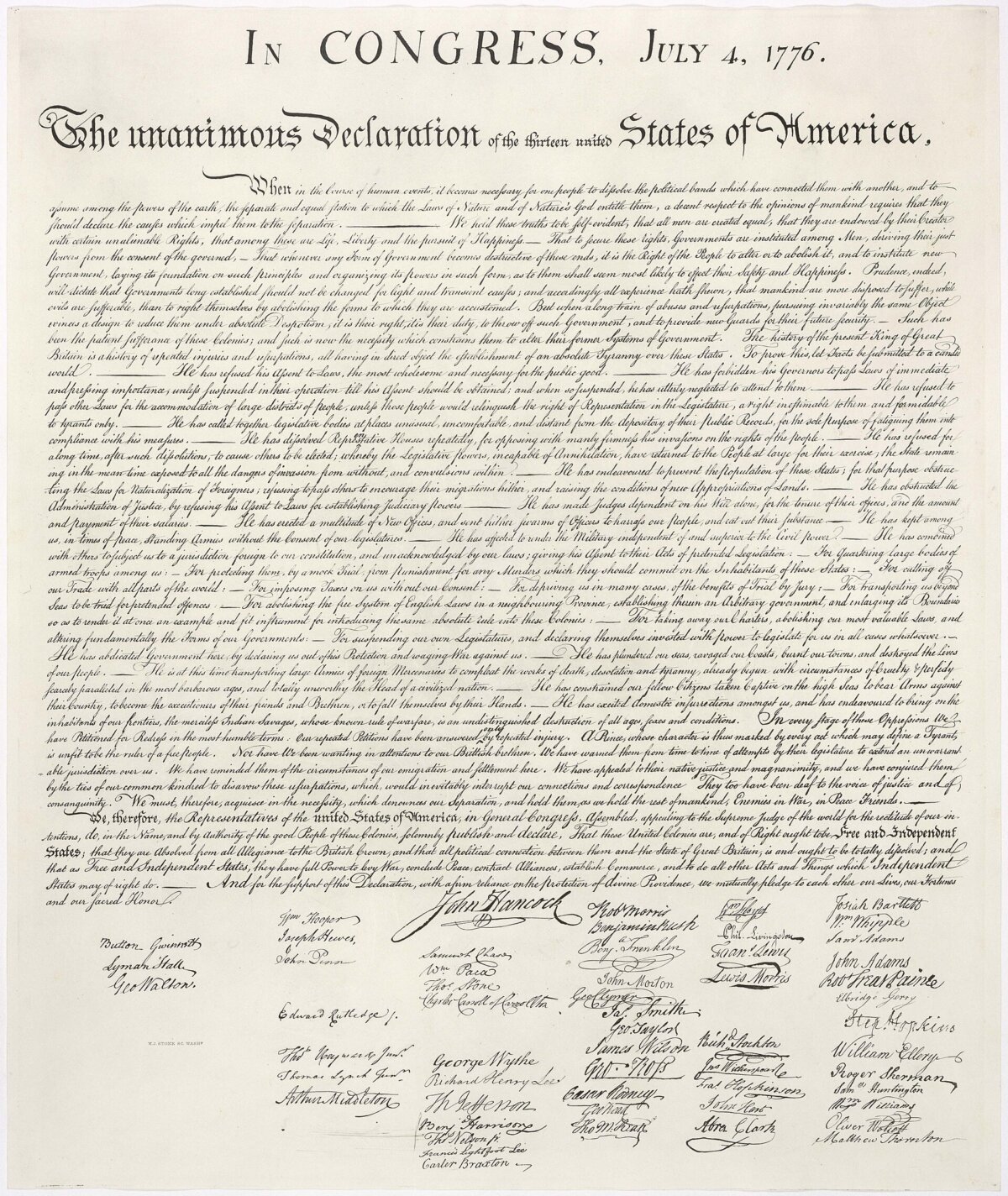
“We hold these truths to be self-evident, that all men are created equal, that they are endowed by their Creator with certain unalienable rights, that among these are Life, Liberty and the pursuit of Happiness.”
In his recent book “The Greatest Sentence Ever Written,” historian and biographer Walter Isaacson declares that sentence from the Declaration of Independence to be “the greatest sentence ever crafted by human hand.”
Isaacson makes his case for this assertion in this 80-page book by first explicating the sentence phrase by phrase, unraveling its meaning, and discussing the controversies it has generated. He mulls over the meaning of “we,” he describes why Benjamin Franklin deleted Jefferson’s “sacred and undeniable” and inserted “self-evident,” and he looks at “all men are created equal” in an age of slavery and unenfranchised women. He rounds out this analysis with a chapter on the American Dream, one of the branches that grew from this tree of liberty, and ends with a few documents pertinent to the Declaration, including a copy of Jefferson’s “Original Rough Draught” and the Declaration itself.
It’s an invaluable little book, easily read in one sitting but which deserves a second or third reading along with some long thoughts on this greatest of all sentences, for in these 35 words is the beating heart of the American experiment.
Isaacson’s book is only 80 pages long, but there’s a good deal more to the story.
The Seed Fell on Fertile Ground
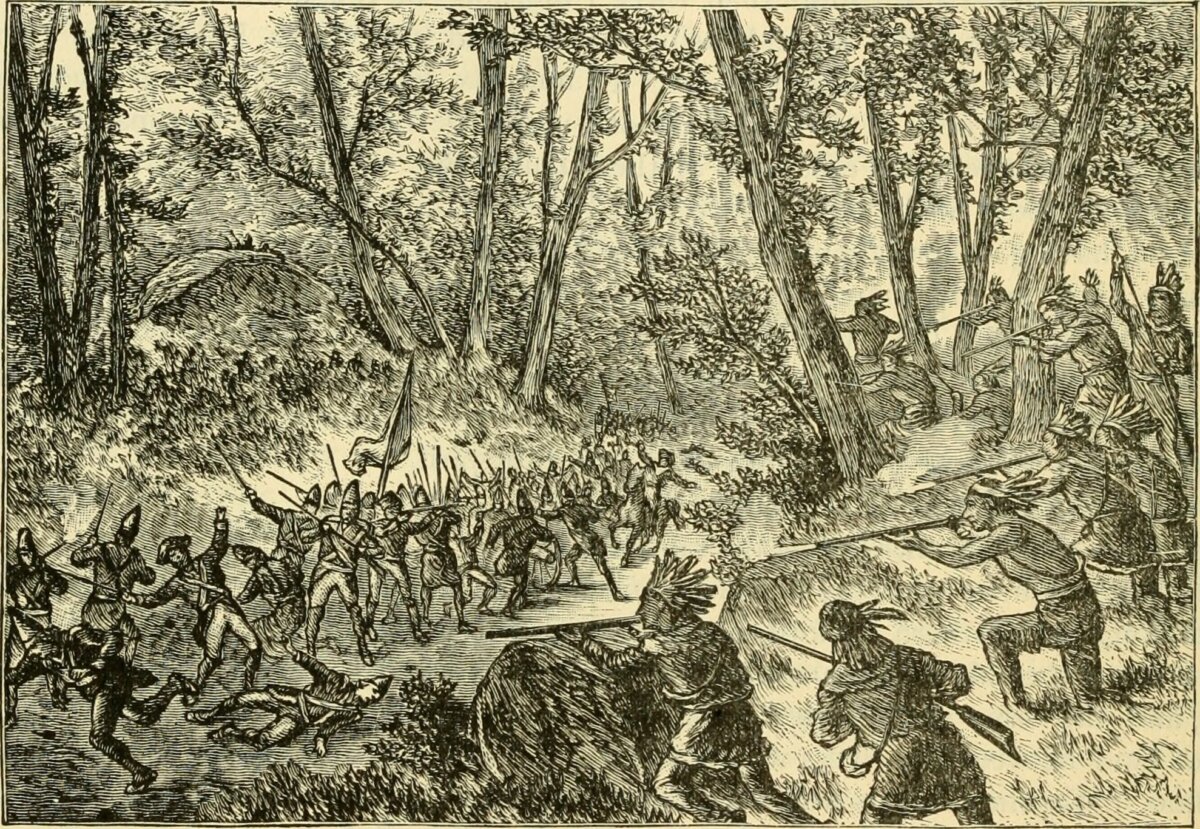
Neither this sentence nor the Declaration itself appeared out of nowhere.
The French and Indian War (1754–1763), known in Europe as the Seven Years’ War, was a truly global war that England won, defeating France and establishing itself as a world empire. With that victory, however, came massive costs and debt.
Consequently, the British government attempted to force the American colonies to pay what it regarded as their fair share of these expenses, instituting taxes and tariffs like the Sugar Act, the Stamp Act, and the Townsend Acts. In response, many in the colonies rose to protest their absence of representation in the Parliament levying these taxes.
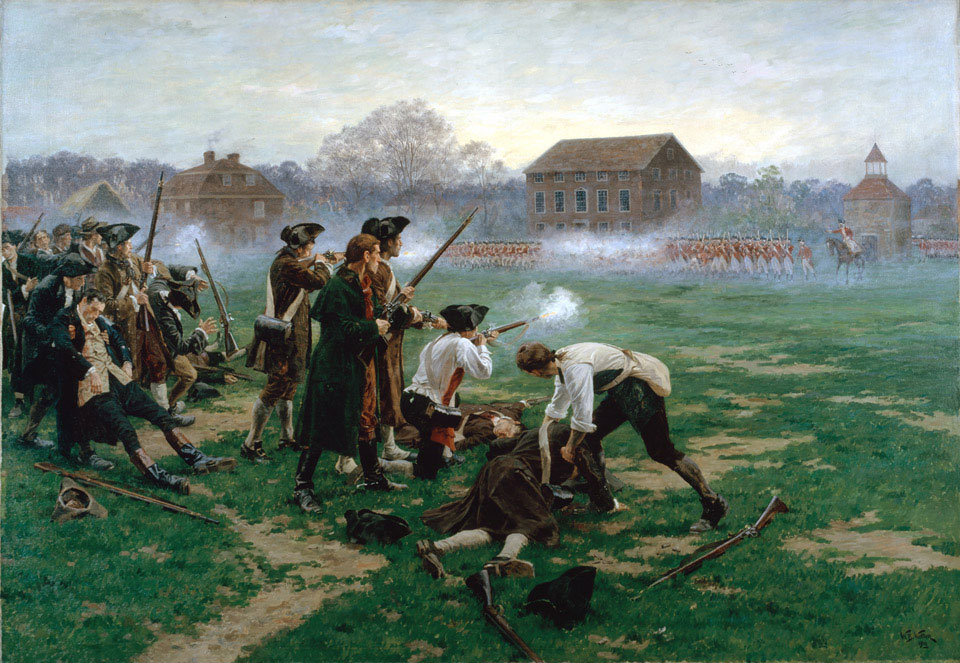
The Battles of Concord and Lexington in April 1775 were matches set to a powder keg ready to explode.
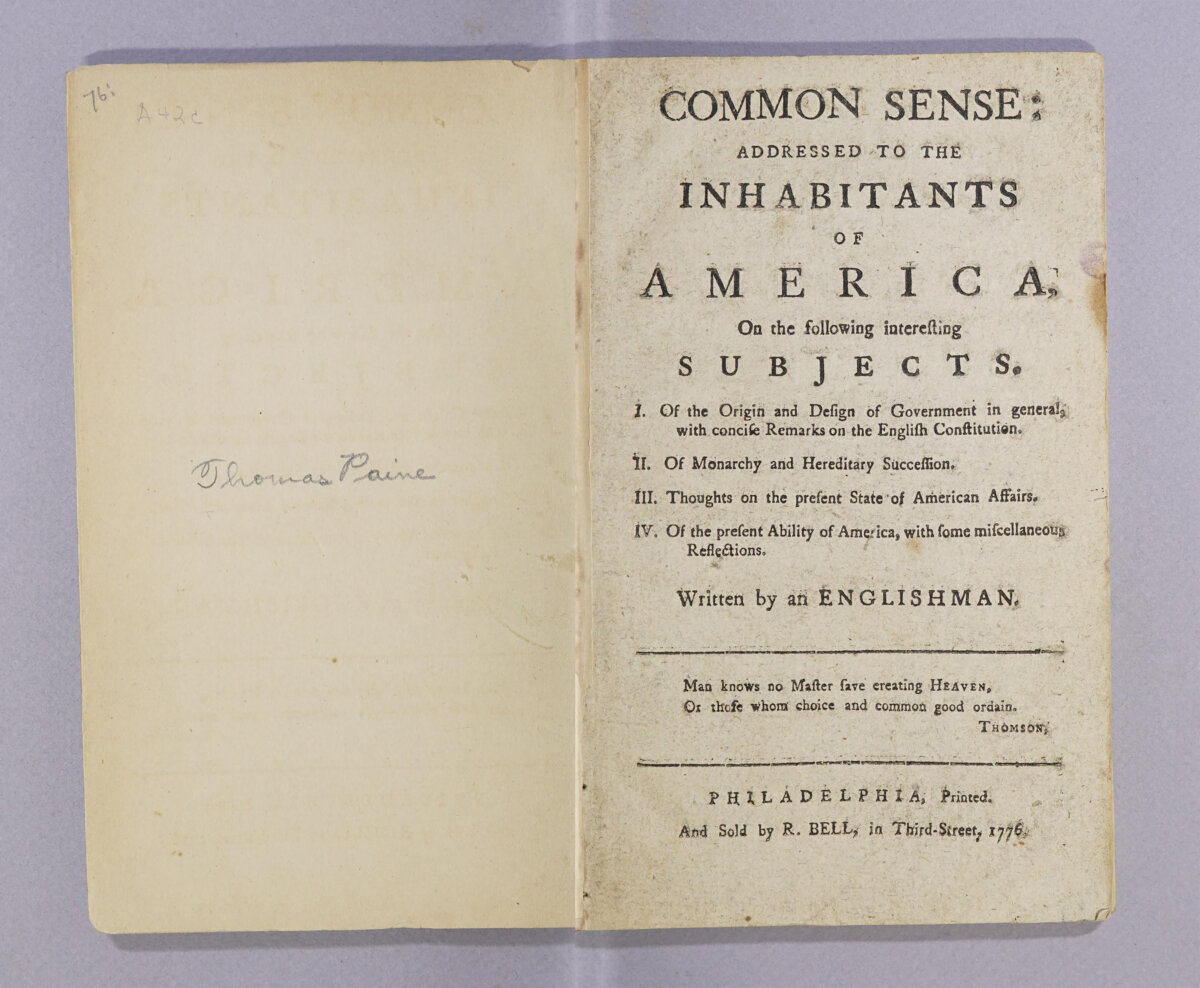
In addition, colonial leaders of the time, like John Adams, Thomas Jefferson, and Ben Franklin, were acquainted, directly or indirectly, with works running from the ancient Romans to John Locke’s 1690 “Second Treatise of Government.” These books of history and philosophy added ammunition to colonial demands for more self-control and for “No taxation without representation.” In January 1776, Thomas Paine’s popular pamphlet “Common Sense” gave cause and direction to Americans fighting the English.
These were just some of the events and ideas that birthed the Declaration of Independence.
A Birthright Neglected
In the 19th century, many schoolchildren memorized parts of the Declaration. Today rote memorization has, for good or for ill, gone by the wayside, but most students at some point in their education still read and study this document of liberty.
It’s said that “familiarity breeds contempt.” Certainly some readers of the Declaration, both when it was issued and today, look at the bold assertions of that sentence, compare it to realities of that age like slavery and economic inequality, and judge it the work of hypocrites.
Perhaps worse, familiarity also breeds indifference. The man who watches the sun rise out of the Atlantic every morning may give a nod now and then to its beauty, whereas the man on vacation will revel like a poet in the glory of such a dawn.
The same holds true today when we read the greatest sentence ever written. For far too many Americans, familiarity has reduced this bonfire of revelation to a candle flame. We ho-hum through the words that not only launched a revolution and created a republic unique on history’s stage but also have since spoken and given voice to countless millions around the world, assuring them that these rights of life, liberty, and the pursuit of happiness are the natural goods of all human beings.
Our nonchalance also causes us to forget that the men who composed the Declaration and the others who signed it understood that their signatures were proof of treason and might easily bring a noose as well as imprisonment and financial ruin. As Ben Franklin is supposed to have said at the signing, “Yes, we must, indeed, all hang together, or most assuredly we shall all hang separately.” That neatly put observation was no idle jest or frivolous aside but was spoken with deadly earnest in light of the rebellion they had declared.
Pudding and Fruits
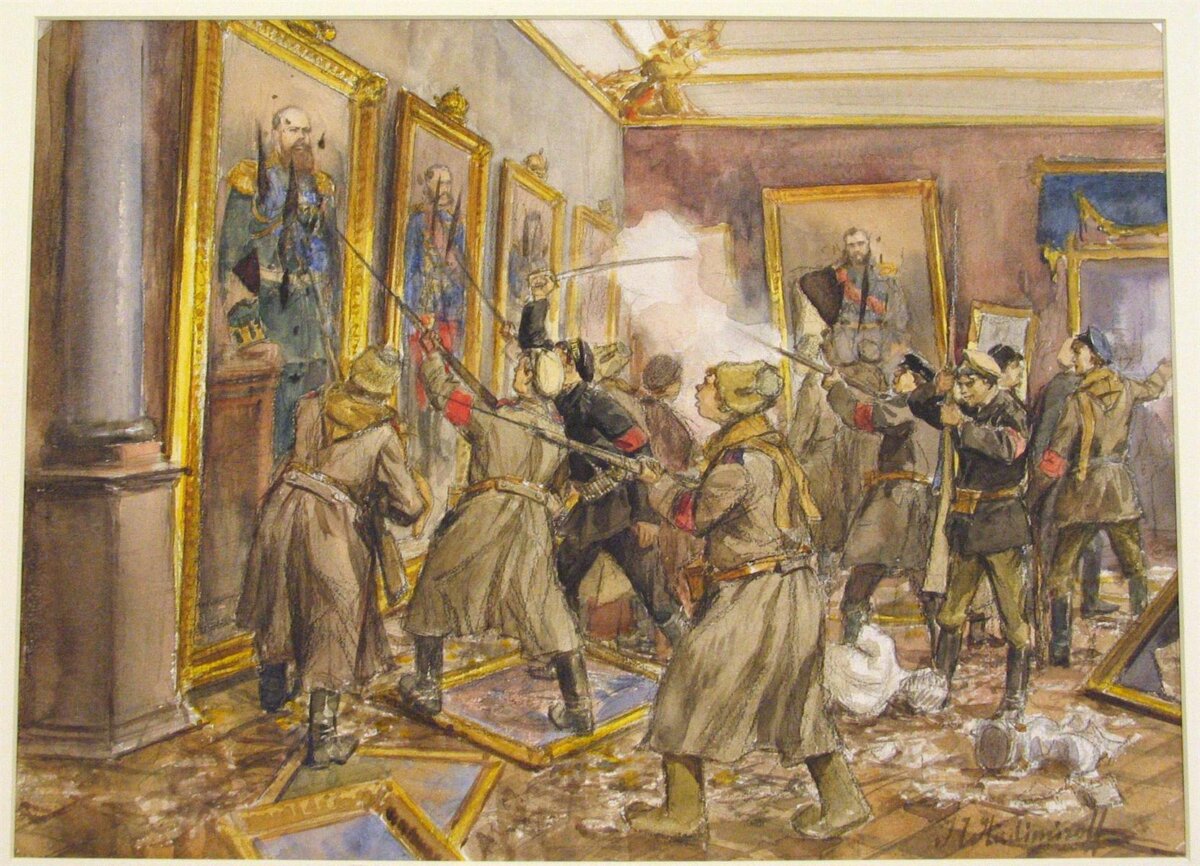
Comparing the American Revolution to other, later revolutions is sometimes a case of apples and oranges. The revolution that resulted in the creation of the United States involved the revolt of colonies against a mother country; whereas, the revolutions that occurred later in France, parts of Europe, Russia, and China were aimed at overthrowing the ruling powers within those countries. In the 20th century, many of those revolutions also ended with the establishment of a communist government rather than a real republic.
The outcomes of most of these revolutions were also radically different.
The Founders who signed the Declaration, who put a pen to that sentiment of “life, liberty and the pursuit of happiness,” believed in those words and put them into action during the Republic’s first decades. The consequences were a country where a common-sense philosophy held sway rather than any rigid ideology, where prosperity generally reigned, where for the first century of its existence freedom abounded within the framework of a relatively small federal government, and where the Constitution of the United States balanced a tripod of executive, legislative, and judicial powers.
In contrast, the 20th century brought abstract and utopian Marxist ideologies, imposed by force, to countries like Russia, China, North Korea, and Cuba. Communism transformed and also wrecked the economies of these nations, erased history and culture, suppressed rights in ways never before seen in human history, and was responsible for more than 100 million deaths. While the United States followed the lamp of liberty, these countries became vast prisons of impoverishment, slavery, and tyranny.
Two adages, “By their fruits ye shall know them” and “The proof is in the pudding,” both apply in this comparison. Follow up the ideas of the Declaration with wisdom and experience, as did the patriots of the revolution and their descendants, and you create a dynamic, thriving culture. Follow the blueprint of Marxism and collectivism, and you create misery and death.
Enduring Aspirations
Though critics often point to America’s flaws, the more vicious or negligent among them fail to mention its virtues, particularly those embedded in the Declaration and the Bill of Rights. Isaacson’s “greatest sentence,” with its no-nonsense endowment of certain human rights by a Creator, undermines every tyranny on the face of the earth, whether in New York City or Beijing.
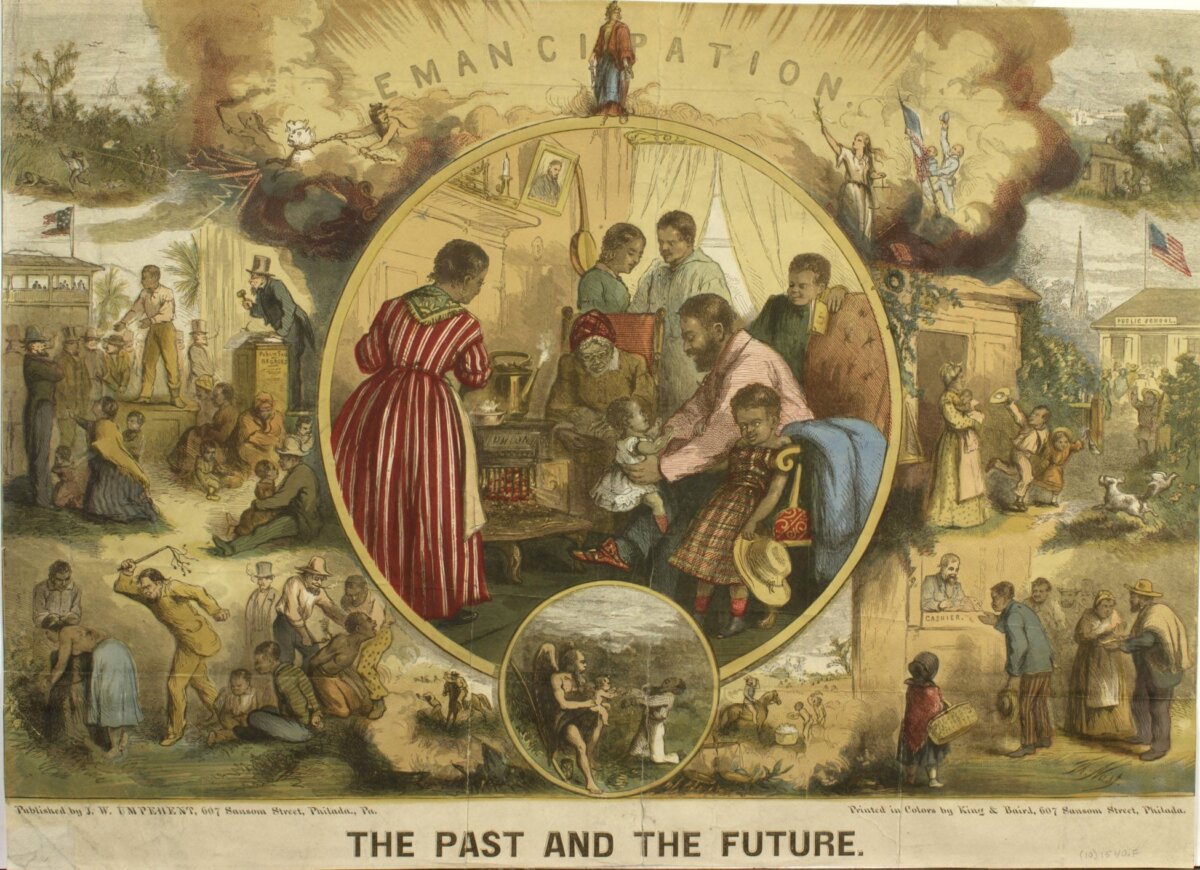
It is this sentence that has fueled and will fuel the engines of American change. These inalienable rights, for instance, facilitated the arguments and actions that ended slavery and, a century later, the Jim Crow laws.
Since 1776, several hundred thousand Americans have died overseas to protect and promote these rights. The entire history of the United States might be viewed as an ongoing effort to define and keep in play the meaning of these rights in law, finance, culture, and the common good.
Many citizens today remain aware of the need for vigilance in protecting their rights against the intrusions of overweening government, corporations, and interest groups. From across the political spectrum, we daily see this vigilance exercised in our courts, our media, and even in the minutiae of private lives. These Americans rightly live as if freedom were a birthright, not a privilege.
The Declaration of Independence concludes with a vow: “And for the support of this Declaration, with a firm reliance on the protection of divine Providence, we mutually pledge to each other our Lives, our Fortunes, and our Sacred Honor.”
In this 250th anniversary year of that Declaration, all Americans of whatever political stripe might consider revisiting this document, meditating in particular on the “greatest sentence,” and renewing the pledge signed by our Founders.
What arts and culture topics would you like us to cover? Please email ideas or feedback to features@epochtimes.nyc