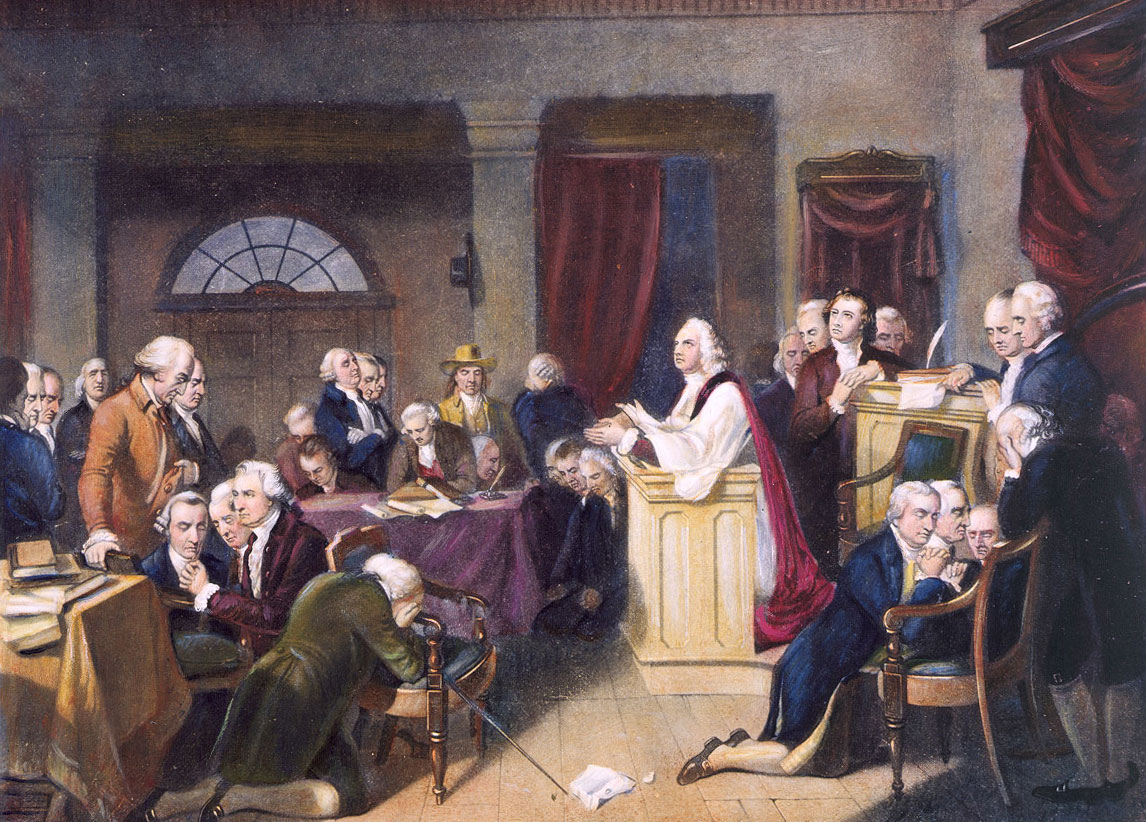
Before the adoption of the U.S. Constitution in 1787 and George Washington’s inauguration in 1789, the newly minted United States functioned as a proto-government, governed first by the Continental Association and later, by the Articles of Confederation after the signing of the Declaration of Independence.
Delegates from the colonies served as parliamentarians in official proceedings, with one elected as president of the Congress. After the Articles of Confederation were ratified nationally in March 1781, Congress elected Maryland delegate John Hanson as their new president on Nov. 5, 1781, renaming the new role as the President of the United States in Congress Assembled. He was the first to serve as presiding officer of the officially united colonies.
The problem was that Hanson wanted to resign after just one week on the job, citing health concerns and family responsibilities.
A Call of Duty
Hanson was widely respected by his colleagues for his prior service in the Continental Congress and for his impartiality. As a Maryland delegate, he served on important committees, addressing wartime finance and administration, and consistently supported measures bolstering congressional authority. He also played a pivotal role, along with fellow Maryland delegate Daniel Carroll, in completing the ratification the Articles of Confederation.
The new position to which he was elected was primarily ceremonial. As outlined in the Articles of Confederation, the office required the president to lead congressional proceedings, represent Congress in diplomatic correspondence, and sign official documents on behalf of the country. There was no judiciary or executive branch—only Congress, a unicameral legislature.
Hanson’s position as president did not include the executive powers the Constitution later bestowed on George Washington’s presidency.
The administrative tasks of his position held little appeal to the Maryland planter and active entrepreneur engaged in mercantile activities, land acquisition and various business ventures tied to England. Colleagues convinced him to remain in the position, citing the challenge of electing a successor with only seven states present. Hanson reluctantly agreed and served out his full one-year term, ending Nov. 4, 1782.
His decision to stay on the job was providential. Much of what he accomplished during his one-year term laid the foundation for future president George Washington and the executive branch outlined in the Constitution.
A Masterful Innovator
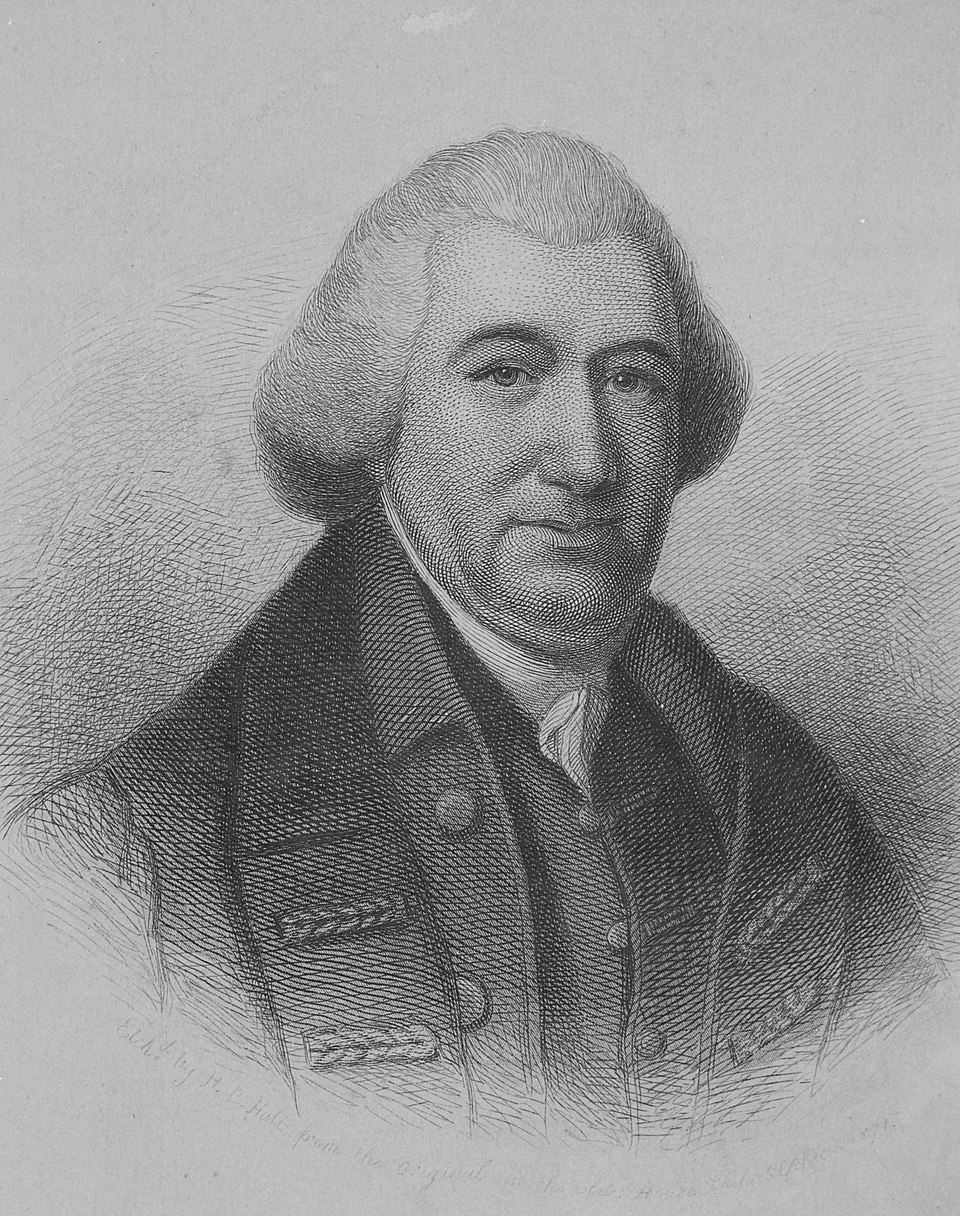
Hanson was not only a good businessman; he was a superb administrator. As president of the United States in Congress Assembled, he introduced programs that helped America gain international prominence. His executive actions laid the foundation for the 1794 Jay Treaty that required the removal of all foreign troops and flags from American territory. He advanced diplomatic efforts throughout Europe, and signed a treaty with Holland guaranteeing repayment of a loan that had helped finance the Revolutionary War.
On the domestic front, he initiated the process for chartering the Bank of North America, the first federally chartered bank in the country. As the country’s chief administrator responsible for signing all official documents, he wisely delegated authority by creating executive departments, including the Treasury Department, the Department of War, and the first Department of Foreign Affairs.
Hanson also initiated the establishment of the U.S. Postal Service, which did not officially begin until the Postal service Act of 1792; adopted a uniform system of currency; took significant steps toward organizing the first census, which occurred in 1790; and led the fight for statehood of the Western Territories beyond the Appalachian Mountains.
Following the conclusion of the Revolutionary War, in an Oct. 11, 1782 proclamation, Hanson recommended that the fourth Thursday of November be observed as a day of solemn thanks to God for his blessings and for the establishment of the United States. That was seven years before George Washington called for a national day of Thanksgiving and decades before Abraham Lincoln’s Thanksgiving proclamation.
A Job Well Done
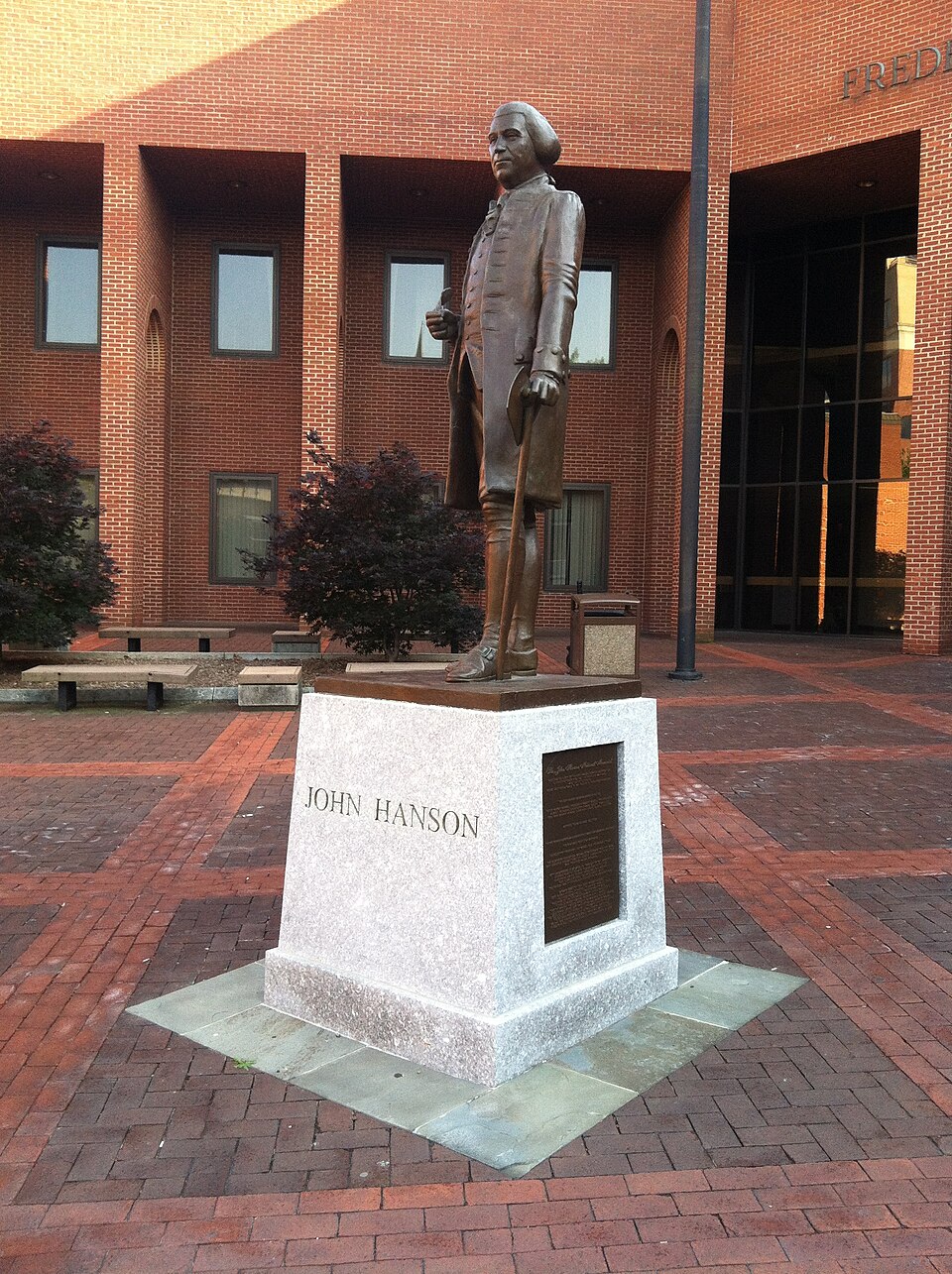
Hanson served one more year in Congress after stepping down as president, retiring to his Mulberry Grove estate near Frederick, Maryland, in 1782.
Like many Continental Congress delegates, his finances and personal health suffered while he served in public office. In an 18th-century example of fake news, Philadelphia newspapers erroneously reported that he had died in May of that year. Subsequent retractions noted that news of his death was premature and the former president was in perfect health. The Articles of Confederation president did die later that year at age 62 while visiting his nephew at Oxon Hill, Maryland.
His remarkable one-year tenure is recognized for its efficiency and pragmatism in leading a tenuous confederation to postwar stability and laying the foundation for the presidency and executive department outlined in the Constitution.
What arts and culture topics would you like us to cover? Please email ideas or feedback to features@epochtimes.nyc