In early March 1776, independence fever was spreading throughout the 13 colonies. In Boston, the British Army maintained its occupation, with the Royal Navy controlling the harbor, ensuring that Gen. William Howe’s forces remained supplied despite the ongoing siege.
For Gen. George Washington, whose patience with Britain had long since run out, the time had come to force the British out of the city once and for all.
Since 1768, Britain had maintained a continuous military presence in Massachusetts Bay. Tensions between British soldiers and the colonists grew increasingly hostile, culminating in the Boston Massacre of 1770. Public pressure afterward forced these soldiers to relocate to Castle William—situated on Castle Island in Boston Harbor—where they remained until returning to the city in 1774 to enforce the Intolerable Acts.
Arriving in Cambridge in July 1775—just three months into the Revolutionary War—Washington was intent on liberating Boston. However, his war councils repeatedly rejected his plans, warning that the Continental Army lacked the gunpowder and heavy artillery necessary for a successful assault.
On March 4, 1776, the agonizing stalemate and frequent delays that had handcuffed Washington for months were finally about to end. On that cold night, Washington oversaw the final preparations for a covert operation designed to shift the tide and seize a decisive tactical advantage. The move would render General Howe’s position indefensible, forcing the British into a desperate choice: evacuation or total annihilation.
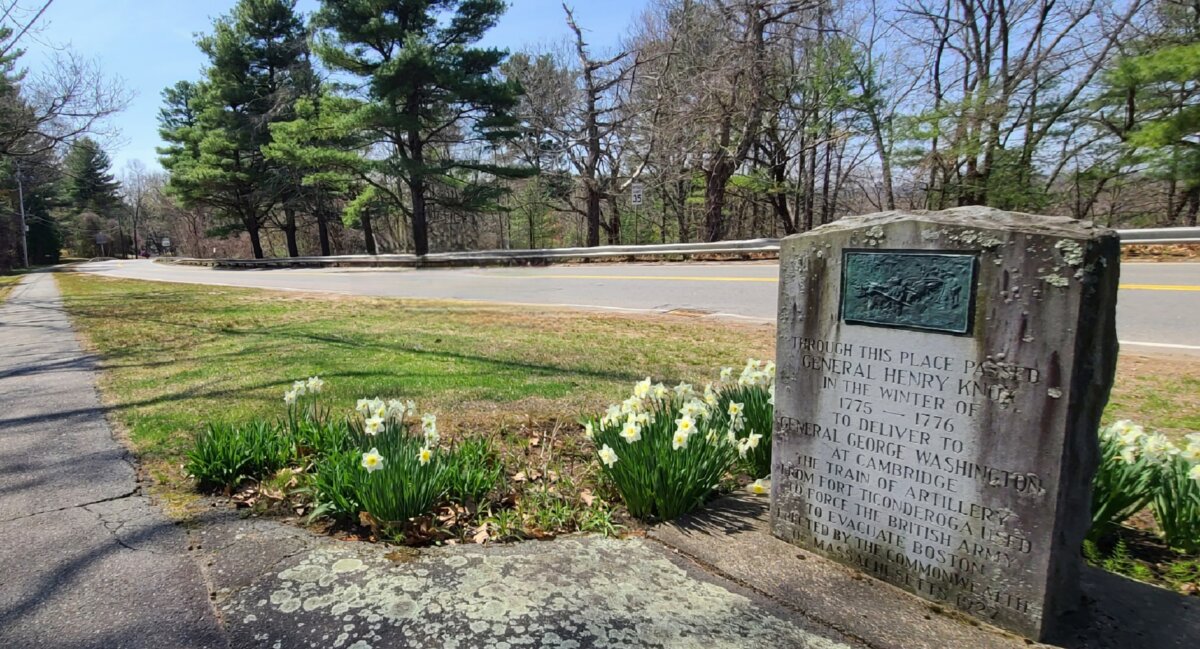
The catalyst for this shift was Henry Knox, a 25-year-old bookseller. Thanks to Knox’s remarkable “Noble Train of Artillery” expedition, the Continental Army was poised to unleash its surprise upon the British the following morning—March 5, the sixth anniversary of the Boston Massacre.
When all was ready, Washington ordered his artillery units to open fire.
Washington’s Dilemma
The dramatic events of March 1776 were months in the making, a period Washington spent resolving crises that might have broken a lesser leader. Although the British were bottled up inside Boston, the Royal Navy’s control of the harbor maintained a vital supply line. Washington faced a frustrating dilemma: The siege alone would not dislodge the enemy, yet a direct assault on the fortified city was a costly gamble with no guarantee of success.
Critical shortages of money, gunpowder, and experienced engineers plagued the Continental Army. Compounding these material struggles were internal frictions: jealous rivalries among officers and intercolonial tensions among the raw recruits. Disease also took a heavy toll as both armies suffered from scurvy, dysentery, typhus, and typhoid fever. Smallpox, however, posed a unique threat to the Americans, as most British soldiers had already been inoculated.
Time was Washington’s greatest enemy. With winter approaching and enlistments set to expire in December, the risk of failure grew with each further delay. “Few people know the predicament we are in,” Washington privately admitted to his adjutant general, Joseph Reed. As the war spread across the continent, Washington remained stalled in Boston by one insurmountable obstacle: The British possessed heavy artillery, and the Continental Army did not. Without it, breaking the siege was impossible.
Knox’s Bold Proposal
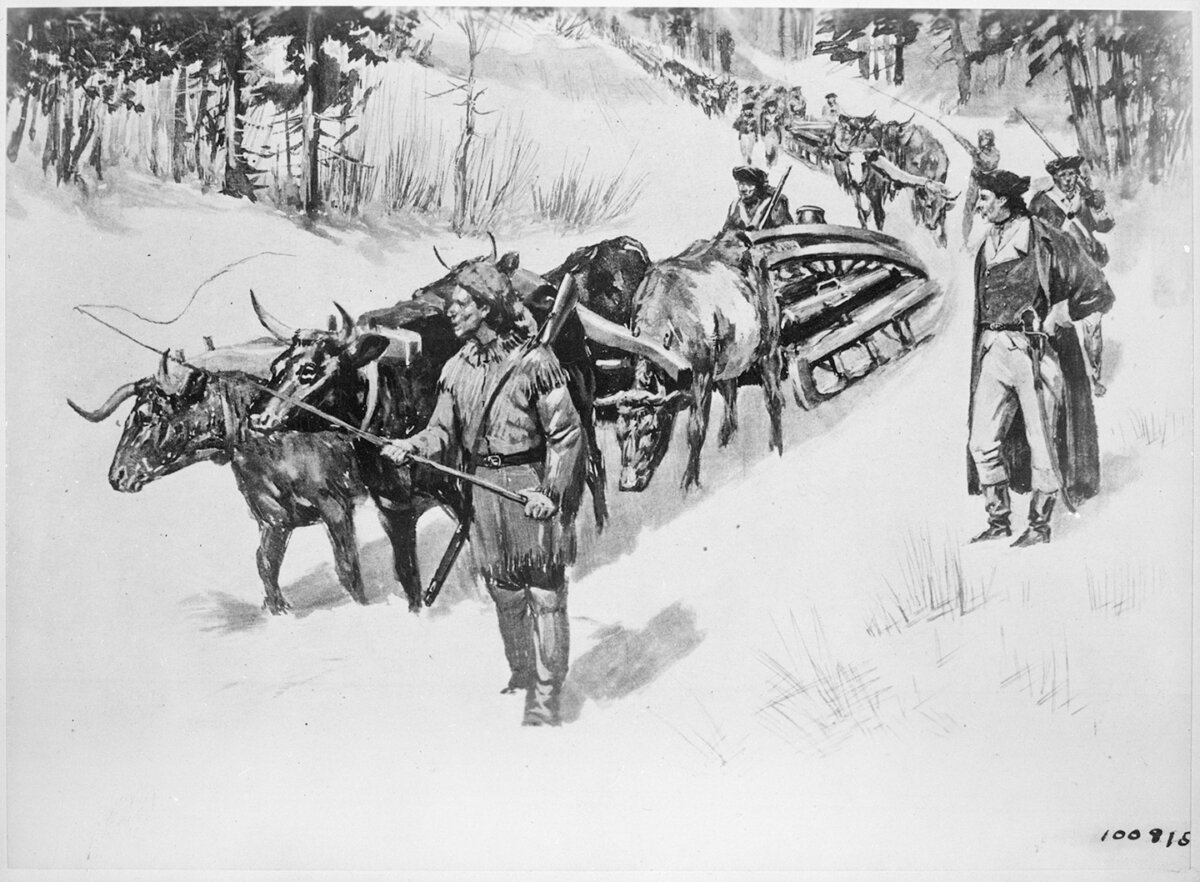
Henry Knox believed he knew exactly where to find the cannons Washington desperately needed. He proposed retrieving the heavy artillery captured months earlier at Fort Ticonderoga and Crown Point in New York. Washington immediately recognized the plan’s potential. On Nov. 16, 1775, he authorized Knox to proceed with the mission, writing that “the want of them is so great, that no trouble or expence must be spared to obtain them.”
The expedition was a staggering logistical challenge, requiring the transport of dozens of heavy guns across 300 miles of wilderness in the dead of winter—a feat many considered impossible.
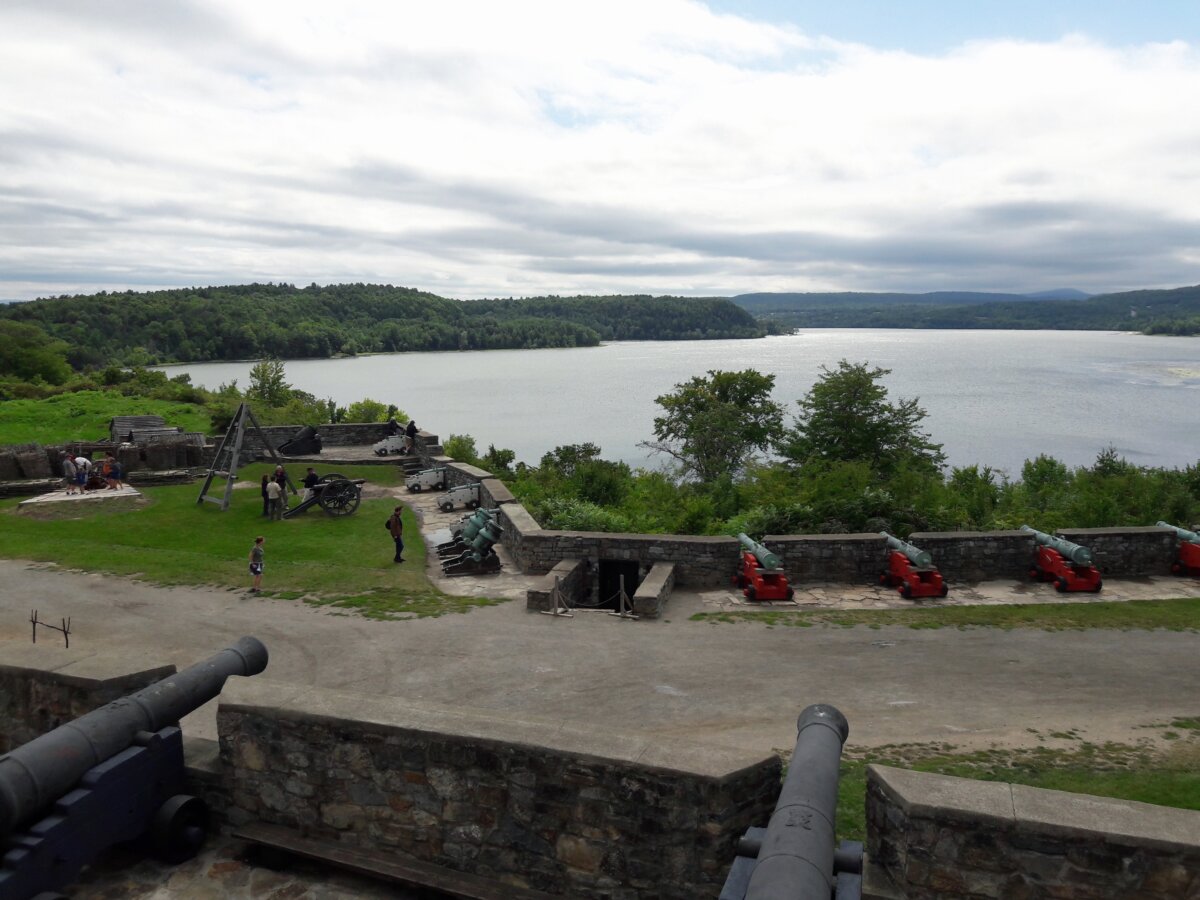
Washington soon appointed Knox a colonel, who then departed with his brother William and a small party. Along the way, they gathered supplies, equipment, and personnel. During one stop, Knox befriended a young British officer—Lt. John André—a man Knox would later preside over in a court-martial following the treason of Benedict Arnold. Reaching Fort Ticonderoga on Dec. 5, Knox’s team selected 59 pieces of artillery, including heavy cannons, mortars, and howitzers.
Hauling the weapons to Boston, however, proved far more grueling than acquiring them. Knox organized what he proudly dubbed a “noble train of artillery,” using sleighs, horses, and oxen to drag the guns across frozen lakes, through dense forests, and over rugged mountains. The journey was plagued with setbacks. At one point, an 18-pounder (cannon) plunged through the ice of the Hudson River. Undeterred, Knox’s men worked in the freezing water to recover it.
Despite repeated halts caused by erratic weather and a lack of snow, the convoy finally reached Cambridge in late January 1776. At long last, Washington possessed the firepower necessary to break the siege.
A Plan to Break the Siege
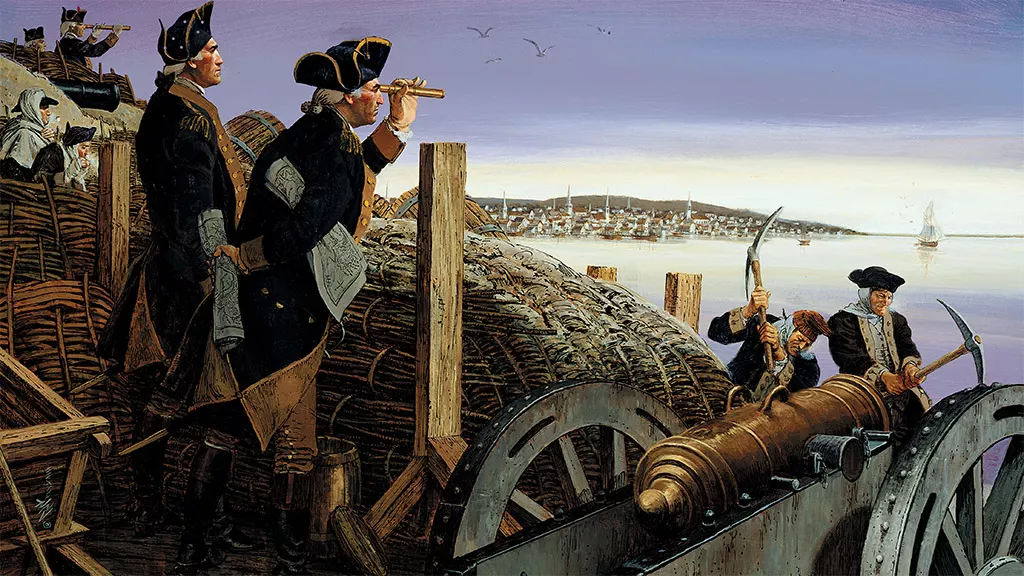
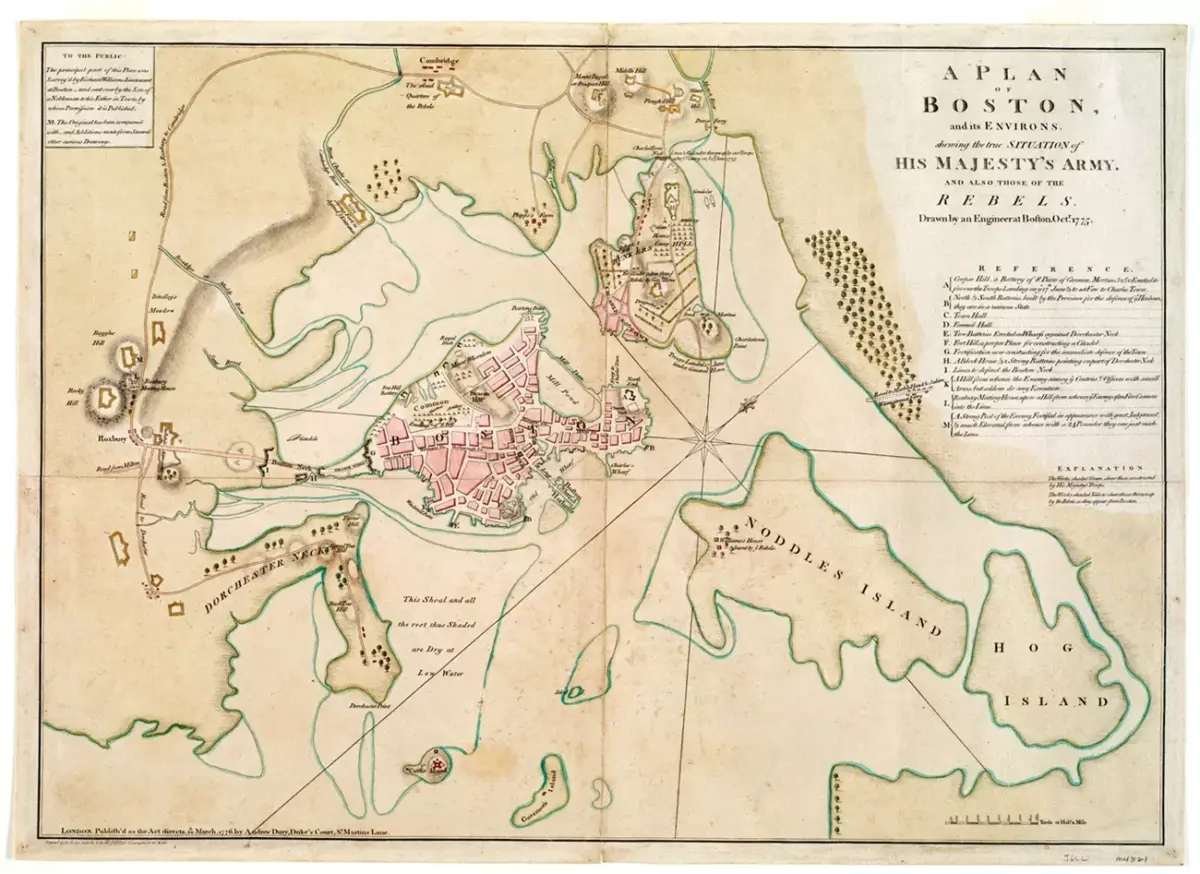
Washington and his generals devised a plan to draw the British into the open. Their strategy centered on Dorchester Heights, a peninsula south of the city with hills rising more than 110 feet. By mounting artillery on those heights, they would hold the British fleet and the city itself at their mercy—a threat that would force the British to abandon their fortifications and launch an attack.
Success, however, hinged on secrecy. Constructing fortifications so close to the city risked immediate British retaliation. Washington, therefore, orchestrated a massive diversion.
On the nights of March 2, 3, and 4, American artillery bombarded Boston from positions west of the city, successfully drawing British attention away from the real objective.
Under the cover of a thunderous bombardment on the night of March 4, Washington directed Gen. John Thomas and Col. Richard Gridley, the army’s chief engineer, to begin their objectives. More than 1,200 soldiers and volunteers—supported by hundreds of ox-drawn carts—quietly hauled tools, timber, and artillery up the hills.
Working through the night, the men constructed fortifications from earth, timber, and hay bales. Because the frozen ground made digging impossible, they used prefabricated wooden frames known as “chandeliers,” allowing them to erect defenses rapidly without the need for traditional trenches and earthen redoubts. The massive cannons from the Knox Expedition were then hauled into position, looming over the city, the harbor, and the British stronghold at Castle William.
When dawn broke on March 5—the sixth anniversary of the Boston Massacre—British officers stared in disbelief at the towering American fortifications that now crowned Dorchester Heights.
Gen. William Howe was equally stunned. He reportedly exclaimed: “My God, these fellows have done more work in one night than my army could do in three months.”
British Shock and Withdrawal
Howe immediately prepared an assault to dislodge the Americans, but a powerful storm swept the region, thwarting his preparations. By the time the weather cleared, Howe and his officers had reconsidered.
The American fortifications were formidable, sitting at an elevation far higher than the ground the British had struggled to take the previous June at the Battle of Bunker Hill. Wary of another pyrrhic victory, Howe announced on March 8 his intention to abandon Boston, vowing to torch the city if the Americans harassed his withdrawal.
The Evacuation of Boston
On March 17, 1776—St. Patrick’s Day—the evacuation began. More than 8,900 soldiers and over 1,200 women and children were packed into overcrowded ships. Joining them were an estimated 1,100 Loyalists, many of whom felt betrayed by the Crown as they were forced to abandon their homes, property, and country. By midday, the last vessels weighed anchor and departed, bound for Halifax, Nova Scotia.
The British were gone. The 11-month siege was over.
That afternoon, Gen. Artemas Ward led 500 soldiers through Boston Neck to secure the town, while Washington remained in Cambridge to attend church services. Liberation from British occupation was so monumental that to this day, Boston and Suffolk County celebrate March 17 as Evacuation Day.
The following day, March 18, Washington himself entered Boston to the cheers of a grateful citizenry.
Yet the war was far from over. Even as the townspeople celebrated, Washington and his generals were already contemplating Britain’s next move. They believed that Howe would strike New York, where the harbor and the Hudson River—also known as the North River—offered a strategically vital prize. Washington had suspected this long before the evacuation of Boston; as early as Jan. 8, he had dispatched Gen. Charles Lee to begin fortifying the city.
What began as a desperate mission amid a brutal winter evolved into one of the most remarkable logistical feats of the Revolutionary War. By hauling the “Noble Train of Artillery” from Fort Ticonderoga to the hills of Dorchester Heights, Henry Knox provided Washington with the leverage needed to break the British hold on Boston. This achievement transformed a frustrating stalemate for Washington into his first great victory of the war, showcasing his leadership and proving the Continental Army was capable of miracles.
Correction: An earlier version of this article misstated where the Henry Knox Trail marker is located. The Epoch Times regrets the error.
What arts and culture topics would you like us to cover? Please email ideas or feedback to features@epochtimes.nyc