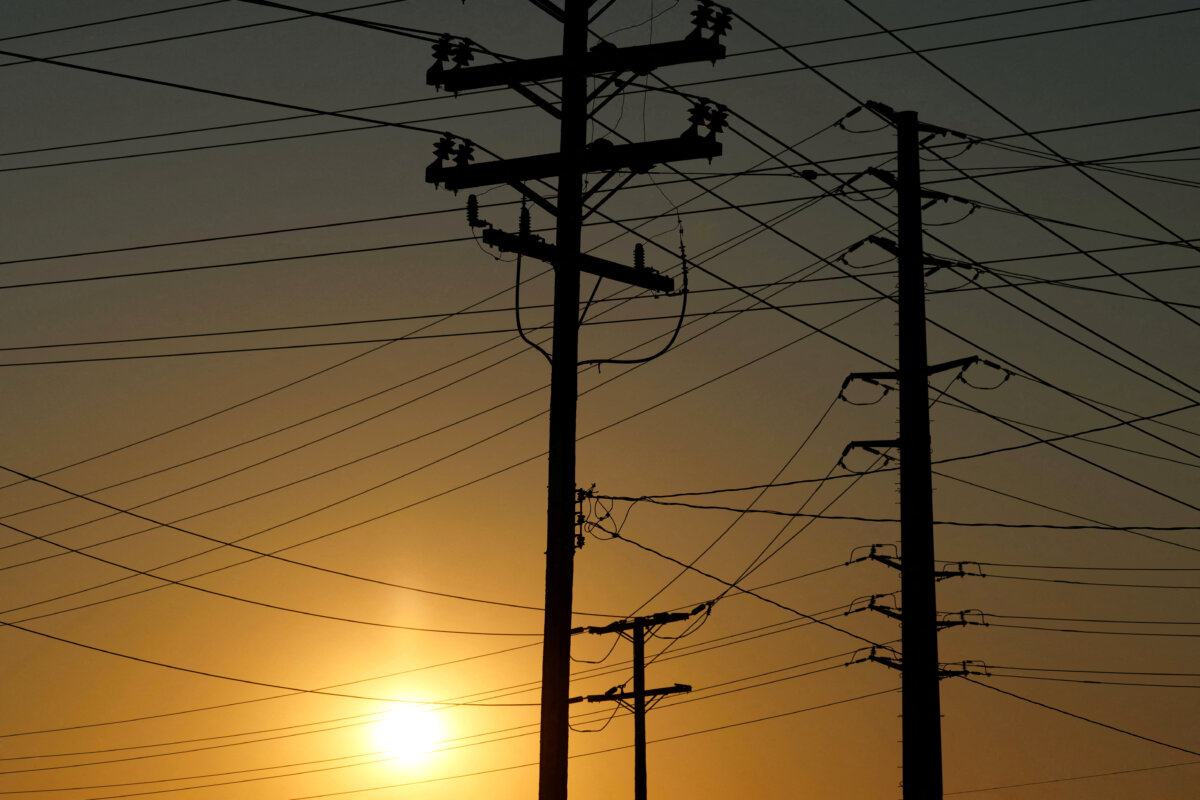

The Department of Energy (DOE) issued an emergency order allowing Southwest Power Pool Inc. to use certain energy resources and mitigate the risks of potential blackouts, the department said in a July 21 statement.
According to the order, issued on July 20 and signed by Secretary of Energy Chris Wright, Southwest Power Pool (SPP) requested the DOE to allow certain resources to exceed their operating limits for a temporary period to ensure grid reliability.
SPP, the regional grid operator for 17 states in the central United States, also sought authority to unlock and deploy backup generation resources at data centers and other large-load industrial and commercial customer sites.
On July 20, SPP issued multiple warnings, citing the risk of rolling blackouts in its service area amid record demand driven by high temperatures. One of the alerts said SPP had to rely on some or all of its operating reserves to meet demand after multiple power plants unexpectedly went offline.
Wright determined that the additional dispatch was necessary, and the operation of backup generation resources may be necessary to meet the energy emergency caused by expected load stress, the order said.
The determination was made based on factors such as expected shortage of electric energy and the potential loss of power to homes and local businesses, which could pose a risk to public health and safety.
Wright granted SPP the authority to use resources to meet electricity demand. The secretary authorized the company to deploy the required backup generation resources as a last resort before issuing an Energy Emergency Alert.
In its statement, the DOE said that the order was effective on July 20 and expired on July 21. According to the department, the order mitigated the risk of power outages in the regions served by the SPP.
“The Trump Administration is tapping into an abundant supply of unused backup generation to maintain affordable, reliable, and secure power for hardworking American families and businesses,” Wright said in the statement.
The DOE estimates that the total unused backup generation nationwide exceeds 35 gigawatts.
Wright said the previous administration’s policies weakened the U.S. power grid, leaving Americans vulnerable during emergency events.
“Thanks to President Trump’s leadership, we are reversing those failures and using every available tool to ensure Americans have continued access to affordable, reliable, and secure energy to power and cool their homes,” Wright said.
On July 15, PJM Interconnection, the nation’s largest electric grid operator that serves 13 states, announced a hot weather alert for its service region through at least July 17.
Such an alert is issued ahead of expected hot weather or high humidity to prepare power generation facilities and personnel to meet a surge in electricity demand.
The Midcontinent Independent System Operator, which serves 15 states, also issued an alert on July 15, citing above-normal temperatures, higher-than-forecasted loads, and power generation outages. The alert ended the same day.
High Temperatures
The emergency alerts issued by power grid operators came amid intense heat in parts of the United States.
According to a July 22 forecast by the National Weather Service’s Weather Prediction Center, “hazardous heat” is expected to continue this week over the southern United States before expanding through the Great Basin and across the Northern and Central Plains.
“Forecast highs range in the mid-90s to mid-100s with heat indices exceeding 105-115 degrees for some locations,” the center said.
“Widespread major to locally extreme HeatRisk (levels 3 and 4/4) is expected, which indicates a level of heat dangerous to anyone without adequate cooling or hydration.”
Amid the high heat, more emergency alerts may be issued by various power grid operators, and the DOE may issue additional emergency orders to address the situation.
Elevated temperatures for the current summer season are a continuation of last year’s trend. In a Jan. 13 post, nonprofit organization Climate Central said that 2025 was the fourth-hottest year on record for the contiguous United States. The nine warmest years in the country have all been recorded since 2012.
According to data from Injury Facts, an online resource run by nonprofit safety advocacy organization National Safety Council, high heat was responsible for 253 deaths in the United States last year.
 Friends Read Free
Copy
Facebook
Tweet
Friends Read Free
Copy
Facebook
Tweet