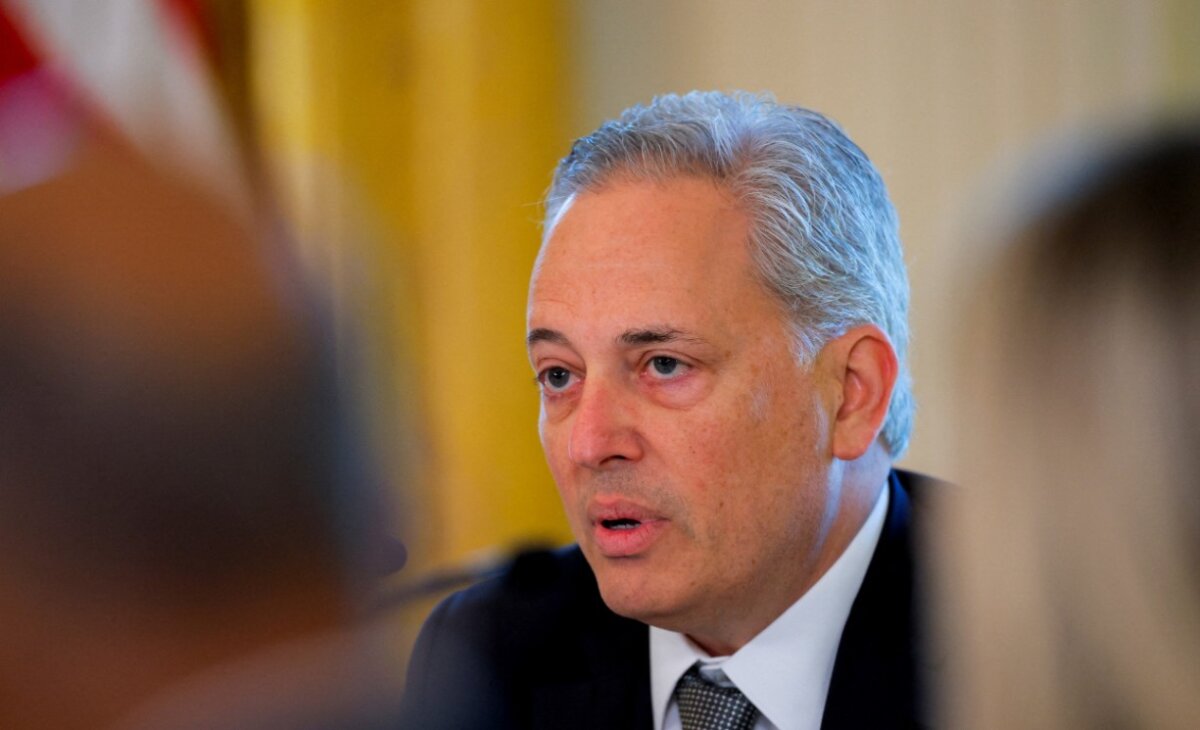
White House artificial intelligence (AI) and crypto czar David Sacks is leaving the role, he said in an interview on Bloomberg Television on March 26, and will move to an advisory role.
Sacks, a South African-born entrepreneur and former chief operating officer at PayPal, was appointed to the role of White House AI and crypto czar in December 2024 by then-President-elect Donald Trump.
It was a newly created position aimed at advancing U.S. policy in AI and cryptocurrency.
“David will focus on making America the clear global leader in both areas. He will safeguard Free Speech online, and steer us away from Big Tech bias and censorship,” Trump wrote in a post on Truth Social at the time.
During his time in the role, Sacks loosened restrictions on exports of AI chip shipments, such as the Nvidia H200, to China.
On March 25, the White House announced Sacks would join the President’s Council of Advisors on Science and Technology (PCAST) and would co-chair it with Michael Kratsios.
The White House also appointed several people to the PCAST, including Meta CEO Mark Zuckerberg, Google co-founder Sergei Brin, Oracle CEO Safra Catz, Coinbase co-founder Fred Ehrsam, Nvidia CEO and co-founder Jensen Huang, and Nobel Prize winner in physics John Martinis.
‘Golden Age of Innovation’
“Under President Trump, PCAST will focus on topics related to the opportunities and challenges that emerging technologies present to the American workforce, and ensuring all Americans thrive in the Golden Age of Innovation,” the White House said in its March 25 statement.
Every president, since Franklin D. Roosevelt in 1933, has established an advisory committee of scientists, engineers, and industry leaders.
As co-chair of PCAST, Sacks said he would be able to make recommendations on a broader range of technology issues beyond AI and cryptocurrency, with the help of “some of the biggest luminaries,” many of whom he said were builders.
“The idea is to gather some of the best and brightest minds in the country on cutting-edge technologies to make recommendations to the president and the White House on issues that obviously can have great impact on the American economy and our security and on innovation policy,” Sacks said.
Sacks co-founded venture capital firm Craft Ventures and launched Yammer, an enterprise software company acquired by Microsoft for $1.2 billion in 2012.
It remains unclear whether a new AI and crypto czar will be appointed in his place or if the role will be terminated.
On March 20, the White House launched a new legislative framework for AI laws that aims to address child safety, economic growth, and free speech protections, and Sacks said there has been some good reception to the framework on Capitol Hill.
However, it has been criticized by Democrats.
“Today’s AI legislative framework takes some steps in the right direction but lacks significant substance,” Sen. Mark Warner (D-Va.) said in a statement on March 20.
Democrat Warns of AI Threat
“The framework is worse than silent on AI-powered mis- and disinformation, a real and growing threat to our elections, our markets, and our country,” Warner said.
Sacks said he would be using his role in PCAST to push forward Trump’s AI framework.
The ending of Sacks’s time as a special government employee comes two weeks after he spoke out against an escalation of the conflict with Iran.
In an episode of the All-In podcast, on March 13, Sacks said the United States should “declare victory” and get out of the conflict with Iran.
Sacks said that damage to Israel, combined with potential damage to desalination plants in the region, could have a significantly detrimental impact on the lives in the region.
At the Hill & Valley Forum’s Washington summit on March 25, Sacks said the United States’ allies in the Gulf were partly targets because of the war over technology.
“If UAE’s data centers were serving China, I don’t think they would be getting bombed right now by Iran,” Sacks said.
At the same summit, Kratsios said the Trump administration was keen on encouraging AI development.
“We want to create an environment where innovators have certainty about the way that they can develop their products, and it’s something that only Congress can provide,” Kratsios said.
Technology companies are opposed to state regulations on AI, which they fear may be contradictory, but the Senate voted 99–1 last year to remove a 10-year moratorium on state AI laws from Trump’s megabill in 2025.
‘Patchwork’ of State Regulations
“The problem that we’re seeing right now is that you’ve got 50 different states regulating this in 50 different ways, and it’s creating a patchwork of regulation that’s difficult for our innovators to comply with,” Sacks told Bloomberg, adding that Trump wanted to create one “rulebook” for AI across the nation.
A national law on AI remains elusive, although Kratsios is hopeful of breaking through the political deadlock.
“We’re optimistic that we can try to get something done this year,” Kratsios said.
The Republican Party controls both houses of Congress.
Reuters contributed to this report.
 Friends Read Free
Copy
Facebook
Tweet
Friends Read Free
Copy
Facebook
Tweet