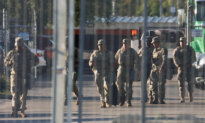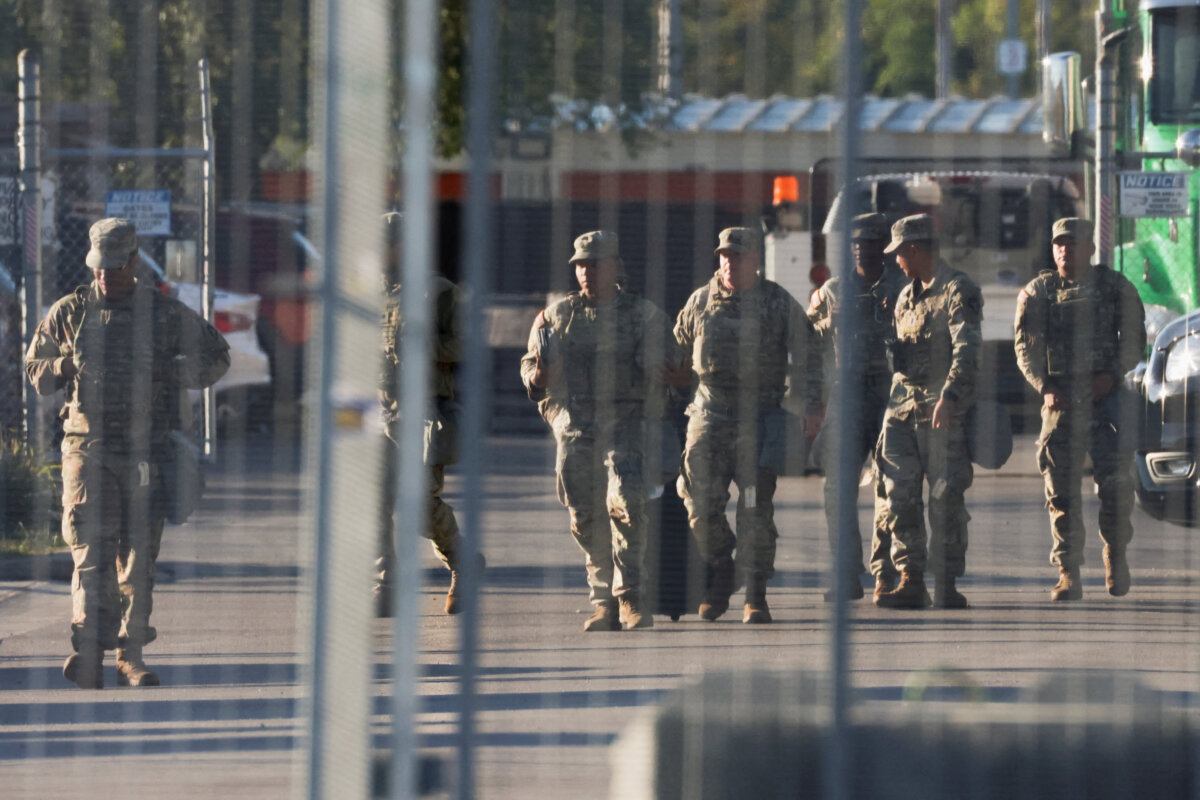

A federal appeals court on Oct. 16 rejected the Trump administration’s request to pause a lower court ruling from last week that temporarily prevents the president from deploying National Guard troops in Illinois during his appeal.
The three-judge panel of the 7th U.S. Circuit Court of Appeals, based out of Chicago, said it lacked evidence that federal law enforcement has been unable to enforce U.S. immigration laws. Their ruling allows an Oct. 9 temporary restraining order by U.S. District Judge April Perry in Chicago, blocking National Guard deployment, to stay in place.
When he invoked his power to deploy National Guard troops in Illinois, President Donald Trump said violent protests were preventing federal agents from arresting people who are in the country illegally.
“Immigration arrests and deportations have proceeded apace in Illinois over the past year, and the administration has been proclaiming the success of its current efforts to enforce immigration laws in the Chicago area,” the court said.
The court stated that the administration’s efforts likely violated Illinois’s constitutional right to sovereignty, which it said was exacerbated by Texas National Guard troops being sent in.
However, the appeals court paused the part of Perry’s order that barred Trump from federalizing Illinois’s National Guard troops, allowing them to remain under federal control. The judges were skeptical that the federal government would be able to show it had legally taken control of the troops, but said leaving them under federal oversight would lead to minimal harm for Illinois for now.
Abigail Jackson, a White House spokesperson, said in a statement that Trump had exercised his lawful authority to protect federal law enforcement and its assets.
“President Trump will not turn a blind eye to the lawlessness plaguing American cities, and we expect to be vindicated by a higher court,” Jackson said.
In her Oct. 9 ruling, Perry said the protests were prompted by the actions of Immigration and Customs Enforcement (ICE) agents, and that deploying National Guard soldiers would “only add fuel to the fire that defendants themselves have started.”
She also said that the immigration-related protests in the Chicago area did not amount to a “rebellion” that would require the deployment of the National Guard.
Perry’s order will remain in effect until at least Oct. 23, but she scheduled a hearing for Oct. 22 to consider extending her temporary restraining order blocking deployment of National Guard troops to Chicago.
Reuters contributed to this report.
 Friends Read Free
Copy
Facebook
Tweet
Friends Read Free
Copy
Facebook
Tweet