
A federal appeals court heard arguments on Sept. 29 on whether a federal judge may continue a criminal-contempt inquiry into Trump administration officials who carried out Alien Enemies Act deportations of alleged Tren de Aragua members to El Salvador last year.
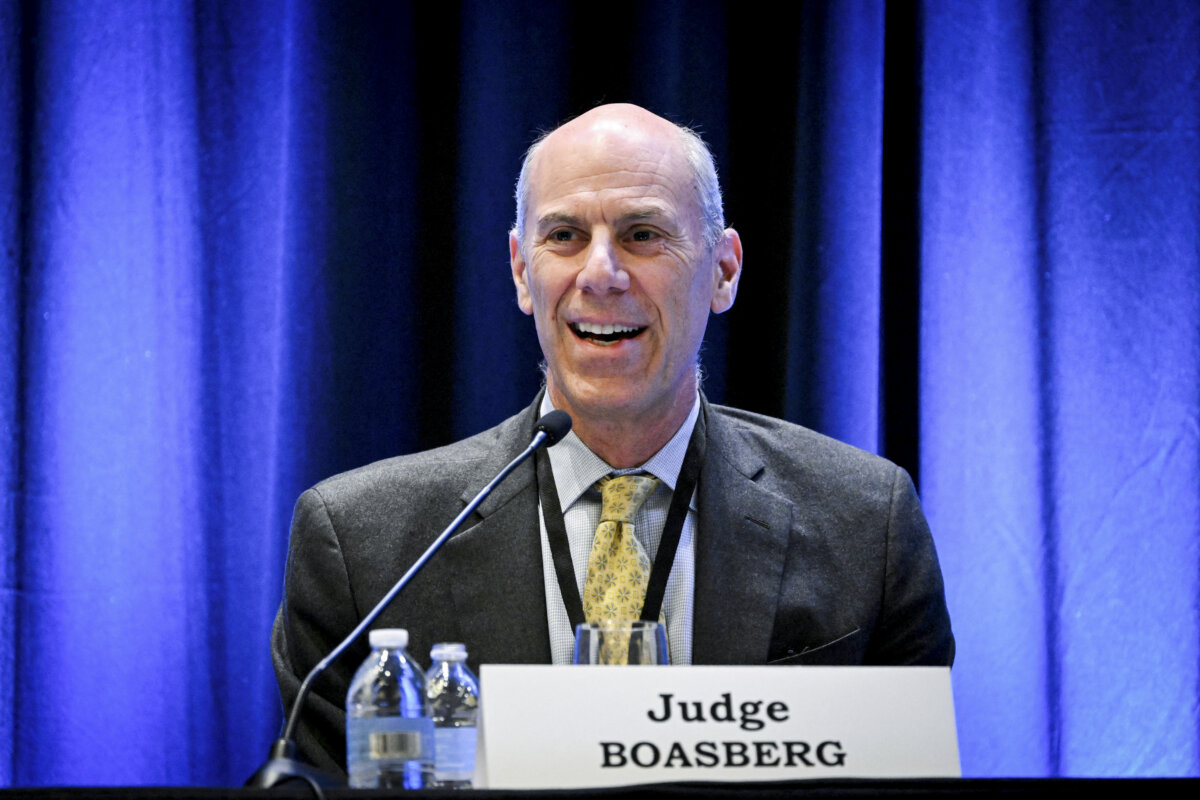
The full U.S. Court of Appeals for the District of Columbia Circuit held a hearing to consider if Washington-based U.S. District Judge James Boasberg can keep probing who decided not to turn around airplanes that left the United States on March 15, 2025, after he issued an oral order and a temporary restraining order blocking the removals.
Boasberg ruled that the federal government appeared to have acted in bad faith when it rushed to organize three deportation flights while the court was holding emergency proceedings to evaluate the lawfulness of the operation.
The Trump administration has identified then-Homeland Security Secretary Kristi Noem as the official who made the final call to proceed with the expedited removals.
The American Civil Liberties Union (ACLU) sued on behalf of Venezuelan men who were deported under the rarely used 1798 statute that provides presidents wide authority to detain and remove noncitizens. The men were imprisoned in El Salvador and then later transported to Venezuela on a Trump administration-engineered prisoner swap.
The government says the flights had already left U.S. airspace, the Supreme Court later vacated Boasberg’s orders, and the contempt inquiry is an unlawful intrusion into executive decision-making.
Attorneys for the deportees say officials willfully defied a court order and that the judge must be allowed to finish the inquiry. A divided panel of the D.C. Circuit had directed Boasberg to stop, finding the judge’s actions encroached on “the autonomy of the executive branch” with its effort to “probe high-level executive branch deliberations about matters of national security and diplomacy.” Later, the full court vacated that ruling in June and took up the case itself.
During the three-hour en banc hearing, the judges did not appear to agree on the facts of March 15, 2025, the clarity of Boasberg’s order, and whether mandamus—an extraordinary order directing a court to stop doing something—should issue to halt Boasberg’s contempt inquiry. Although the D.C. Circuit has 11 judges, U.S. Circuit Judge Karen LeCraft Henderson did not participate in the hearing.
Department of Justice (DOJ) lawyer Brett Shumate told the judges during the oral argument that Boasberg’s criminal contempt investigation had “gone off the rails.” Prosecutors, not judges, are supposed to investigate crimes, he said.
The district court already found probable cause that the Trump administration “willfully violated” Boasberg’s temporary restraining order that the Supreme Court later vacated, yet it is “now investigating the mental state of senior government officials,” Shumate said.
The district court has “demanded that the government’s litigation counsel testify in a quasi-grand jury, and it has even invited the ACLU to participate in the court’s criminal investigation.”
Mandamus must issue to halt the lower court’s investigation because it is “unlawful, unnecessary, and futile,” the attorney said.
U.S. Circuit Judge Michelle Childs defended Boasberg’s efforts, saying he was “fact-finding to know what happened and know why there was a violation of the district court’s order, oral and written.”
U.S. Circuit Judge Patricia Millett said the district court “has to find out what happened and who was in the room providing the advice,” though “maybe not the content of the advice.”
ACLU attorney Lee Gelernt said Boasberg did the right thing.
“No prior DOJ or administration has ever taken these kind of egregious actions and it’s so disrespectful to the judiciary,” he said. “In the fog of the moment, it’s very difficult to know when is that time to put your foot down.”
“If you don’t uphold what this district court did, it will send a horrible message,” Gelernt said.
It is unclear when the D.C. Circuit will issue a ruling.
 Friends Read Free
Copy
Facebook
Tweet
Friends Read Free
Copy
Facebook
Tweet