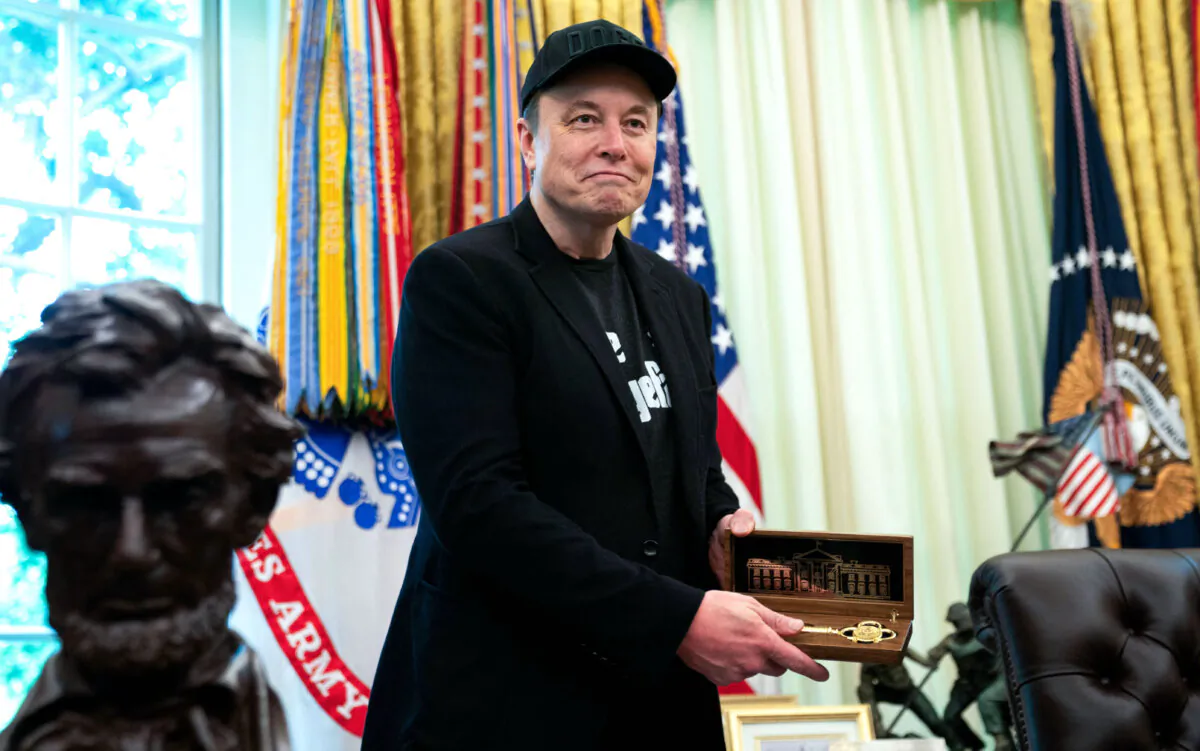

Battle lines are forming in Congress after former Department of Government Efficiency (DOGE) chief Elon Musk delivered his harshest criticisms yet toward Republicans’ One Big Beautiful Bill Act.
On June 3, Musk described the legislation as an “abomination,” writing, “I’m sorry, but I just can’t stand it anymore. This massive, outrageous, pork-filled Congressional spending bill is a disgusting abomination. Shame on those who voted for it: you know you did wrong. You know it.”
The comments have already ignited disagreements in Republican circles between the conservatives who share Musk’s concerns and those aligned with President Donald Trump and congressional GOP leadership.
House Speaker Mike Johnson (R-La.) was critical of the comments.
“With all due respect, Elon is simply wrong about the One Big Beautiful Bill,” Johnson told reporters, while nevertheless indicating that he considers Musk a friend.
“Our legislation comprehensively delivers on every major campaign promise and the America First agenda, while ALSO securing historic savings of more than $1.6 trillion,” Johnson said. “It’s going to keep our borders secure, provide historic tax relief for hardworking Americans, unleash American energy dominance, reduce spending, and restore peace through strength.”
On the other side of the political aisle, House Minority Leader Hakeem Jeffries (D-N.Y.) quipped, “Breaking news: Elon Musk and I agree with each other.”
Speaking at a weekly press conference after Musk made his latest comments against the bill, Jeffries echoed Musk’s criticism.
“Every single Republican who voted for the one big, ugly bill, should be ashamed of themselves. They aren’t helping their constituents. They are hurting their constituents,” Jeffries said.
At a weekly press conference, Senate Majority Leader John Thune (R-S.D.) reiterated his support for the package broadly.
“We think that the bill as passed by the House … with Senate modifications to strengthen and improve it will be something that will make this country more safe, and people in this country more prosperous,” Thune said.
He cited the legislation’s provisions for enhanced border security, energy development, military modernization, and staving off a tax increase that would otherwise go into effect at the end of 2025.
But multiple lawmakers have already sided with Musk on the issue, including several senators.
In response to a post on X where Musk pointed out that the deficit was on track to reach $2.5 trillion a year, Sen. Mike Lee (R-Utah) called the figure “nothing short of stunning.”
“Senate Republicans can make a meaningful dent in the problem through a combination of (1) the ‘Big, Beautiful Bill’ (for mandatory spending), (2) rescissions packages (for discretionary spending), and (3) the appropriations process (also discretionary spending),” Lee wrote.
“We must commit now to doing so, as this is what voters justifiably expect—and indeed deserve—from the GOP Congress,” Lee said.
Sen. Rand Paul (R-Ky.) shared the sentiment.
“I agree with Elon. We have both seen the massive waste in government spending and we know another $5 trillion in debt is a huge mistake,” Paul wrote in a post on X.
“We can and must do better.”
The criticisms from Musk and other lawmakers revolve around the bill’s projected impact on the federal budget and deficit. The Congressional Budget Office has estimated it could increase the deficit by as much as $3.8 trillion in its current state, but House Republican leaders have countered that this assumes a lower growth rate than they expect from the bill.
Currently, the Senate is working through modifications to the House-passed version of the legislation. The upper chamber is expected to make sweeping changes.
To pass, any final version of the bill will need to win the support of all but three senators, in which case Vice President JD Vance would still need to cast a tie-breaking vote. As is, there are indications that the bill would fail in the Senate as multiple senators have expressed reservations about various components of the bill.
It would then return to the House, where additional changes could be made.
Both chambers will need to pass an identical version of the legislation to send it to President Trump’s desk.
 Friends Read Free
Copy
Facebook
Tweet
Friends Read Free
Copy
Facebook
Tweet