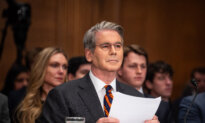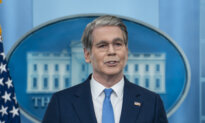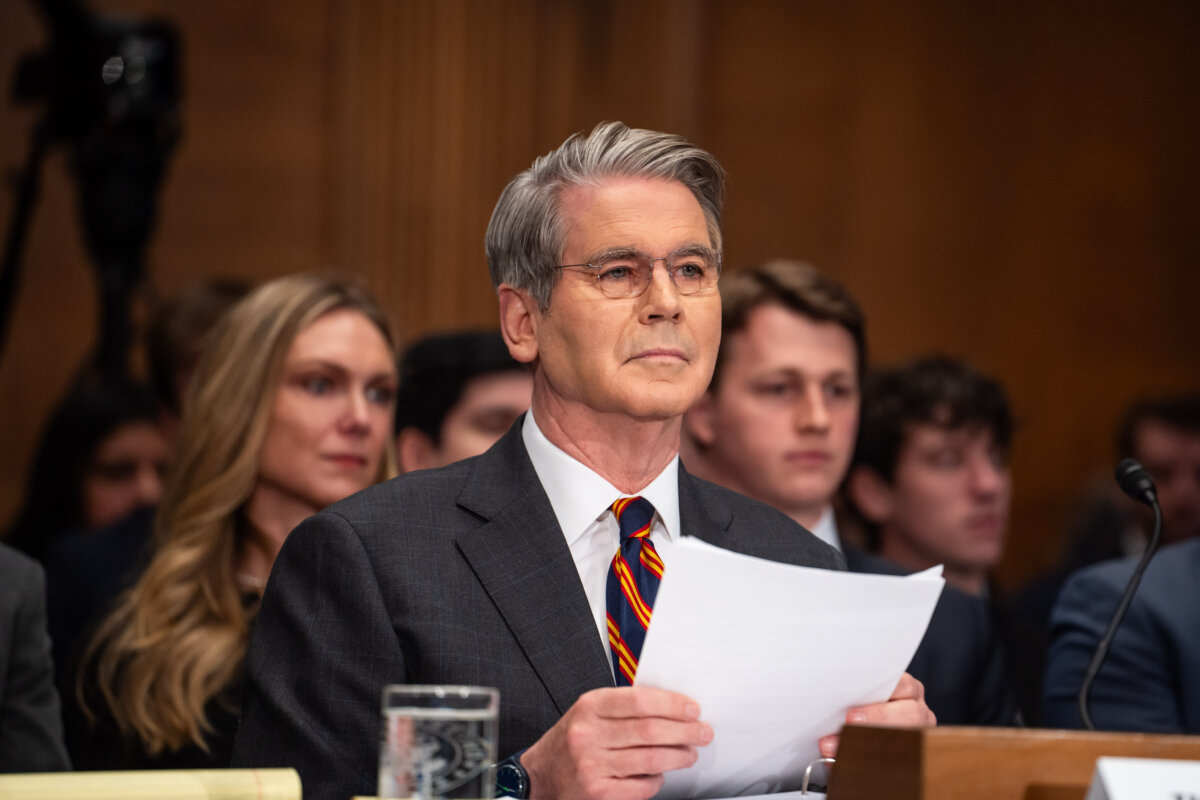

Treasury Secretary Scott Bessent said on Feb. 24 that President Donald Trump’s new retirement proposal could be advanced through budget reconciliation.
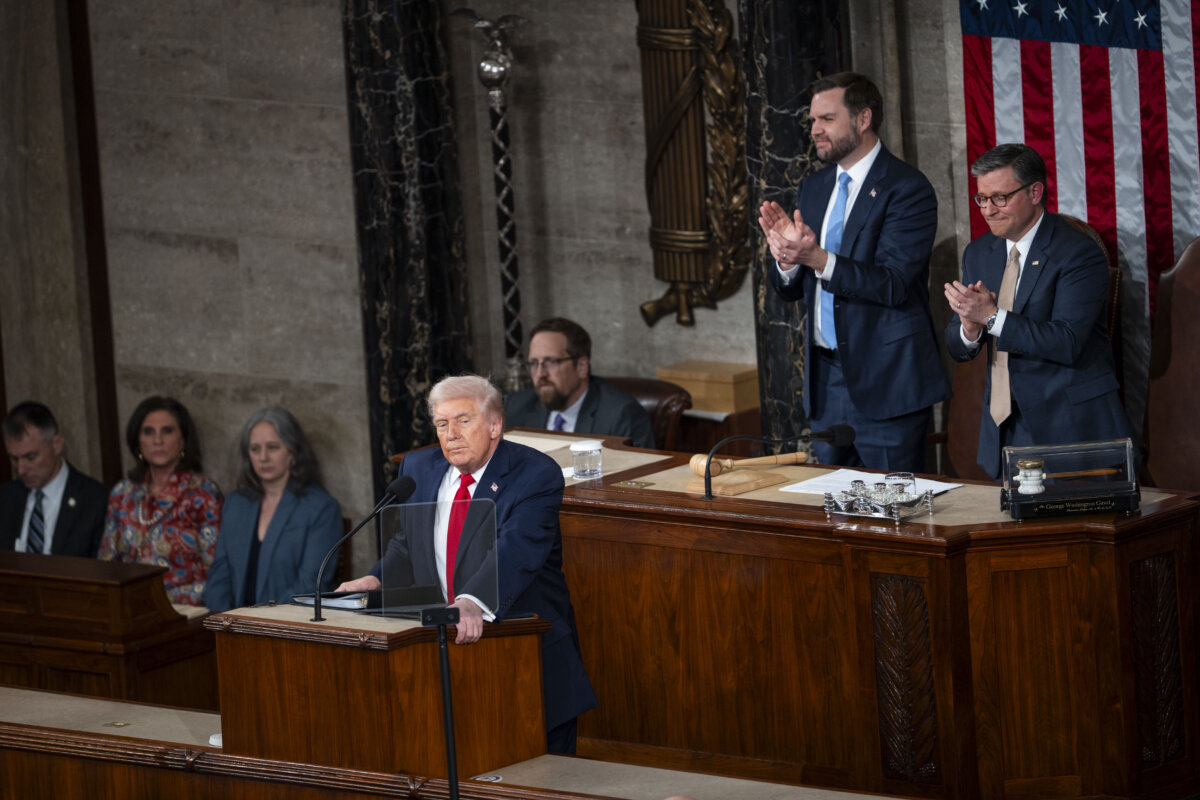
In his record‑long State of the Union address, the president announced a plan to give Americans who lack an employer‑sponsored retirement plan such as a 401(k) access to the same program available to federal workers.
Trump also said he plans to match their contribution with up to $1,000 each year to “ensure that all Americans can profit from a rising stock market.”
In an interview with NBC’s Kristen Welker following Trump’s speech, Bessent said the proposal could be implemented through budget reconciliation.
Budget reconciliation is a shortcut that Congress can use to pass certain tax and spending legislation with a simple majority in the Senate.
Echoing the president’s remarks about the “forgotten workers,” Bessent stated that Trump’s policies are “coming back for working Americans” and “those who have been left behind.”
“The president wanted to preview it in his speech, but I think this is going to be a very big part of working Americans’ retirement program, because there is a tremendous amount of financial insecurity,” he said.
“Currently, 38 percent of Americans have no exposure to the equity market, and we think, over time, this is going to remedy that, so everybody will have a stake in our great, innovative economy and the American dream.”
The Economic Innovation Group estimates that approximately 40 million people—or about half of full-time private sector employees—do not have access to employer-provided retirement plans.
Full details will be rolled out in the “coming weeks and months,” Bessent said.
Wall Street ‘Encouraged’
Industry groups welcomed the president’s call to strengthen the U.S. retirement system.
“The US voluntary retirement system is strong and access continues to expand,” the Investment Company Institute said in a Feb. 25 statement.
“Preserving and strengthening that framework is the most effective way to help more Americans save for a secure retirement, rather than shifting to a government-run one-size-fits-all approach.”
Financial markets are also responding positively to the president’s policy proposals, according to strategists at the investment analytics platform Reflexivity.
“Investors appear encouraged by the President’s pro-market tone, particularly a proposal to match up to $1,000 annually in government-backed 401(k) contributions for workers without employer plans—a move that could support long-term equity inflows,” the firm said in a note emailed to The Epoch Times.
U.S. stocks are mostly in the green as of midweek, led by a 1 percent gain in the tech-heavy Nasdaq composite index.
The blue-chip Dow Jones Industrial Average ticked up by 0.1 percent, while the broader S&P 500 jumped by almost 0.5 percent.
Trump touted the stock market’s performance in his second term’s first year, pointing to the Dow Jones hitting 50,000 and the S&P 500 touching 7,000, which he says was “years ahead of schedule.”
Throughout his primetime address, which lasted one hour and 47 minutes, Trump championed several economic policies aimed at improving affordability—an issue top of mind for U.S. voters.
Although consumer sentiment has improved in recent months, surveys continue to spotlight Americans’ growing consternation over the cost of living and the broader economic landscape.
The Conference Board’s February Consumer Confidence Survey, released on Feb. 24, inched up, but it remains below high levels reached in late 2024. This research assesses consumer attitudes and expectations, buying intentions, and vacation plans.
Trump pointed to the One Big Beautiful Bill Act’s provisions, including no tax on tips, no tax on overtime, a new deduction on car loan interest payments for cars assembled in the United States, a new deduction for seniors, and his signature Trump Accounts for children.
The tax‑free Trump Accounts are designed as a retirement savings vehicle for Americans younger than 18, and the Treasury will automatically contribute $1,000 for every child born from Jan. 1, 2025, through Dec. 31, 2028.
Many major companies have pledged to match that contribution for their employees’ children. Billions of dollars in private donations have also been submitted.
Trump also reaffirmed his administration’s commitment to protecting Social Security, Medicare, and Medicaid.
 Friends Read Free
Copy
Facebook
Tweet
Friends Read Free
Copy
Facebook
Tweet