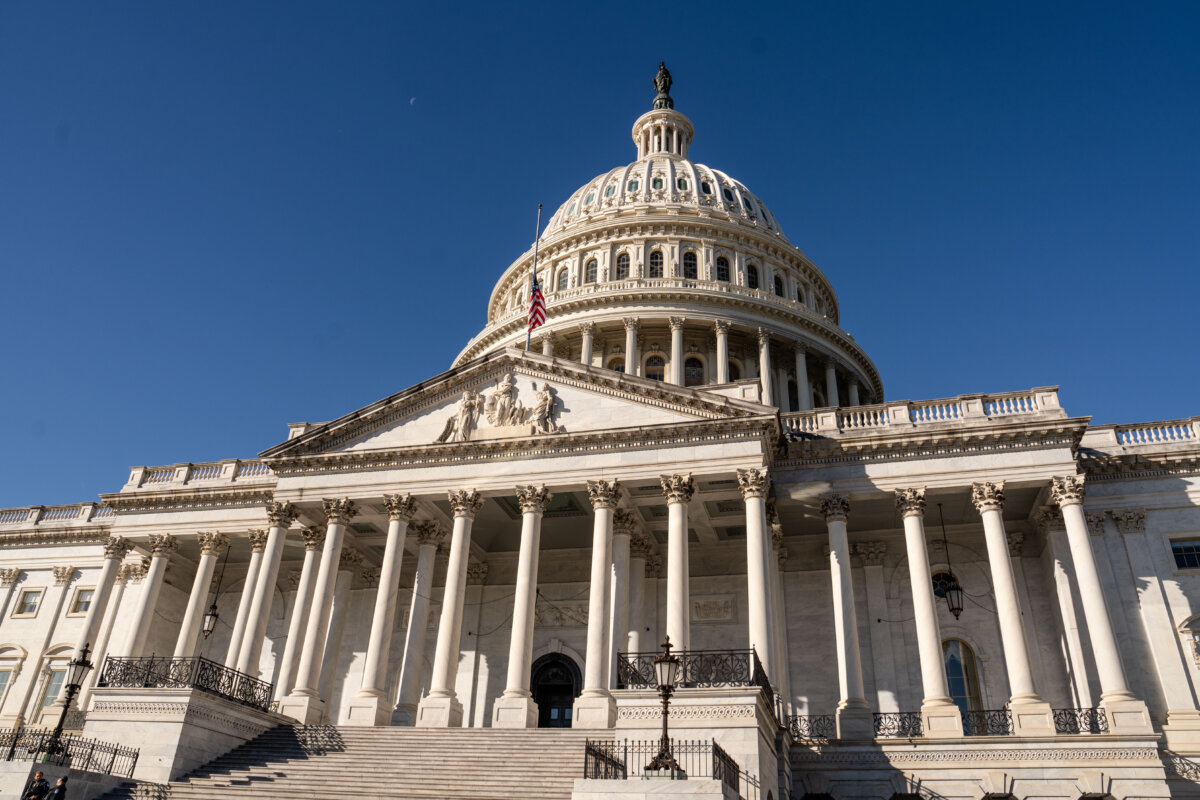

A bipartisan coalition of 36 attorneys general is asking congressional leaders to reject any proposal that would limit states’ ability to regulate artificial intelligence (AI).
“While AI promises to be a transformative technology in numerous fields, it also poses significant risks—notably to the most vulnerable among us, our children. States must be empowered to apply existing laws and formulate new approaches to meet the range of challenges associated with AI,” they wrote in the letter on Nov. 25.
The letter was sent to House Speaker Mike Johnson (R-La.), House Minority Leader Hakeem Jeffries (D-N.Y.), Senate Majority Leader John Thune (R-S.D.), and Senate Minority Leader Chuck Schumer (D-N.Y.).
In addition to existing concerns about criminals exploiting AI-powered deepfakes, social-media profiles, and voice clones, the attorneys general said they are alarmed by more recent reports that AI chatbots themselves may be contributing to the nation’s mental health crisis.
“We are also deeply troubled by sycophantic and delusional generative AI outputs plunging individuals into spirals of mental illness, suicide, self-harm, and violence,” they wrote in the letter.
“And we are concerned that AI chatbots and ‘companions’ are engaging children in highly inappropriate ways, including with conversations that feature graphic romantic and sexual roleplay, encouragement of suicide, promotion of eating disorders, and suggestions to prioritize use of the AI at the expense of connecting with friends and loved ones in real life.”
Their message follows a separate letter released earlier this week, in which more than 200 state lawmakers likewise urged Congress to reject any “blanket prohibition” on state AI regulations.
The pressure campaign comes as House Republican leadership is expected to include a federal ban on state AI laws in next year’s military-funding bill. Over the summer, Sen. Ted Cruz (R-Texas), who chairs the Senate Commerce, Science, and Transportation Committee, tried to add a 10-year ban on state AI laws to the One Big Beautiful Bill Act, though the provision was ultimately dropped from the final draft.
Both Republican- and Democratic-led states are moving ahead with their own rules. Colorado in February enacted a new “high-risk” AI law, requiring developers of AI systems to exercise “reasonable care” to protect users from discrimination, defined by outcomes rather than intent. A Texas law will go into effect on Jan. 1, 2026, making it illegal to develop or deploy AI “with the intent to unlawfully discriminate” against protected classes. Tennessee has already passed its ELVIS Act, named in honor of the legendary musician, which prohibits using AI to clone an artist’s voice without permission.
Trump, meanwhile, continued to express enthusiastic support for AI, which he described as “one of the most important technological revolutions in the history of the world.” His administration has outlined an expansive agenda to position the United States as a global leader in AI development and application, and is seeking to eliminate regulations that AI advocates say are overly burdensome to the industry and would hinder innovation.
“We must have one federal standard, instead of a patchwork of 50 state regulatory regimes,” Trump wrote on Nov. 18 on his Truth Social platform. “If we don’t, then China will easily catch us in the AI race.”
It’s not the first time Trump has called to curb state AI regulations. The White House’s AI Action Plan, released in June, directs federal agencies with “AI-related discretionary funding” to limit awards if a state’s regulatory regime “may hinder the effectiveness of that funding.”
“The Federal government should not allow AI-related federal funding to be directed toward states with burdensome AI regulations that waste these funds, but should also not interfere with states’ rights to pass prudent laws that are not unduly restrictive to innovation,” it states.
 Friends Read Free
Copy
Facebook
Tweet
Friends Read Free
Copy
Facebook
Tweet