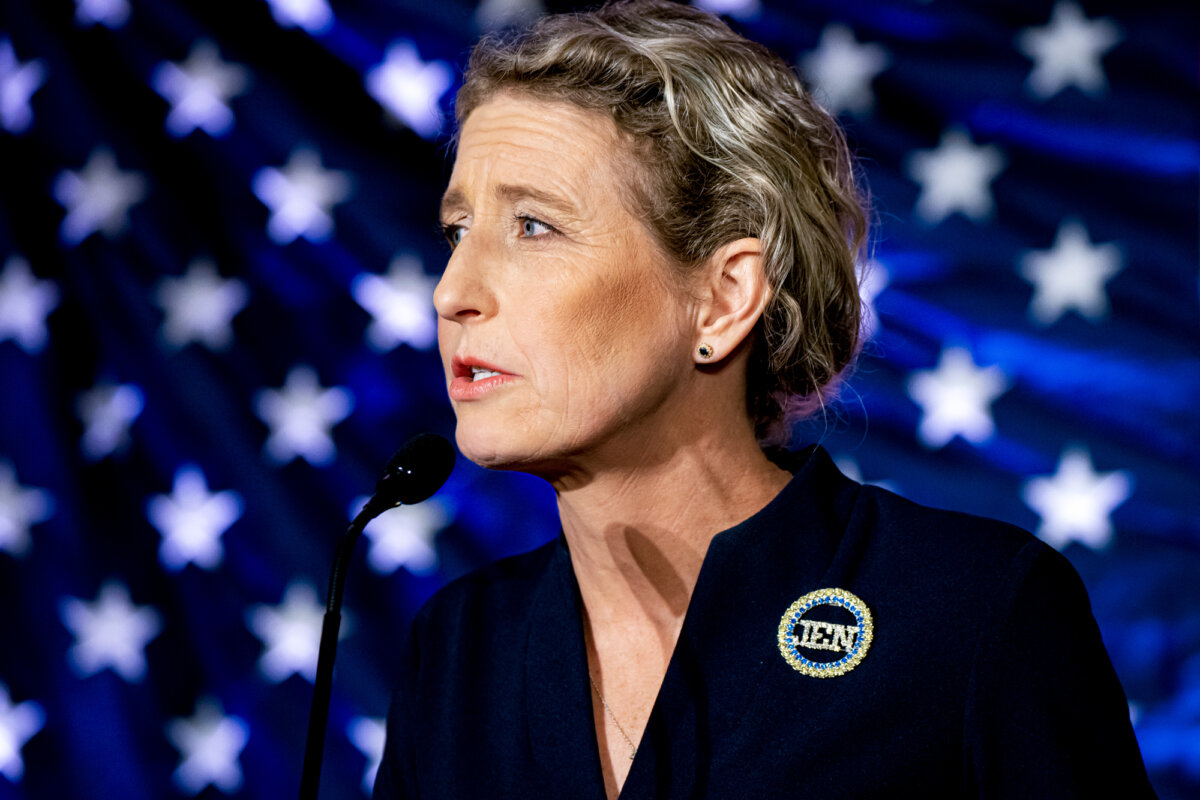

A bipartisan group of House members has introduced a bill to extend certain tax credits for Obamacare enrollees, which are set to expire at the end of the year.
The bill, sponsored by Rep. Jen Kiggans (R.-Va.) and Tom Suozzi (D-N.Y.), would extend the “enhanced” premium tax credits for one year, avoiding an abrupt end to a financial benefit many Americans have come to rely on.
“While the enhanced premium tax credit created during the pandemic was meant to be temporary, we should not let it expire without a plan in place. My legislation will protect hardworking Virginians from facing health insurance bills they can’t afford, thus losing much-needed access to care,” Kiggans said in a statement.
Enhanced Tax Credits
Obamacare is based on tax credits that help people pay health insurance premiums. There are two types of credits.
The Affordable Care Act Marketplace created a premium tax credit whereby people whose income is between 100 and 400 percent of the federal poverty level pay a reduced health insurance premium, with the federal government paying the rest.
The federal poverty level for the continental United States is $15,650 in annual income for one person. The level increases based on household size. A family of three with an annual household income of up to $103,280 would qualify for that tax credit this year.
In 2021, the American Rescue Plan created a second credit, called an enhanced premium tax credit. This enhanced credit did two things.
First, it reduced the maximum amount enrollees would pay for premiums.
Second, it opened Obamacare to people whose income is above 400 percent of the federal poverty level if their premium payment would be greater than 8.5 percent of their income.
A sharp increase in Obamacare enrollment followed, rising from 11 million in 2020 to 24 million by 2025.
In 2022, the Inflation Reduction Act extended the enhanced premium tax credit through 2025, so they are set to expire at the end of this year.
Impact of Expiration
Some analysts foresee a drop in health insurance enrollment and an increase in premiums when the enhanced tax credits expire.
Some Obamacare enrollees would see premium increases between 25 percent and 100 percent, according to Commonwealth Fund, a group that funds policy research.
Further, if healthy people choose to drop their health coverage due to the additional cost, premiums could go up for everyone, according to Commonwealth Fund.
Among 23 health insurers who had posted their 2026 premiums as of June 3, all included an additional increase averaging 4 percent to compensate for the expected expiration of the enhanced premium tax credits, according to the think tank Center for Budget Priorities.
The Congressional Budget Office has not estimated the cost of a one-year extension of enhanced health premium tax credits. However, it calculated that a permanent extension would increase the federal deficit by $335 billion while increasing the number of insured Americans by 3.4 million per year.
Co-sponsors of the bill are Reps. Brian Fitzpatrick (R-Pa.), Jared Golden (D-Maine), Jeff Hurd (R-Colo.), Rob Bresnahan (R-Pa.), Young Kim (R-Calif.), David Valadao (R-Calif.), Carlos Gimenez (R-Fla.), Tom Kean (R-N.J.), Juan Ciscomani (R-Ariz.), Mike Lawler (R-N.Y.), Don Davis (D-N.C.), and Marie Gluesenkamp Perez (D-Wash.).
 Friends Read Free
Copy
Facebook
Tweet
Friends Read Free
Copy
Facebook
Tweet