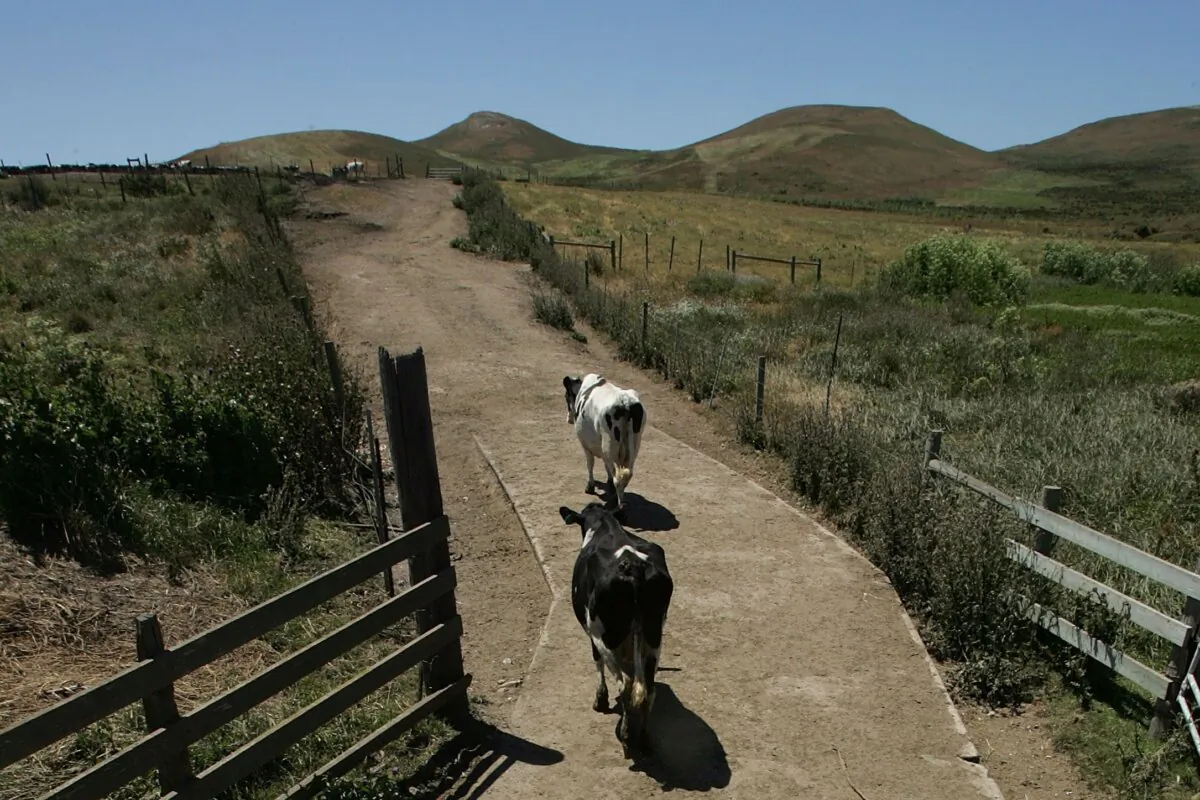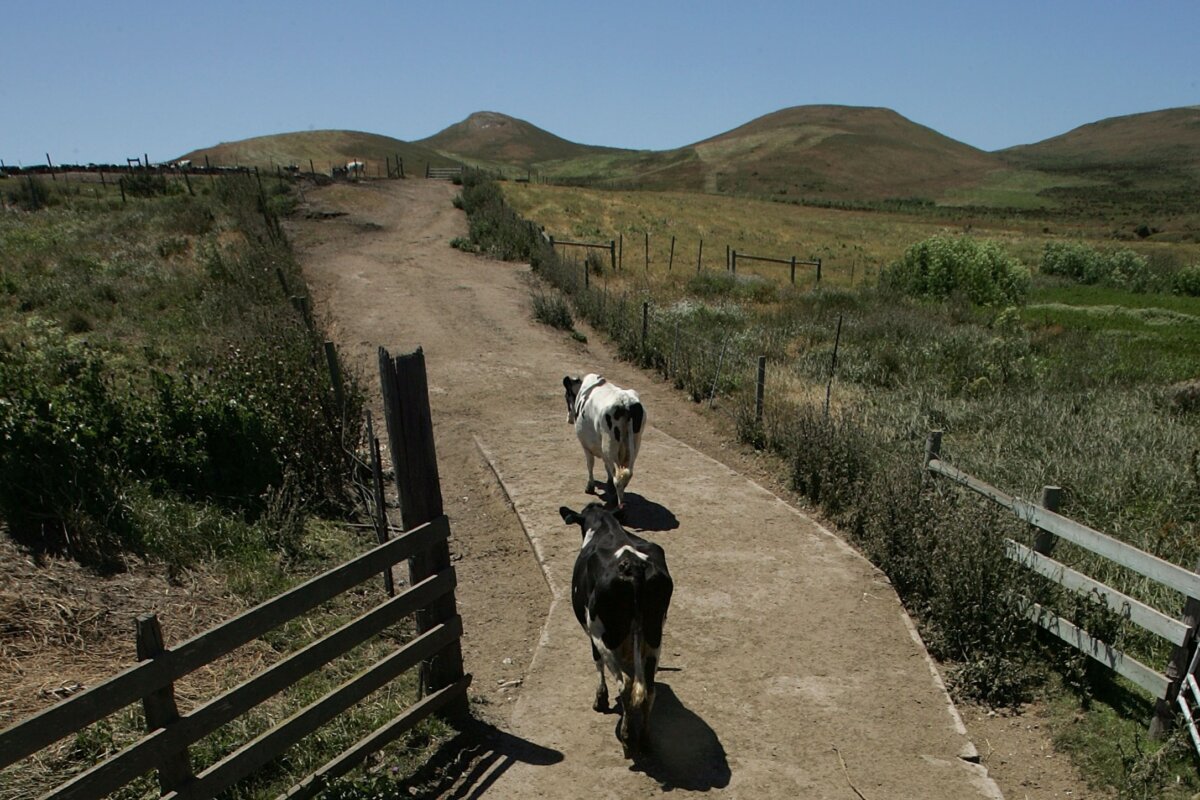

The Marin County Board of Supervisors on Aug. 26 approved the purchase of land to build a temporary homeless shelter for dairy and ranch workers who are expected to be displaced after dozens of farms on national park land were ordered to shut down by 2026.
The vote took place during a closed session. One board member recused himself.
The purchase was deemed necessary as 12 historic dairies and beef ranches at the Point Reyes National Seashore are forced to shutter by 2026 under a settlement between the National Park Service and environmental groups.
By February, 26 households of 89 people, many of them immigrants who have milked cows and mended fences, must leave the housing that came with their jobs that earn them less than $41,000 a year. The county declared a shelter crisis in March and is now working on a temporary refuge.
During public comment, many locals wrote in support of the proposal.
“These are farmworkers, caregivers, and service workers who are the backbone of West Marin’s economy and community,” said Marnie and Whit Jackson. “Without intervention, many of them face homelessness and displacement.”
The one-acre dirt lot at the corner of Sixth and B streets in Point Reyes Station will be turned into a homeless shelter for ranch workers and their families who are to be evicted.
The vote will allow the temporary homeless shelter to be exempt from certain planning and zoning requirements, streamlining the building process. The shelter will eventually be used for affordable housing, once the families move out. The structure will operate as a temporary homeless shelter for three years, with the option to extend.
The value of the property is $1.1 million.
Officials intend to partner with the nonprofit Community Land Trust Association of West Marin to install “homes on wheels,” modular housing units.
On Aug. 22, the board allocated $300,000 to the West Marin Fund, a local nonprofit tasked with alleviating the current housing gap, setting up a workforce stability program with temporary lodging in local homes for six to eight families, and training for jobs in industries such as tourism and construction.
West Marin’s housing crisis is nothing new. Bolinas, an unincorporated coastal community, is home to 60 agricultural workers and their families living in recreational vehicles since 2023. Meanwhile, zoning laws have stymied new construction.
The seashore was established in 1962 to protect 80,000 acres of beaches, dunes, and headlands. The working ranches remained, though the leases were recently not renewed.
Plaintiffs consist of groups such as the Resource Renewal Institute and the Environmental Action Committee of West Marin, which argued that not renewing the leases was good for biodiversity. The ranches date back to the 1850s and produce organic milk and grass-fed beef.
The West Marin Fund, with the $300,000 at its disposal, envisages long-term stability through apprenticeships in regenerative agriculture elsewhere or advocacy for the building of more affordable units.
The shelter crisis declaration allows for expedited building over the course of three years, sidestepping certain regulations to meet immediate needs.
 Friends Read Free
Copy
Facebook
Tweet
Friends Read Free
Copy
Facebook
Tweet