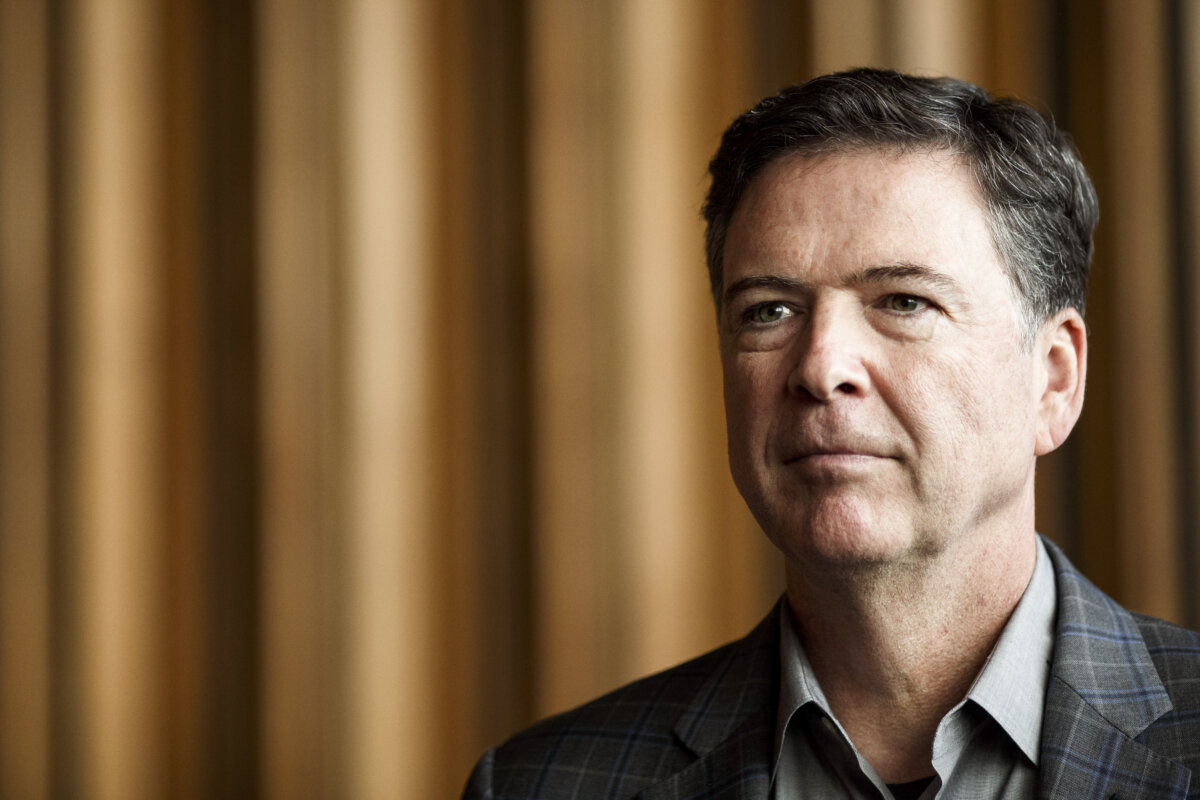

Former FBI Director James Comey argued in a new motion filed July 28 in federal court in North Carolina that the indictment brought against him for allegedly threatening President Donald Trump is an example of a vindictive and selective prosecution.
A vindictive prosecution is a due process violation that takes place when prosecutors file or escalate criminal charges against a defendant primarily to punish or retaliate against the defendant for exercising a legal or constitutional right.
A selective prosecution claim alleges a violation of equal protection principles when the government charges a person based on protected characteristics such as race, religion, or the exercise of First Amendment rights.
Comey was charged after he posted a photo on Instagram in May 2025 showing seashells arranged to read “86 47.”
To “86” is to remove or get rid of someone, and the term has been used in some contexts as a euphemism for killing someone. The number 47 has been interpreted to refer to Trump, who is the 47th president.
Comey said he found the seashells arranged on a beach and took a photograph of them. He said he assumed the shells were intended as a political message and that he was making a political statement in opposition to Trump when he posted online. Comey subsequently deleted the post, saying he did not know at the time that “86” was associated with violence.
Comey was indicted for allegedly making a deliberate threat to take the life of or inflict bodily harm upon the president of the United States and for allegedly threatening criminal conduct across state lines through online or other interstate communications. The maximum penalty for each of the two counts is five years of imprisonment.
His attorneys say in the motion that the government may not retaliate against individuals for their protected speech. Government officials are not permitted to use criminal legal processes “to exact retribution against their perceived personal and political enemies.”
“The ensuing indictment is not based on a good-faith application of the law to the facts; instead, it effectuates a yearslong campaign by the President to use the criminal process to punish Mr. Comey for his protected speech and because of the President’s deep-seated animosity,” they state in the motion.
Prosecutors have singled out Comey “in direct response to the President’s urgings and Mr. Comey’s successful motion to dismiss a prior indictment,” his attorneys wrote in the motion.
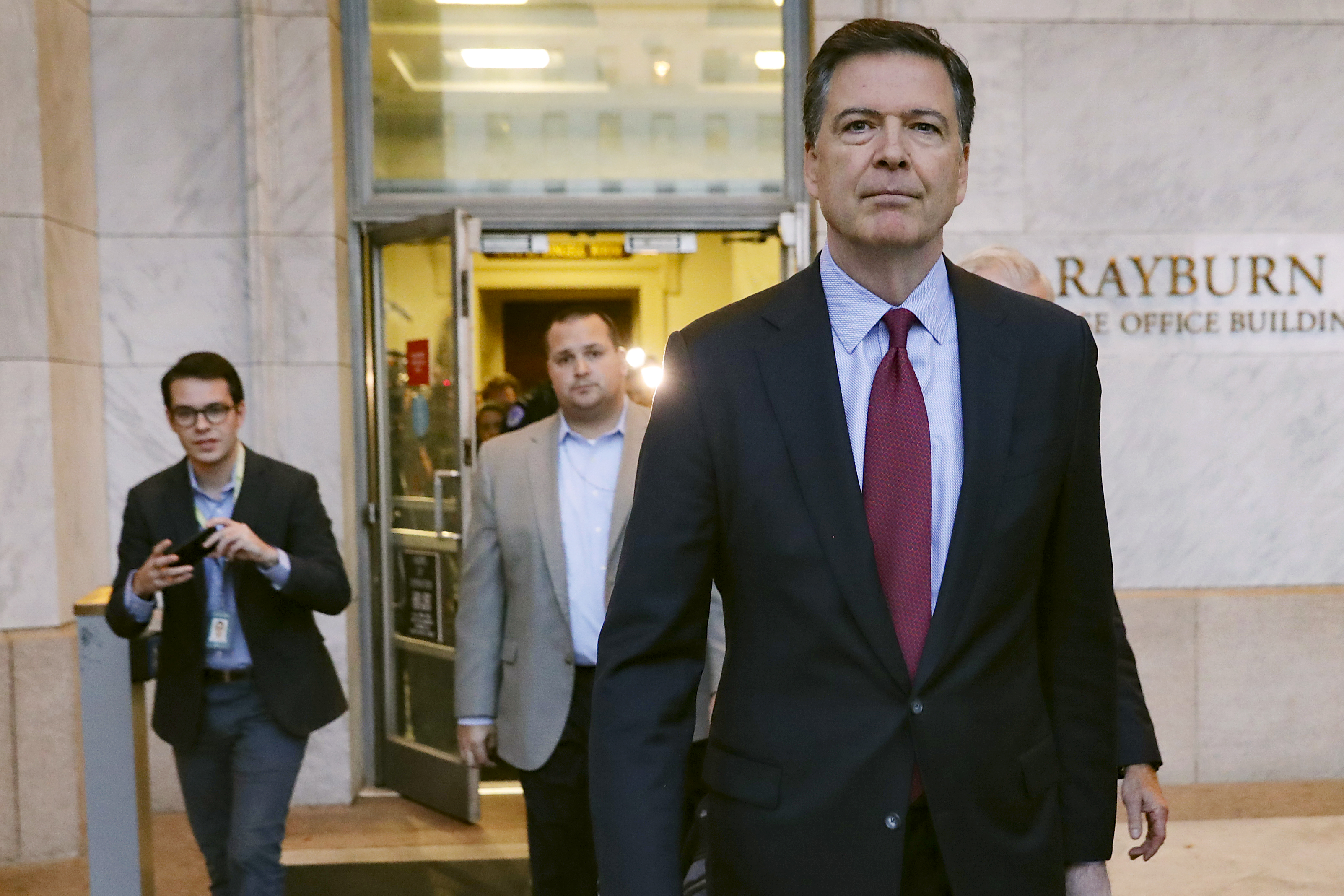 Former FBI Director James Comey in Washington, on Dec. 7, 2018. (Chip Somodevilla/Getty Images)
The Department of Justice (DOJ) has denied that Comey is being prosecuted for his political views.
The motion stated that the day after the Instagram post, Trump said Comey’s post “meant assassination” and indicated he wanted the DOJ to bring criminal charges.
The motion also stated that the day after the post, the Secret Service carried out illegal electronic surveillance of Comey at the request of a senior DOJ official and created a new policy of treating the phrase “86 47” as a kind of code for threatening the president.
On July 28, Comey’s legal team also filed a motion for disclosure of the transcripts and audio recordings of the grand jury proceedings that culminated in the indictment.
“The myriad irregularities that led to this indictment, along with the constitutional violations inherent in this prosecution, indicate that grounds may exist to dismiss the indictment,” the motion said.
Another motion filed on July 28 seeks to suppress evidence that was obtained under two search warrants.
A supporting memorandum asked the court to exclude evidence obtained from records related to Comey’s Apple account and Google accounts associated with Comey and his wife.
Separately, on July 27, Comey’s attorneys filed another motion to dismiss, arguing that the Instagram post does not constitute what lawyers call a true threat against Trump.
A true threat is a serious statement indicating that someone intends to commit violence against a specific person.
The Supreme Court held in Counterman v. Colorado (2023) that to prove a true threat, prosecutors must demonstrate that the speaker making the threat had a subjective understanding of the statement’s threatening nature. At a minimum, they must prove the speaker recklessly disregarded a substantial risk that others would interpret the statement as a threat of violence.
“Both Counts of the indictment seek to punish Mr. Comey for a social media post expressing a political viewpoint,” Comey’s attorneys wrote in the July 27 filing.
In 2025, Comey was indicted in federal court in Virginia for allegedly making a false statement to Congress and obstructing a congressional proceeding. In November of that year, a federal district judge dismissed that indictment, finding that the appointment of interim U.S. Attorney Lindsey Halligan, who oversaw the prosecution, was unlawful.
In December 2025, the government appealed. The appeal is pending before the U.S. Court of Appeals for the Fourth Circuit.
 Friends Read Free
Copy
Facebook
Tweet
Friends Read Free
Copy
Facebook
Tweet