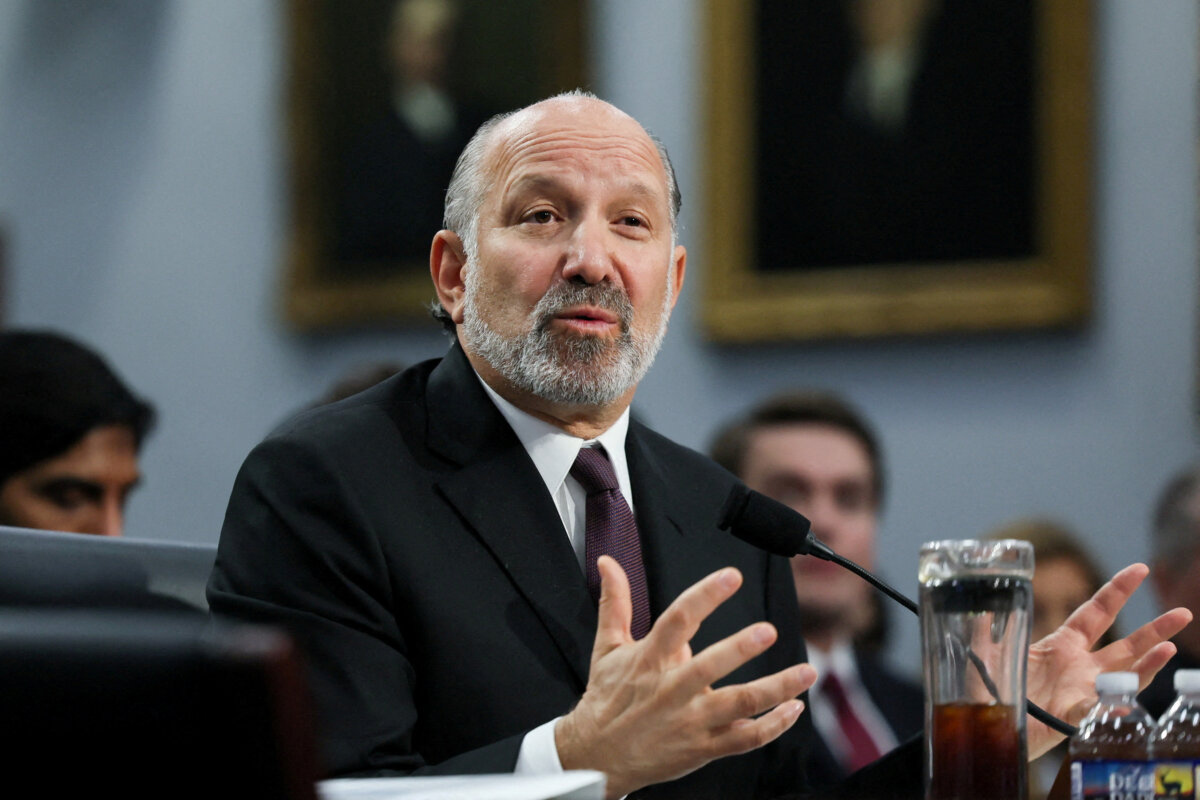

Department of Commerce Secretary Howard Lutnick said he expects the Supreme Court to side with the Trump administration on its tariffs, which he said would open the door to $2,000 dividend payments to Americans.
Tariff-derived dividends to low- and middle-income Americans were floated by President Donald Trump earlier this month, although White House officials have said that the payments would need an act of Congress first.
“Tariffs are going to be a part of this administration’s national security and national economic protection of the American people,” Lutnick said on Monday in a Fox News interview, adding that “it’s pretty clear” the White House will win the tariff case before the Supreme Court.
Lutnick added that “one of the ways to prove to the American people how great tariffs are is to have them share in a part of one year’s income from these tariffs, and that’s $2,000 a head for people who need the money.”
Earlier in November, Trump suggested the idea of sending money to Americans derived from his tariffs after Supreme Court justices heard oral arguments on the legality of the import taxes. Multiple lawsuits that challenged the duties have alleged that the administration is illegally using an emergency provision of the International Emergency Economic Powers Act (IEEPA) to impose the tariffs.
Days after Republicans suffered losses in the November elections, Trump argued in a Nov. 9 post on Truth Social that his tariffs are bringing in so much money that “a dividend of at least $2000 a person (not including high income people!) will be paid to everyone.’’ Later, he told reporters that the tariffs would also go toward “reducing debt,” referring to the U.S. national debt.
This past week, the president said he was eyeing a rollout of the dividend-derived payments by the middle of 2026.
Several administration officials, including Treasury Secretary Scott Bessent and National Economic Council head Kevin Hassett, have said that the dividend payments would need legislation first.
Bessent also indicated that the dividend may not take the form of checks or payments that are sent directly to Americans, suggesting it could be in the form of tax cuts.
“The $2,000 dividend could come in lots of forms, in lots of ways,” Bessent told ABC News’ “This Week” during an interview on Nov. 9. “It could be just the tax decreases that we are seeing on the president’s agenda. You know, no tax on tips, no tax on overtime, no tax on Social Security. Deductibility of auto loans.”
In another interview, Bessent said that the tariff rebate would likely have an income limit, suggesting that families that make $100,000 or less per year would be eligible.
Trump imposed tariffs on most countries around the world starting in April and has used them as a means to negotiate deals on non-economic policies, including immigration. The president and his administration have said the tariffs don’t increase consumer prices and are needed for national security purposes.
An estimate released by the Congressional Budget Office (CBO) on Nov. 20 found that the recent tariffs would reduce U.S. deficits by $1 trillion less than a previous estimate, revising the lower primary deficits to $2.5 trillion over the next 11 years.
The president this past week signed several executive orders that removed tariffs on beef, tea, fruit juice, cocoa, spices, bananas, oranges, tomatoes, and certain fertilizers. Some of the products covered aren’t produced in the United States, meaning that tariffs meant to spur domestic production had little effect.
But reducing the tariffs will still likely mean lower prices for U.S. consumers.
The Associated Press contributed to this report.
 Friends Read Free
Copy
Facebook
Tweet
Friends Read Free
Copy
Facebook
Tweet