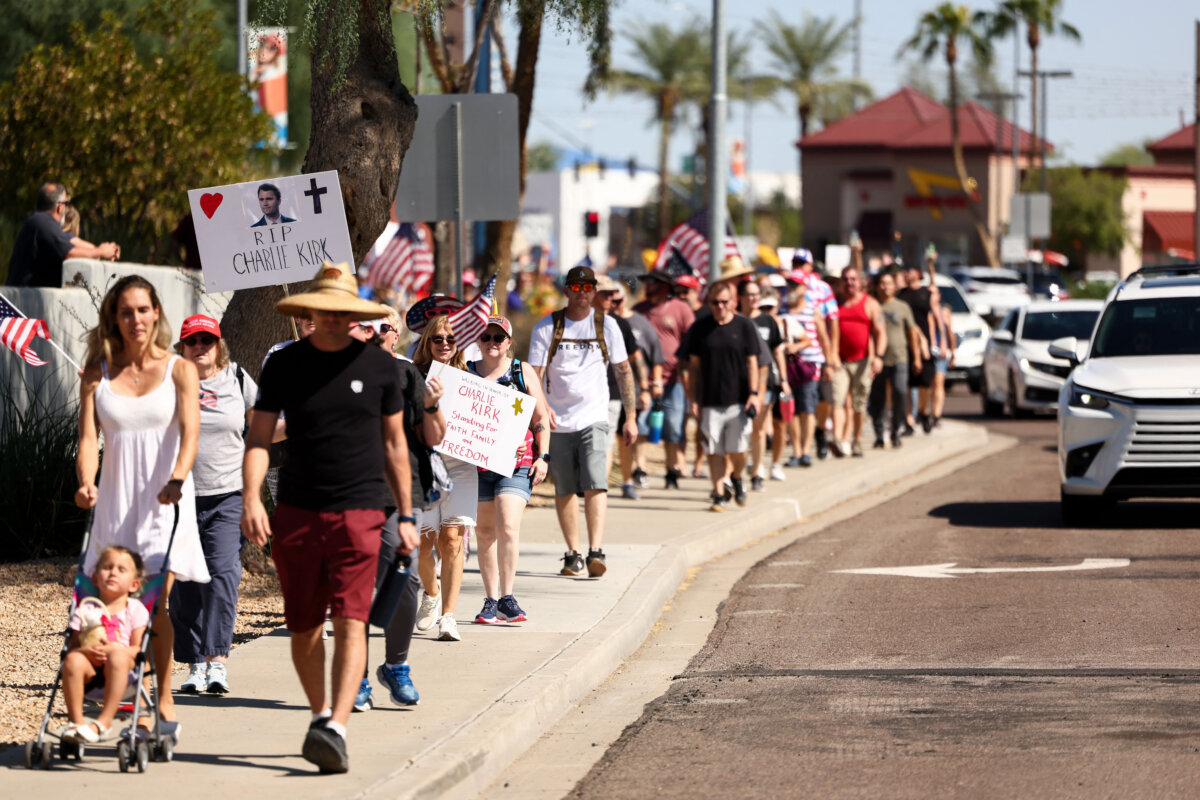

TEMPE, Ariz.—While some see a growing political divide, Carson Carpenter sees hope and opportunity rising from the legacy of Turning Point USA founder Charlie Kirk.
Carpenter, 20, who graduated from Arizona State University (ASU) in 2024, said he believes that something better lies beyond Kirk’s death. The conservative commentator was assassinated at Utah Valley University in Orem, Utah, on Sept. 10.
Carpenter said change starts with a new commitment and promise to act and talk respectfully, which means “toning down” the ideological rhetoric.
He said he thinks that Kirk’s assassination has made more people realize the dangers of escalating political conflict.
“I feel like it’s resolved with a lot of peace in people—even on the left,” Carpenter told The Epoch Times.
“Honestly, they don’t want to be represented as cold-blooded killers.
“Seeing the video of [Kirk] getting shot in the neck—it can’t get any higher stakes than that.”
Carpenter said he earned his political science degree in just two years at ASU. He said he got involved in student politics by joining the College Republicans at ASU, and he later served as the group’s president.
He said he completed an internship with Turning Point USA in Phoenix and met Kirk on several occasions. Kirk co-founded the conservative youth movement in 2012.
Carpenter said his conservative beliefs have brought him into conflict with students on campus who disagreed with his views. At times, he has felt that his safety was at risk, like there was a “target” on his back because of his politics, he said.
“At that time, the campus administration was very harsh on conservatives,” Carpenter said.
“They were pushing back against us. We couldn’t get funding from the student government, even though we should have gotten a baseline amount.”
Carpenter said the group moved forward with its message of liberty, traditional values, and civil discourse over direct confrontation.
The Epoch Times reached out to ASU for comment, but did not receive a response by publication time.
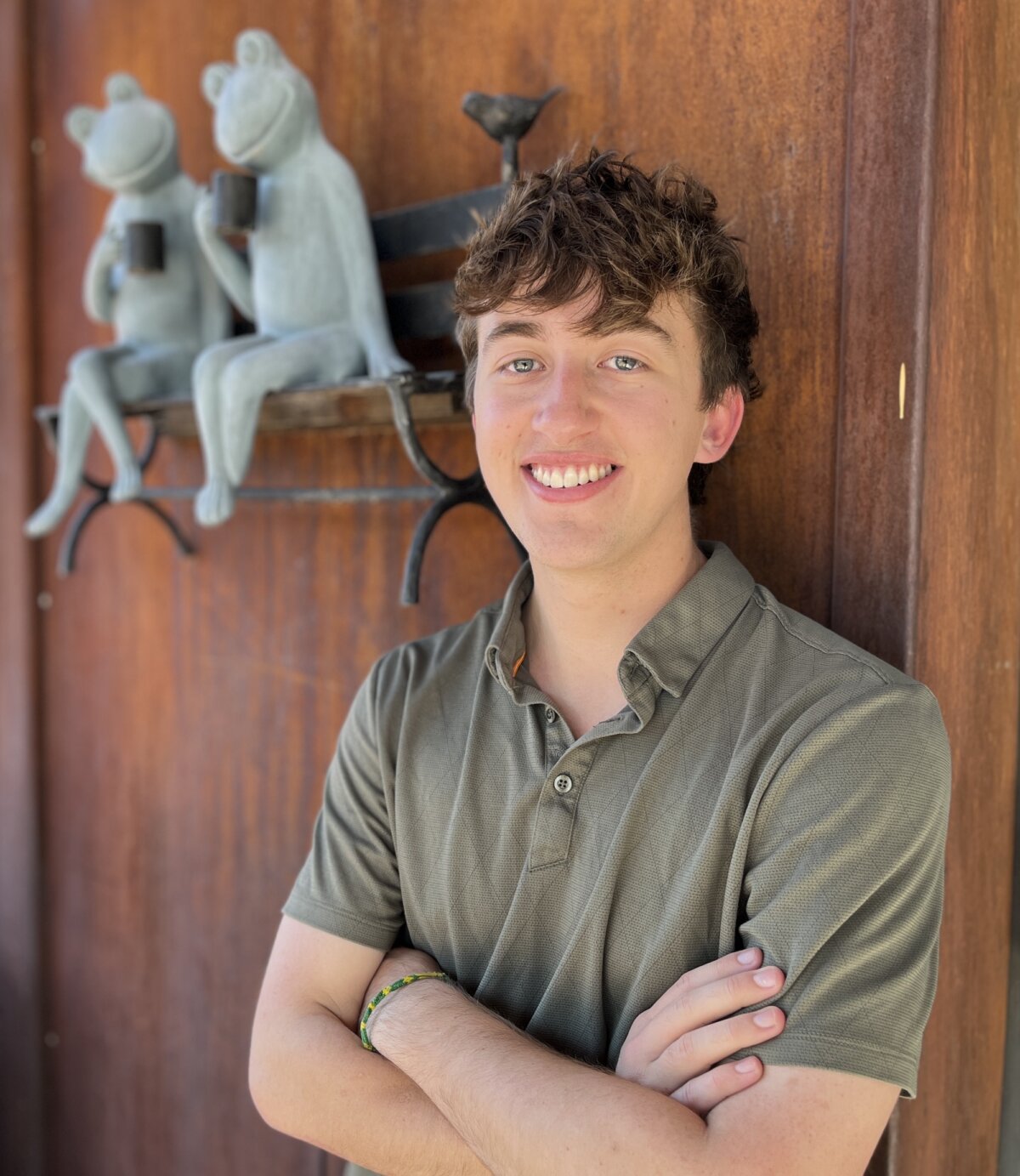
Watershed Moment
Carpenter described Kirk’s assassination as a wake-up call for young people and the country, showing what can happen when animosity arising over political disagreements goes too far.
People now face real danger from a culture of intolerance and disrespect, he said, and speaking up can cost someone their life.
“We need to tone down the rhetoric,” said Carpenter, who is now founder and chief executive of Off The Record USA, a digital-first media company in Gilbert, Arizona.
Arguing for freedom of speech and conservative fiscal policy “shouldn’t be something you take to your death,” he said.
Carpenter said he believes that Kirk recognized the risks he faced and approached his public political discourse with realism, never expecting an easy path.
ASU, like many other colleges, has clear rules about when, where, and how people can speak on campus.
While the campus states that it is “dedicated to university activities,” its policies state that it is “not a place with unrestricted public access.”
The university states that it advocates a practical philosophy of “do no harm.”
“Physical violence, threats of violence, disruption of university activities, and damage to university property are all prohibited [as are weapons],” the campus policy states.
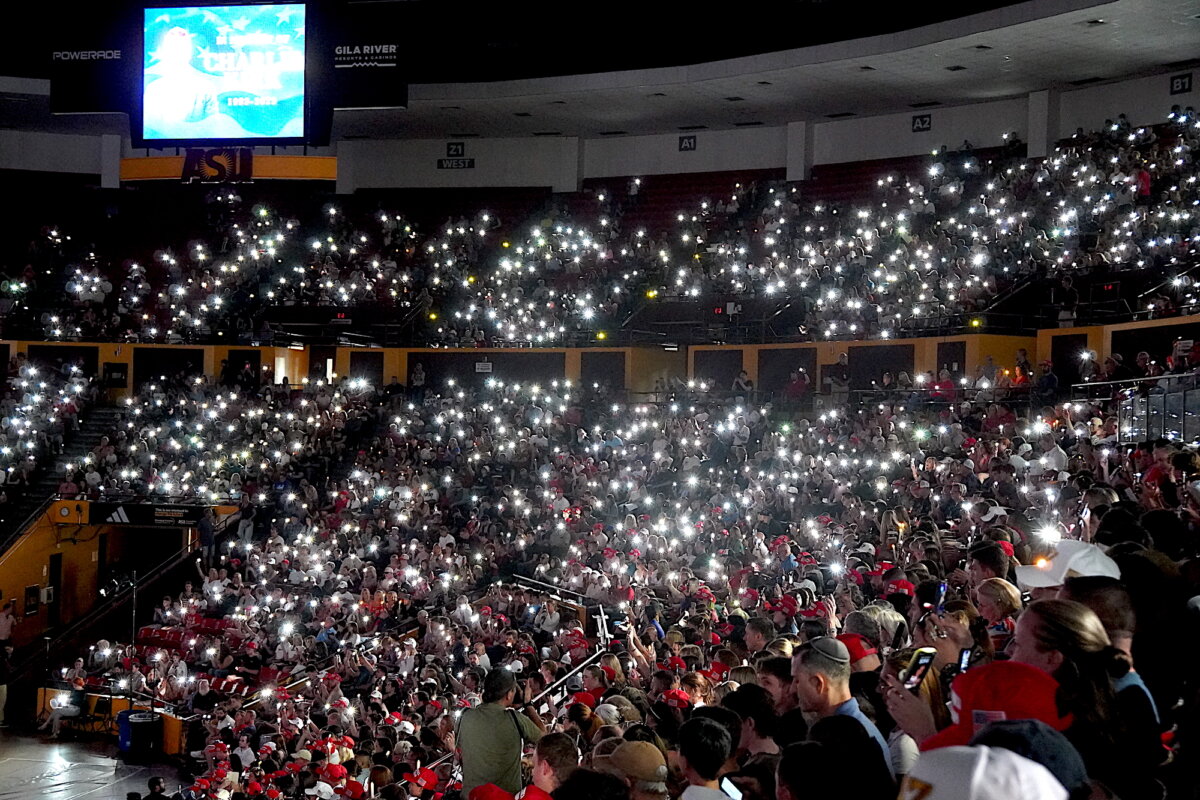 Thousands of cellphone lights flicker during a vigil for slain conservative youth leader Charlie Kirk in Tempe, Ariz., on Sept. 15, 2025. (Allan Stein/The Epoch Times)
The State Press, ASU’s independent student newspaper, expressed concern about restrictions on freedom of speech on college and university campuses.
“The frightening part is that these policies are becoming increasingly common at universities across the country, allowing schools to control the time, place, and manner of public expression,” the publication stated.
“If we accept these free-speech areas without protest, they will become the norm. And if this becomes the norm, is this still a democracy?”
Colleges Ranked
Laura Beltz is the director of policy reform at the Foundation for Individual Rights and Expression (FIRE), a nonpartisan organization that defends free speech rights on U.S. college campuses.
She said the nonprofit’s main goal is to ensure that colleges support free and open discussion on campuses by adhering to their own rules.
Beltz said FIRE is starting to see the first signs of new policies in response to the Kirk assassination.
For example, some campuses may now use metal detectors, search bags and personal belongings, employ security teams at events, and charge an extra security fee, she said.
Beltz said many people called for students and teachers to be fired or punished because of their reactions to the shooting or comments about Kirk.
FIRE has weighed in on, and sometimes intervened, in cases in which public faculty members have been disciplined for their constitutionally protected speech, Beltz said.
While the Constitution protects free speech at public schools through the First Amendment, she said it does not apply to private colleges and universities.
“The vast majority of private colleges do make commitments to follow free speech and free speech guidelines,” Beltz told The Epoch Times.
“Some of them are quite sweeping promises of freedom of expression for students and faculty. Unfortunately, a lot of times private schools do not live up to those commitments.”
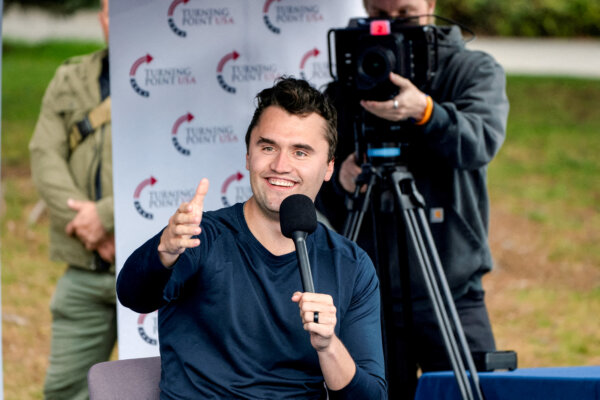 Charlie Kirk holds a debate event ahead of his scheduled speech at the University of Washington in Seattle on May 7, 2024. (David Ryder/Reuters)
Beltz pointed to FIRE’s annual survey using campus experiences, school rules, and classroom controversies to determine free speech rankings.
In 2025, FIRE ranked 257 colleges and universities, based on the findings of College Pulse, a research company, which surveyed 68,510 students in two- and four-year programs.
ASU ranks 23rd in FIRE’s Free Speech Rankings, with a score of 70 and a grade of C- for its speech climate.
“After suspending a student group in 2024 for a controversial social media post, ASU improved in 2025 when it declined to sanction College Republicans United for similar conduct,” the survey report stated.
The survey ranks ASU in the top 25 for political tolerance and in the top 50 for administrative support.
However, it falls in the bottom 50 for openness and disruptive conduct, showing that controversial dialogue remains “fragile.”
“ASU could boost its standing by adopting an official commitment to institutional neutrality and educating students on when expression crosses into unprotected conduct,” the survey report stated.
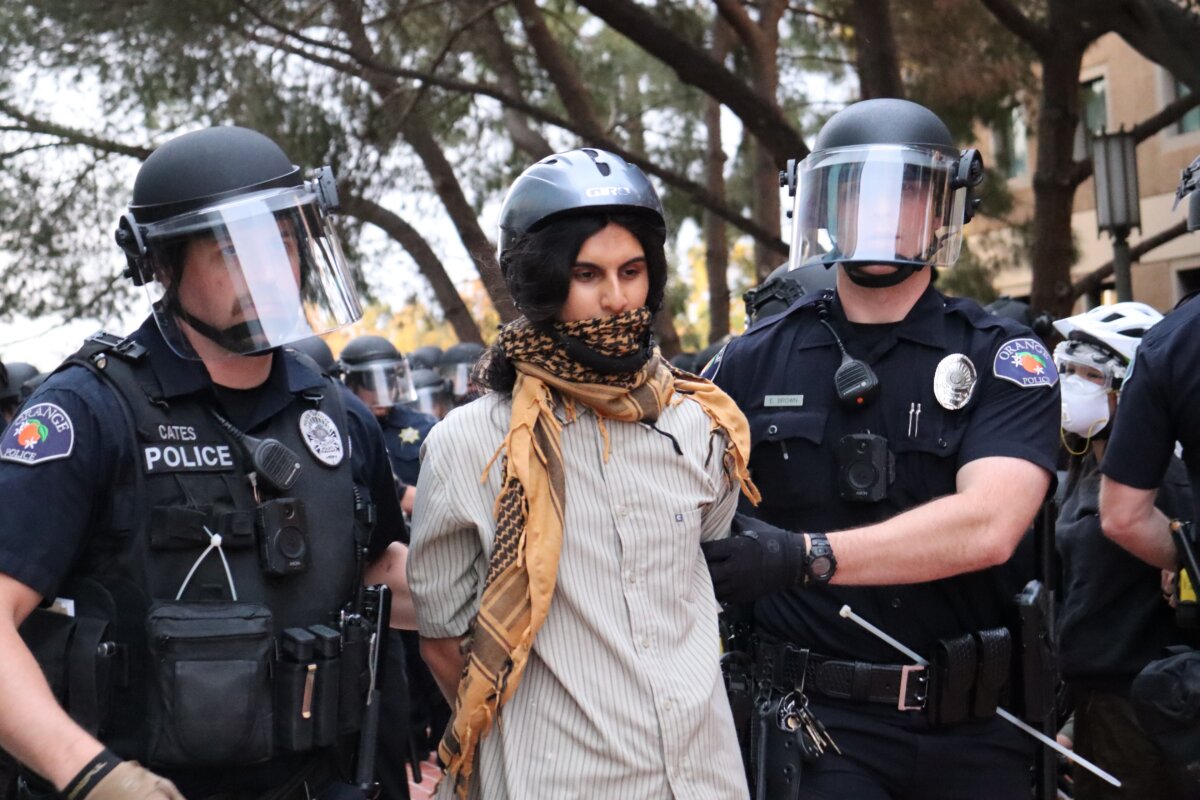 Law enforcement officers arrest a person during a pro-Palestinian protest at the University of California–Irvine on May 15, 2024. (May He/The Epoch Times)
Claremont McKenna College in Claremont, California, received the survey’s top ranking, with an overall grade of 80 (B-) across almost every major area.
The school ranks in the top 10 for self-censorship, administrative support, comfort expressing ideas, and openness.
It also places in the top 50 for disruptive conduct, indicating lower acceptance of shout-downs compared with other schools. Still, progress could be made on the disruptive conduct score, where the school ranks 39th.
The survey concluded that educating students on when expression crosses into unprotected conduct allows the college to build on its robust climate for free expression.
Barnard College, a private school in New York City, ranks at the bottom of the survey, with a failing grade of 40.7.
FIRE reported that Barnard’s last-place ranking “reflects a campus climate where free expression is neither protected nor prioritized.”
“For example, administrators investigated and briefly suspended student journalists who covered pro-Palestinian protests. These penalties dragged down the score,” the report stated.
FIRE noted that if Barnard wants to repair its reputation and regain student trust, it must take prompt, visible steps to reverse course.
“Without bold, systemic change, Barnard risks remaining the worst environment for campus speech in the country,” FIRE stated.
The Epoch Times contacted Barnard College about the survey rankings, but did not receive a response by publication time.
Beltz said a lack of strong civics education underpins political intolerance and discord on college and university campuses.
“I think it would be great for colleges to focus on that and really teach students boundaries [and] to explain why America has such a robust protection for freedom of speech,” she said.
“That’s when you can really start to change minds on this.”
Beltz said the solution lies in action at both the government and grassroots levels, where college leadership plays a key role.
“I think that this is an opportunity to once again send the message that we as a nation do not censor speech on the basis that some find it offensive,” she said.
JT Marshburn, national chairman of the College Republican National Committee, said Kirk’s death offers the nation a chance to come together in the spirit of fairness and open dialogue.
These are the very ideals that Kirk championed, he said.
“I also think that it’s really an opportunity for us as conservatives to protect free speech on campuses,” Marshburn told The Epoch Times.
He said he believes that there needs to be a “culture of respect” and that those who incite, glorify, or engage in political violence should be held accountable.
“We urge all university administrations to affirm our commitment,” Marshburn said. “We’re not going to back down for moments like this.”
Correction: A previous version of this article gave an incorrect position for JT Marshburn, national chairman of the College Republican National Committee. The Epoch Times regrets the error.
 Friends Read Free
Copy
Facebook
Tweet
Friends Read Free
Copy
Facebook
Tweet