
Senate Democrats have rejected a Republican proposal to fund the Department of Homeland Security (DHS), extending a partial shutdown that has now entered its sixth week and intensifying pressure on both parties to reach a compromise.
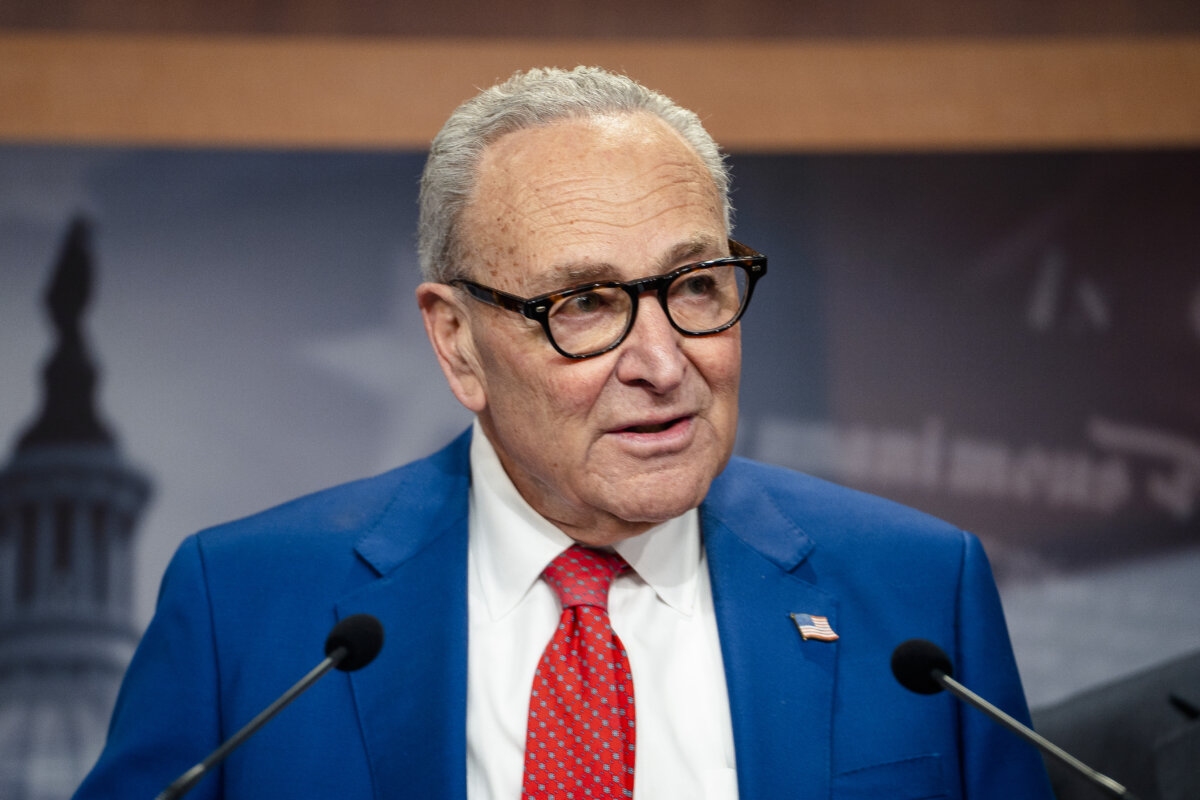
Speaking at a March 24 press conference, Senate Minority Leader Chuck Schumer (D-N.Y.) said Democrats had submitted a counteroffer, emphasizing that any agreement must include changes to Immigration and Customs Enforcement (ICE) practices.
“We have to rein in ICE and stop the violence. We need reform,” Schumer said after meeting with Democratic senators, adding that his caucus is unified in pushing for changes to enforcement policies.
Schumer criticized the Republican plan for failing to address those concerns, noting that Democrats’ response would include “significant reform.”
Republicans have proposed funding the rest of DHS while temporarily excluding ICE’s enforcement and removal operations. Under their approach, ICE funding would later be addressed through the budget reconciliation process, allowing passage with a simple majority rather than the 60 votes typically required in the Senate.
The proposal has gained traction within the White House. President Donald Trump said he would review the plan, signaling openness but stopping short of a full endorsement. “They’re working on all of that,” Trump told reporters when asked about separating immigration enforcement funding from the broader DHS budget.
Some Democrats have expressed cautious optimism. Sen. Chris Coons (D-Del.) said a deal could be within reach but stressed the need for a formal, written agreement. He also made clear he would oppose any bill that does not include reforms to ICE detention and deportation practices.
Negotiations appeared to gain momentum after Republican senators met with Trump at the White House late on Monday. Lawmakers indicated that staff worked overnight to refine details, with formal proposals expected during Tuesday’s party meetings.
Despite progress, significant disagreements remain. Trump has previously insisted that any DHS funding deal include the SAVE America Act, which would mandate photo ID for voting and proof of citizenship for voter registration—provisions Democrats have pledged to block.
The ongoing standoff is having visible effects. With DHS partially unfunded since Feb. 13, disruptions to the Transportation Security Administration have included long lines at airports across the country. While roughly 96 percent of the federal government remains funded, DHS operations have been strained. ICE and Customs and Border Protection have been funded through 2029 due to a megabill passed last year.
At the core of the impasse is Democratic opposition to current immigration enforcement policies, particularly large-scale deportation efforts. Their position hardened following the deaths of two people during protests against ICE operations in Minneapolis.
So far, the Senate has failed four times to pass legislation funding the remainder of DHS.
Democrats have outlined a series of demands tied to any funding agreement. These include limiting enforcement to targeted operations, requiring judicial warrants before entering private property, and banning broad, indiscriminate arrests. They also seek stricter warrant standards and verification of citizenship status before detention.
Additional proposals would require ICE agents to clearly identify themselves by name, agency, and a unique identification number, and to provide that information upon request. Democrats are also pushing to restrict enforcement actions at “sensitive locations” such as schools, churches, hospitals, courts, child-care centers, and polling places.
Currently, DHS relies largely on administrative warrants, and ICE agents are not required to wear body cameras. However, outgoing DHS Secretary Kristi Noem recently said that agents in Minneapolis would begin using them.
Meanwhile, border czar Tom Homan has defended some enforcement tactics, including agents wearing masks. He cited a sharp rise in threats to the safety of personnel and their families.
“I don’t like the masks either, but threats against ICE officers are up dramatically,” Homan said in a CBS interview. “These men and women need to protect themselves.”
With negotiations ongoing, both sides face mounting pressure to resolve the impasse and restore full funding to DHS while addressing deep divisions over immigration policy.
 Friends Read Free
Copy
Facebook
Tweet
Friends Read Free
Copy
Facebook
Tweet