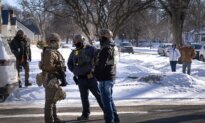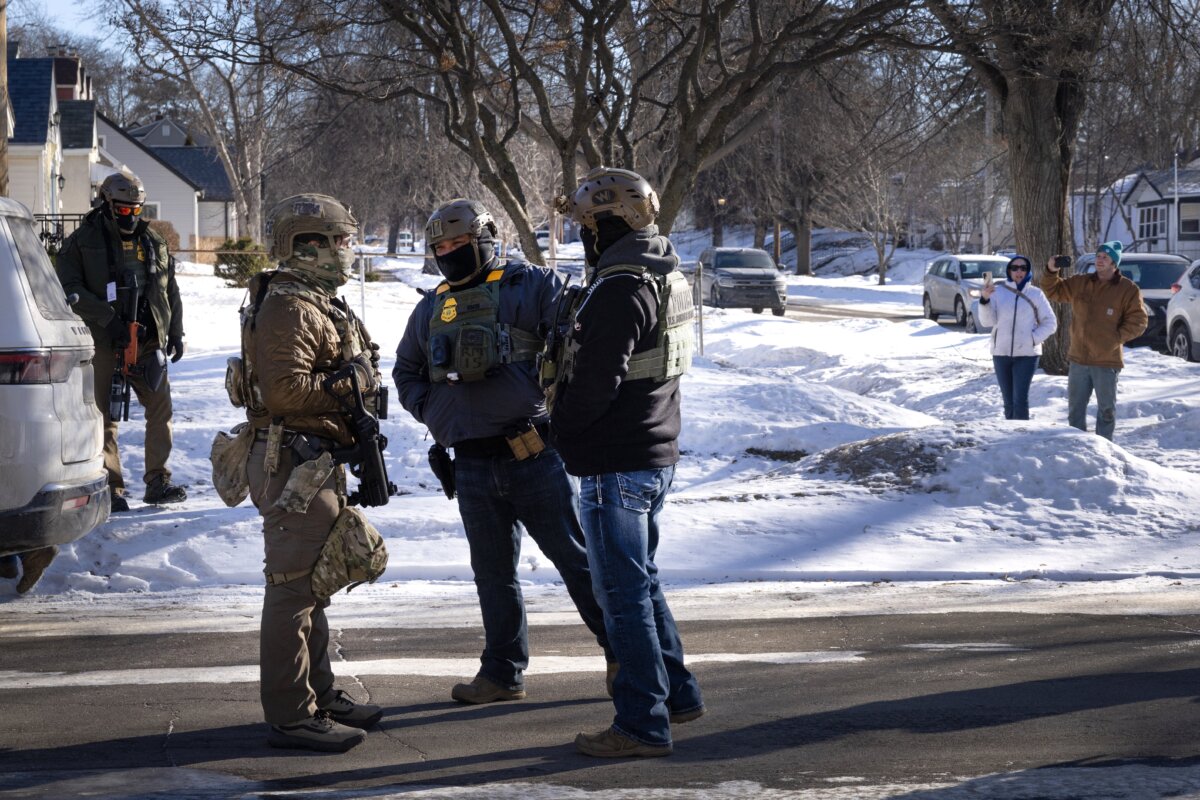

All federal officers in the field in Minnesota’s most populous city will have body cameras moving forward, Department of Homeland Security (DHS) Secretary Kristi Noem announced on Feb. 2.
“Effective immediately we are deploying body cameras to every officer in the field in Minneapolis,” Noem wrote on X after meeting with other top officials, including border czar Tom Homan.
“As funding is available, the body camera program will be expanded nationwide,” Noem said. “We will rapidly acquire and deploy body cameras to DHS law enforcement across the country.”
DHS did not immediately respond to a request for more information.
While body cameras have become increasingly prevalent among local and state officers, federal immigration officers are not required to wear them, although they have been deployed to some Immigration and Customs Enforcement (ICE) officers as part of a pilot program that began in 2024. ICE, which is engaged in a large-scale immigration enforcement operation in Minneapolis and other cities, is part of DHS.
DHS officers recently shot protesters in the course of altercations in Minneapolis in recent weeks, resulting in two deaths. At least several of the officers involved were wearing body cameras. Some Democratic lawmakers have criticized the shootings, while federal officials say they were justified.
Sen. Chuck Schumer (D-N.Y.), the top Democrat in the Senate, said in late January that Democrats in the upper chamber want a new spending package for the government to mandate body cameras for immigration officers as well as a ban on those officers wearing masks.
“These are common-sense reforms, ones that Americans know and expect from law enforcement,” Schumer told reporters after a closed-door Senate Democrat meeting in Washington. “If Republicans refuse to support them, they are choosing chaos over order, plain and simple.”
The House of Representatives started work Monday on a Senate bill that would end the partial shutdown that started over the weekend as members of Congress negotiate over various portions of the package. The bill would extend DHS funding for just two weeks—in contrast to full funding for the other five departments—because of disputes between lawmakers over what measures to make part of the full-year funding for DHS.
A final package “gives us an opportunity to impose real restraints on the Department of Homeland Security,” such as requiring agents to wear cameras and keep them on, Sen. Richard Blumenthal (D-Conn.) wrote on X on Jan. 29.
Sen. Ron Johnson (R-Wis.) said on Sunday during an appearance on CNN’s “State of the Union” that he does not have a problem with requiring federal agents wear body cameras. However, he said he opposes restricting DHS officers from entering homes unless they obtain warrants, another condition floated by Democrats.
“We have millions of cases,” he said. “So demanding judicial warrants is their sneaky way of basically neutering our ability to enforce any immigration laws.”
Correction: A previous version of this article misstated the status of body cameras worn by ICE agents involved in shootings in Minneapolis. The Epoch Times regrets the error.
 Friends Read Free
Copy
Facebook
Tweet
Friends Read Free
Copy
Facebook
Tweet