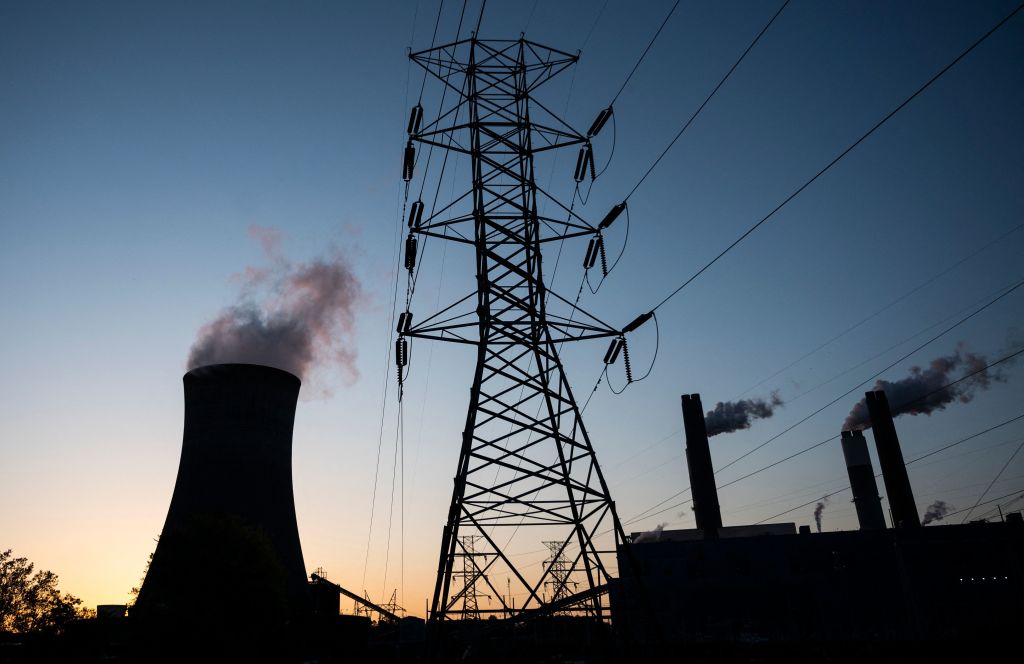

The Department of Energy (DOE) issued an emergency order on Dec. 16 directing TransAlta to continue operating a unit of a coal power plant in Washington state that was scheduled for closure at year’s end.
The order, signed by Energy Secretary Chris Wright, directs TransAlta to keep unit 2 of the Centralia Generating Station running as the DOE seeks to secure affordable power for the Northwestern region—which includes Montana, Oregon, Washington state, and parts of northern California and Idaho— during the cold winter months.
The DOE stated that the North American Electric Reliability Corporation (NERC) determined the region is likely to need external assistance during extreme winter weather, when thermal plant outages and adverse wind turbine conditions strain local resources.
“The last administration’s energy subtraction policies had the United States on track to experience significantly more blackouts in the coming years — thankfully, President Trump won’t let that happen,” Wright said in the statement. “The Trump administration will continue taking action to keep America’s coal plants running so we can stop the price spikes and ensure we don’t lose critical generation sources.”
According to the department’s resource adequacy report, blackouts could increase 100 times by 2030 if reliable power sources such as coal power plants are taken offline. The directive will be in effect through March 16, 2026.
The Epoch Times reached out to TransAlta for comment but did not receive a response by publication time.
The unit was slated for retirement in December 2025 pursuant to a 2011 Washington state law and TransAlta’s agreement with the state, according to the DOE order. It also noted that TransAlta plans to convert the plant to natural gas by 2028.
The Environmental Protection Agency (EPA) last month proposed extending the deadline for coal-fired power plant operators until Oct. 17, 2031—which is three years beyond the initial Oct. 17, 2028, deadline—to cease operations of coal-fired boilers and close unlined coal combustion residual impoundments over 40 acres.
The Trump administration has moved to reverse the decline in U.S. coal use. In October, the DOE announced $100 million in funding to revamp the country’s existing coal-fired power plants and support “practical, high-impact projects” designed to enhance efficiency, extend operational lifespan, and improve the performance of coal and natural gas facilities.
According to the Energy Information Administration (EIA), coal consumption in the U.S. power sector has decreased since the 2000s because of rising competition from natural gas and renewable energy sources and stricter emissions regulations on coal-fired power plants.
The EIA projected that the total operating capacity of U.S. coal-fired power plants will drop to 145 gigawatts (GW) by the end of 2028, a decline of more than 15 percent from the 172 GW in operation as of May this year.
 Friends Read Free
Copy
Facebook
Tweet
Friends Read Free
Copy
Facebook
Tweet