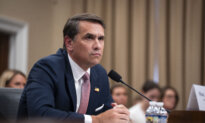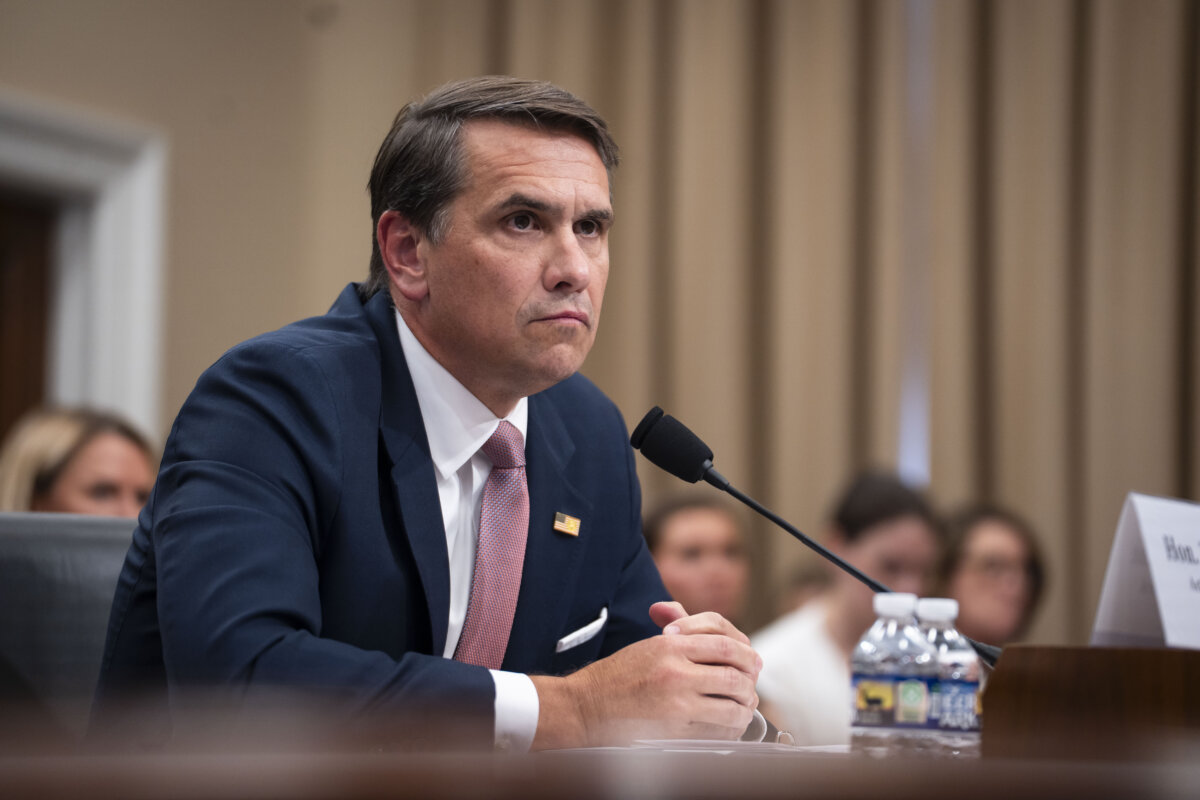
Acting Attorney General Todd Blanche told a congressional committee on June 2 that the Department of Justice is scrapping the proposed Anti-Weaponization Fund that has been blocked by the courts.
“We’re not moving forward with the fund, period,” Blanche told Rep. Grace Meng (D-N.Y.) during a meeting of a House Appropriations subcommittee.
The Anti-Weaponization Fund was created as part of a settlement of a lawsuit that President Donald Trump filed against the IRS over alleged leaks of his tax returns. The settlement called for the federal government to pay out nearly $1.8 billion to compensate alleged victims of the weaponization of law enforcement.
As a result of the settlement, Blanche said on May 19 that the IRS would no longer pursue claims against Trump, members of his family, or his businesses over allegedly unpaid taxes.
The fund would have been authorized to formally apologize to and compensate those who the Trump administration says were unfairly targeted by the government in investigations and lawfare. It would have drawn on sums in the U.S. Treasury’s perpetual Judgment Fund, which is made available to the Justice Department to pay out settlements and court judgments involving the federal government.
The plan for the fund has met opposition in Congress from both Republican and Democratic lawmakers.
Some expressed concerns that those involved in the Jan. 6, 2021, security breach at the U.S. Capitol could receive payouts from the it.
A federal district judge on May 29 indicated that she was probing allegations of fraud in the recently settled lawsuit.
Judge Kathleen Williams of the U.S. District Court for the Southern District of Florida directed attorneys to provide answers as part of her investigation into what she called “grievous allegations” that the settlement was “premised on deception.”
Williams said that 35 former federal judges had filed a motion asking the court to reopen the case. Some of those who support the motion “submit that the settlement ‘is a product of collusion and is itself a fraud on the Court.’”
Also, on May 29, Judge Leonie Brinkema of the U.S. District Court for the Eastern District of Virginia issued an order in separate litigation temporarily blocking the Trump administration’s moves to establish the Anti-Weaponization Fund.
She said the order was needed to make sure that no funds are “irreversibly disbursed” before litigation over the fund has an opportunity to play out.
At the congressional hearing, under questioning, Blanche told Meng and Rep. Rosa DeLauro (D-Conn.) several times that the fund will not go forward.
Meng, the ranking member on the subcommittee, asked if Blanche and Associate Attorney General Stanley Woodward, who previously signed documents regarding the settlement and the fund, would “now sign and release documents reversing the [Department of Justice’s] position on the fund?”
Blanche replied, saying, “I’m not sure what that means to sign documents reversing. There’s nothing to reverse. We’re not moving forward with the fund.”
Meng said she wasn’t certain if there were other ways that “you could use another vehicle to move forward with a similar fund or similar intention.”
“We just want to reassure the American public—we’ve heard from both Republicans and Democrats, constituents, and Americans across the country about this fund, and I think they would love to be reassured that this fund will not progress,” she said.
Blanche answered, saying, “I’m telling you, it’s not. … I’m not trying to be flippant with you. … I’m telling you, it’s not.”
He noted that the Justice Department released a June 1 statement on the fund.
The department said on X that it “disagrees strongly” with Brinkema’s decision blocking disbursements from the fund, but “will abide by the Court’s ruling.”
Blanche said there is a temporary injunction against the fund in Virginia, and there is litigation regarding it pending in Florida.
“But notwithstanding what we do in those litigations, and defending our rights and making sure our rights are protected, we’re not moving forward with the fund,” he said.
DeLauro said that because Blanche had presided over a deal “to take $1.8 billion of taxpayer money to create a slush fund to pay out violent criminals who pleaded guilty to assaulting police officers, you cannot be surprised when people question your impartiality.”
Even though the Anti-Weaponization Fund has been discarded, Blanche defended the idea behind the fund.
“The reasons for the fund—it’s something that President Trump talked about for a long time, which is the fact that there were a lot of people in this country who had their government weaponized against them,” he said.
“The reasons for the fund … remain as important as [they] were before.”
Rep. Andrew Clyde (R-Ga.) expressed disappointment over the Justice Department’s decision.
“I’m sorry to hear that the [Anti-]Weaponization Fund is not moving forward,” he said.
“You would have my full support when our government is weaponized so as to steal money from innocent law-abiding citizens, whether by making the process into the penalty … or by actually seizing their bank accounts through civil asset forfeiture. When there is no criminal prosecution, it is only right and fair to make these citizens whole.”
Civil asset forfeiture is a legal procedure in which law enforcement officials take assets from people suspected of criminal or illegal activity without necessarily charging the owners with wrongdoing. Often, the owners are required to prove that the asset was not involved in criminal or illegal activity. Failing that, the government keeps the property.
Despite Blanche’s assurances, some senators on both sides of the aisle have expressed interest in inserting language into pending legislation to formally end the fund.
After the hearing, Senate Minority Leader Chuck Schumer (D-N.Y.) posted on X that he wanted “to abolish it by law—permanently.”
“Senate Democrats will force a vote on the floor,” he wrote.
Nathan Worcester contributed to this report.
 Friends Read Free
Copy
Facebook
Tweet
Friends Read Free
Copy
Facebook
Tweet